Author Archives: Peter

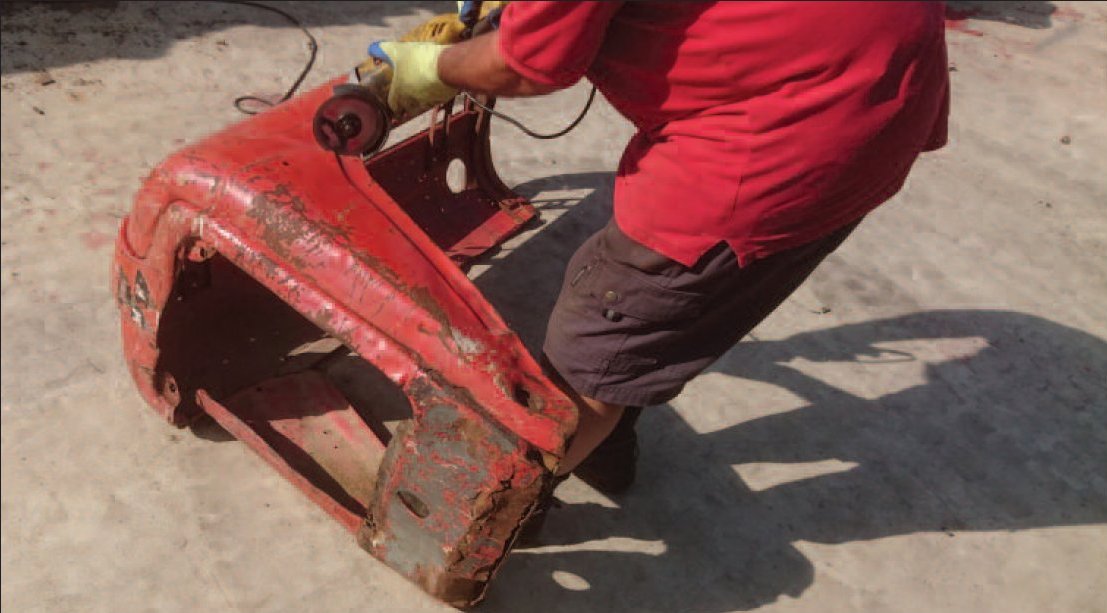
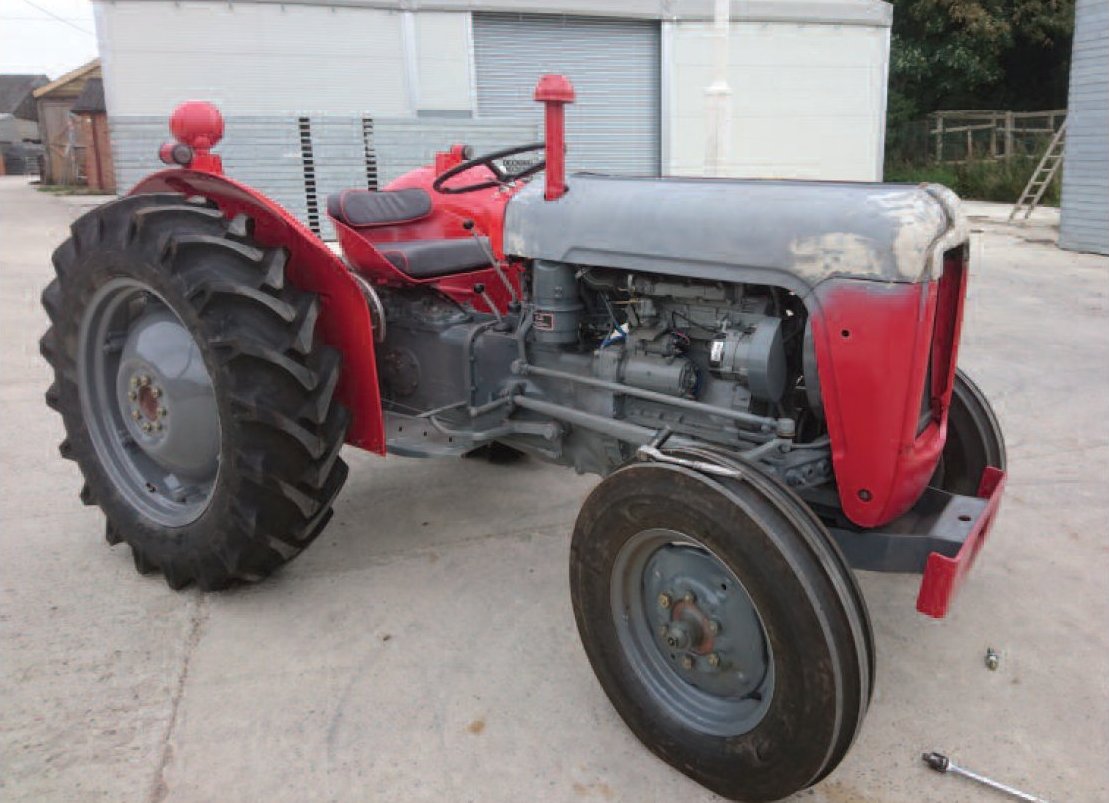
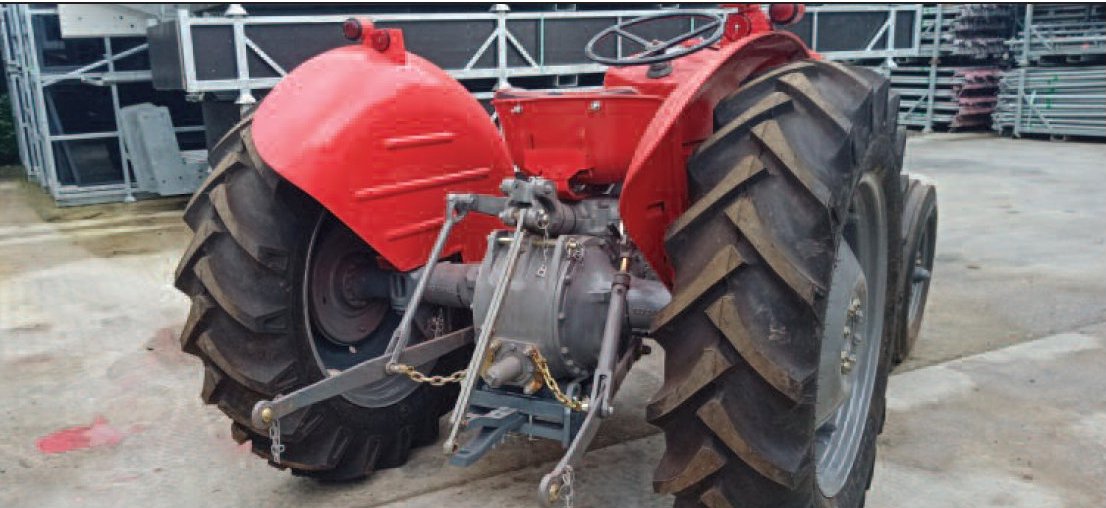
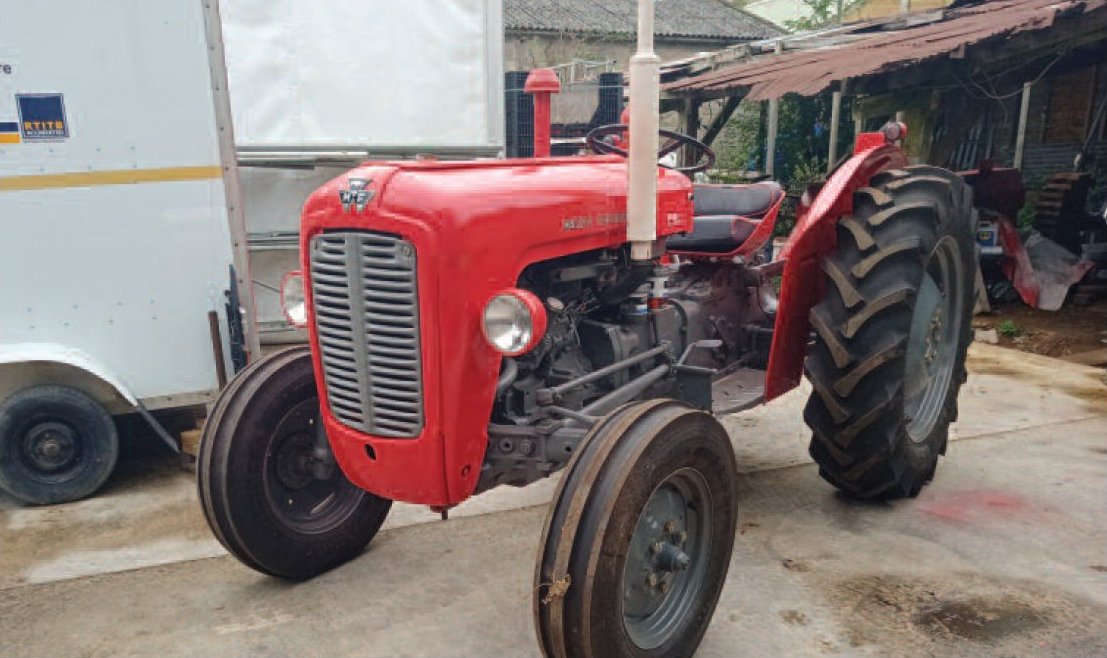
MF35 23C Paint Colours 🔑

Being the Archivist I like to have facts that are correct if I am to pass information on to other members.

I have been doing a MF35 with 23C engine with the serial No.SDM145075, according to my records it is a MK2 version.

When I came to paint this tractor I consulted AGCO colour chart that was issued to dealers earlier this year, and a colour brochure that the archives hold.

I quote from AGCO colour chart:

Mudguards –       Super Red
Grille surround – Super Red
Bonnet – Super Red
Chassis – Flint Grey Metallic
Grille – Super Red
Wheel Rim – Light Grey
Seat – Silver Mist

On the colour brochure all the tinwork is painted Red with a metallic grey grille and all the chassis and wheels are painted metallic grey.

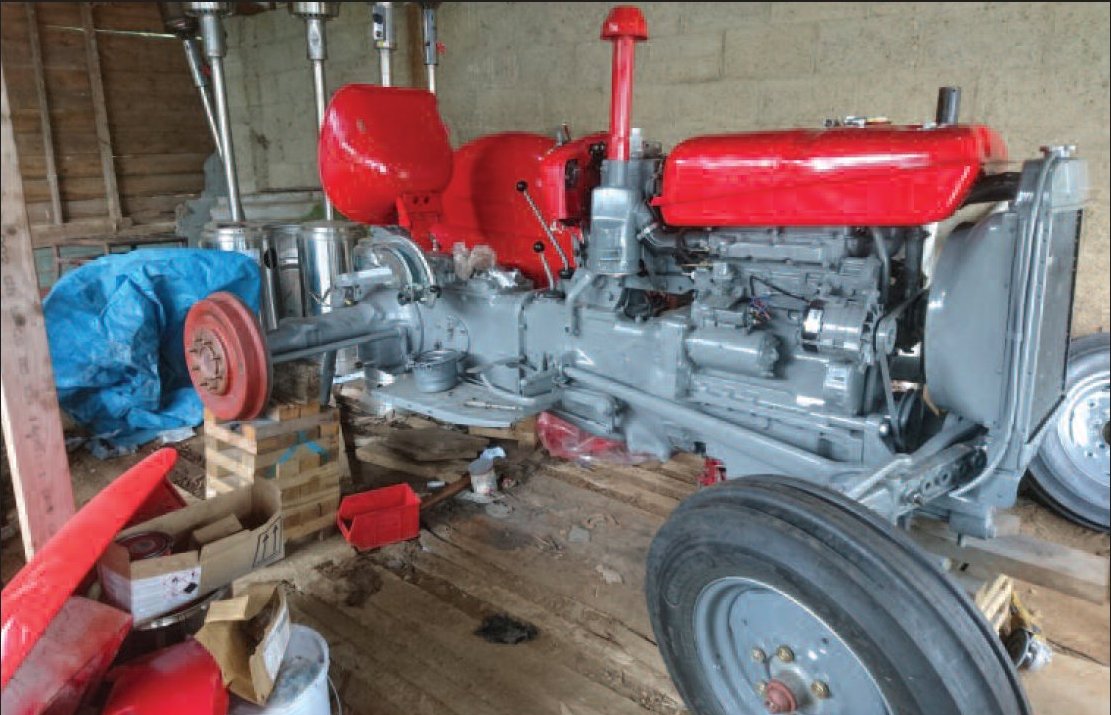
When I stripped this tractor down for painting the whole tractor had been painted more than once, but remains of grey metallic were still visible on the wheels and more importantly under the battery tray was definitely grey metallic.

The question is, who is right about the colour scheme – AGCO colour chart, or colour brochure stating the following:-

DISTINCTIVE STYLING

The distinctive two-tone colour scheme places the Massey-Ferguson 35 in a class on its own. Wheels and chassis are in metallic Flint Grey whilst the sheet metal work is bright Rich Red.

As a footnote I have a colour brochure with a 3 cylinder 35 that appears to be painted metallic grey.

To add to this controversy AGCO state in their colour chart that there is a Mk3 version of the FE35 painted Stoneleigh Grey with Super Red tin work.
The FE35 Mk1 was launched with the Engine Gold & Light Grey colour scheme until serial No.74655. Then designated the MF35 Mk2 with the Super Red & Flint Grey Metallic colours. My research to date comes to the conclusion that Flint Grey Metallic was used up to the end of production at serial No.166595 in November 1959, with the introduction of the 3 cylinder model, also the first 65s were painted Flint Grey metallic. At what serial number did the Mk3 version painted Super Red & Stoneleigh Grey come in, and what other changers were there? All publicity photos of the 4 cylinder tractor appear to be painted metallic, even the ones rolling of the production line at Banner Lane.

Any information with serial numbers of changes made to these models would be more than welcome, direct to me or the editor for inclusion in the next Journal.

Published in Journal No.60 Winter 2008/09 : John Groves


MF Multi-Power 🔑

Most members will be aware of the fitment of Multi-Power to some MF tractors, from the 35.65 era onwards. What is not always understood is the reason for the development of this system, its benefits and its workings.

Multi-Power was a MF innovation, first introduced on a MF35 on the 25th June 1962 and followed on 27th August 1962 by its introduction on a MF65. Some of the aspects of Multi-Power design are evident in tractor transmissions of today: i.e. the hydraulically operated clutch pack.

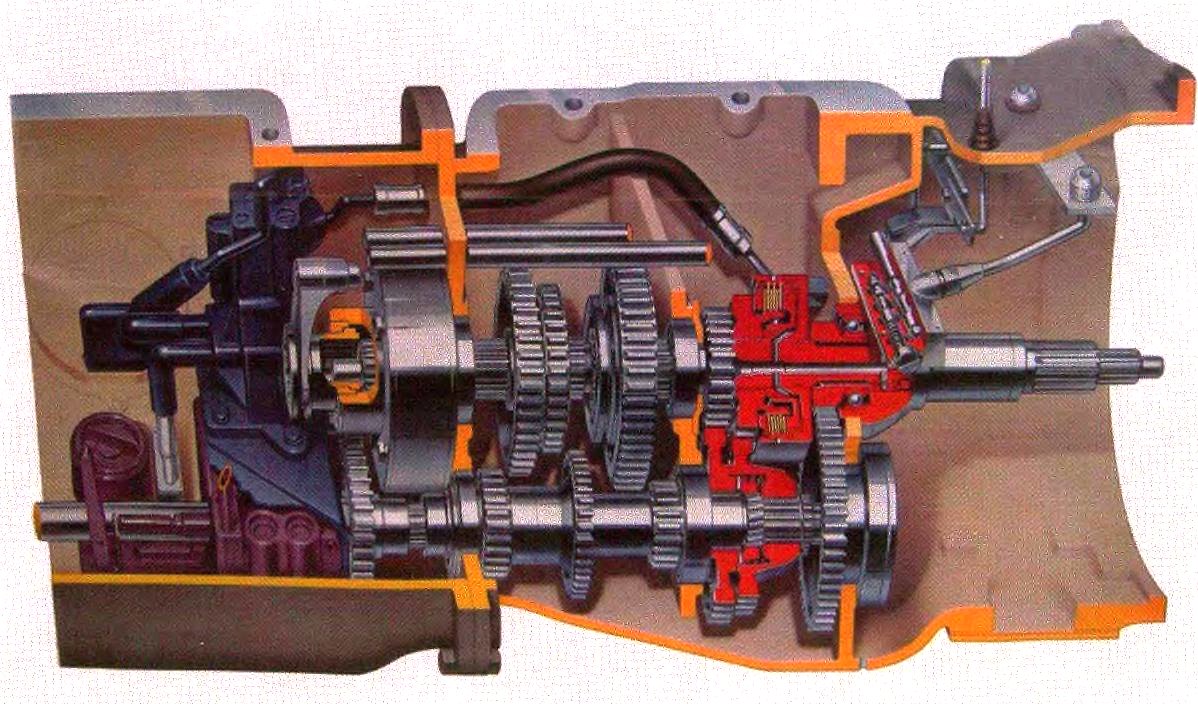
With its introduction users were offered this system as an optional factory fitrnent. It provided the facility to split a gear ratio on the move and underpower, thus doubling the number of gear ratios available. To achieve this, additional components were required within the standard transmission, and these were placed on the input side of the main gear box. The additional components were two pairs of constant mesh gears: one set of the standard ratio, the other offering a step-up or overdrive ratio. A free wheel unit, known as a differential clutch coupler, in principle operating rather like the Bendix drive on a starter motor. A hydraulically operated multi-plate clutch. Within the clutch bell housing was placed the oil control valve, and its mechanical linkage, which terminated with a small lever on the dash panel. The small dedicated hydraulic pump, that is required to energize the Multi-Power system, is positioned on top of the existing main hydraulic lift pump: this small pump is gear driven, from a third gear wheel attached to the PTO shaft, just forward of the main hydraulic pump via an intermediate gear wheel.

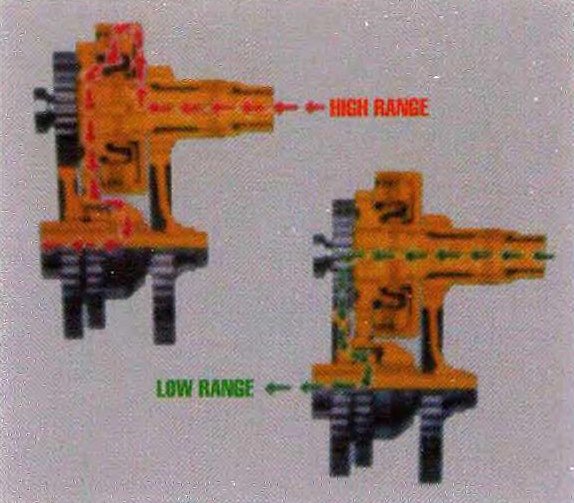
I have used the general arrangement photograph from a MF Service Manual and posters. Basic operation in Multi-Power High – The multi-plate clutch on becoming pressurized with oil becomes a solid unit so that drive is taken from the main drive shaft via the input overdrive pinion assembly to the lower overdrive gear, splined to the layshaft of the main gear box via the differential clutch coupling: the standard drive gear assembly rotates freely on the layshaft. When low ratio is selected there is no pressure within the multi-plate clutch, so therefore the main drive shaft drives the main input pinion, thence the standard drive gear assembly, the differential clutch coupler remains solid in this case, as it is splined to the layshaft, so drive is transmitted.

This diagram shows the path of the drive in both Low and High range.

I have used the analogy of Bendix drive to describe the differential clutch coupler in a way, perhaps one could think of it as functioning rather like the free wheel on a bike. It is for this reason, that tractors fitted with Multi-Power, cannot be tow started AND most importantly Multi Power High MUST be selected when engine braking is needed, i.e. when descending hills. If low is used there will be no engine braking thanks to the free wheeling effect of the differential clutch coupler.

Ford overcame this disadvantage with their system introduced in the mid-1970s which was known as Dual Power, this consisted basically of two hydraulically operated clutch packs; Dual Power was an underdrive system.

Thanks must be conveyed to Ernie Luxton in that he kindly talked me through the workings of this system: however any errors are of my making.

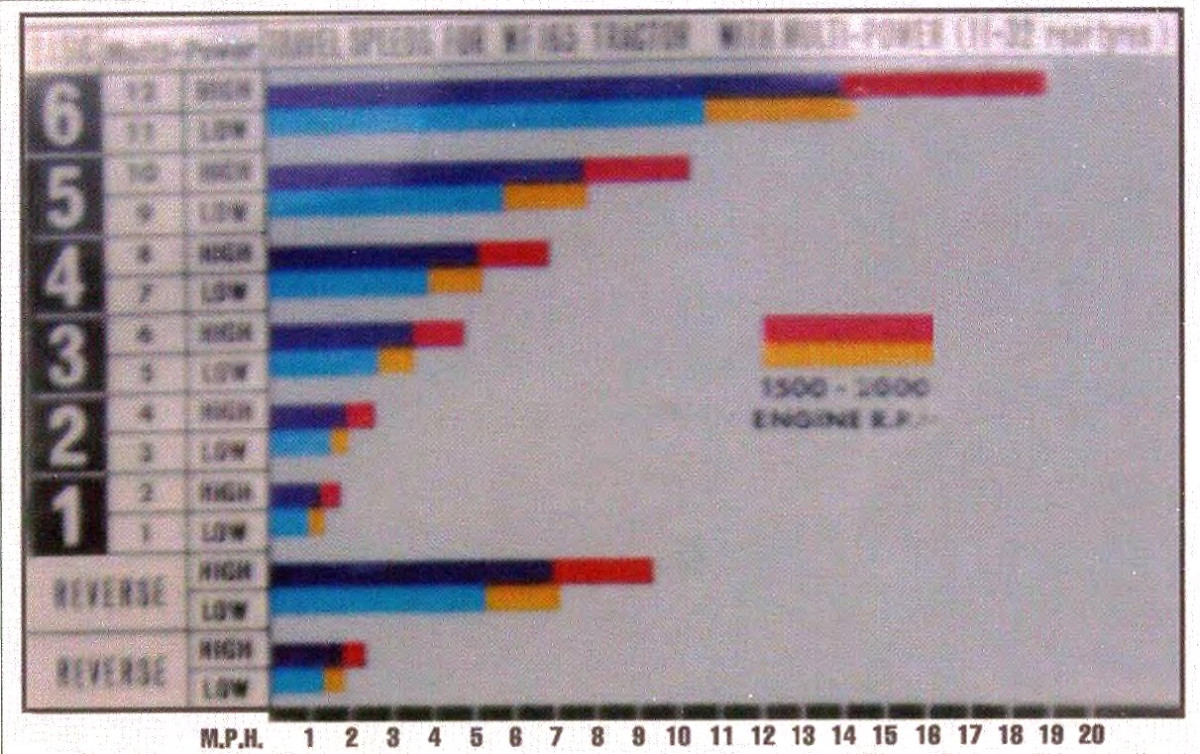
The chart shows the difference in ground speed in all gears, that is obtained when Multi-Power is fitted.

Published in Journal No.70 Spring 2012 :  Mike Thorne


MF Type C Lift Pump Repair MF35, 35X, 135🔑

Sandy Donald – Technical Team

Fitting a repair kit to a C type lift pump as fitted to, MF 35, 35X and early 135.
(Newer MF 135 tractors have a lift pump without the glass bowl).

Start with turning the fuel off at the tap on the bottom of the tank, clutch pedal side.
Undo the plastic and metal pipe going into the lift pump, 1/2″ AF spanner size, then undo the two 1/2″ nuts holding the pump to the engine. Dismantle the pump and clean all the parts for inspection. To remove the diaphragm, hold the bottom body and push and turn the diaphragm a quarter of a turn to remove, this gives you access to the spring and top hat seal. The two old valves will flick out of the housing with a screwdriver, any marks left in the housing can be removed with the back of a half round file.

List of parts to be reused
The two parts of the main pump body, glass bowl, and bracket for holding glass bowl, the five screws and the rubber top hat seal. Some kits don’t supply this seal.


New parts supplied in the repair kit.

Parts of the dismantled lift pump.

Tools required for the repair. A small socket that fits over the three legs of the valve, a small 3mm punch to tap the valves fully home, a screwdriver, a half-round file, a centre punch to pin the valves in and a small hammer.

After checking the new parts, the next job is to fit the two one-way valves. Valve one is the suction valve shown on the left in the picture below. This valve opens when the pump draws the fuel from the glass bowl and closes when the pump makes pressure to push the fuel to the filters. The valve on the right in the same picture works in the opposite way, closing under suction and opening under pressure. Each valve has a small gasket under it to help seal it in the housing. The best way to fit the valves is to use the small socket to start the valves into the housing then tap fully home with the small punch. The valves are held in the housing with three small centre punch marks around each valve.

Both replacement valves now fitted.

To reassemble the pump, place the top hat seal and spring into the bottom housing then carefully push the diaphragm into place and turn a quarter of a turn. Then carefully place the top cover onto the bottom half and fit the five screws, tighten all five screws evenly till tight then slacken off half a turn, now move the lever on the side of the pump 2 or 3 time to centralise the diaphragm then retighten all five screws. Now fit the new gauze and rubber seal into the lift pump, place the glass bowl onto the seal and hold in place with the wire bracket, do not overtighten the glass bowl.
On an original A C lift pump, it has a small drain hole in the bottom section on the left hand side, this is to give you warning that the diaphragm has started to leak diesel into the engine.
If you have air in your fuel system on a tractor, or any vehicle fitted with this type of lift pump, the air can only get into the system through the pipe work before the lift pump or the lift pump itself. After the lift pump if you have a bad connection, you Dirty fuel filters can also cause air in the
will have a leak rather than sucking air. system at the injection pump.

The orange arrow indicates where the small drain hole is on the original A C lift pumps.

The pump is now ready to refit to the engine with the new gasket.

Published in Journal No.104, Spring 2023 : Sandy Donald – Technical Team


MF35 Rear Linkage Restoration 🔑

The MF35 rear linkage, including lift arms, lift rods, levelling assembly, pins etc, become very worn and tired on older tractors. The link arm ball ends can get so worn that the ball will no longer stay in its socket. We can rectify this by either replacing the whole link arm or by the welding on new replacement ball ends.

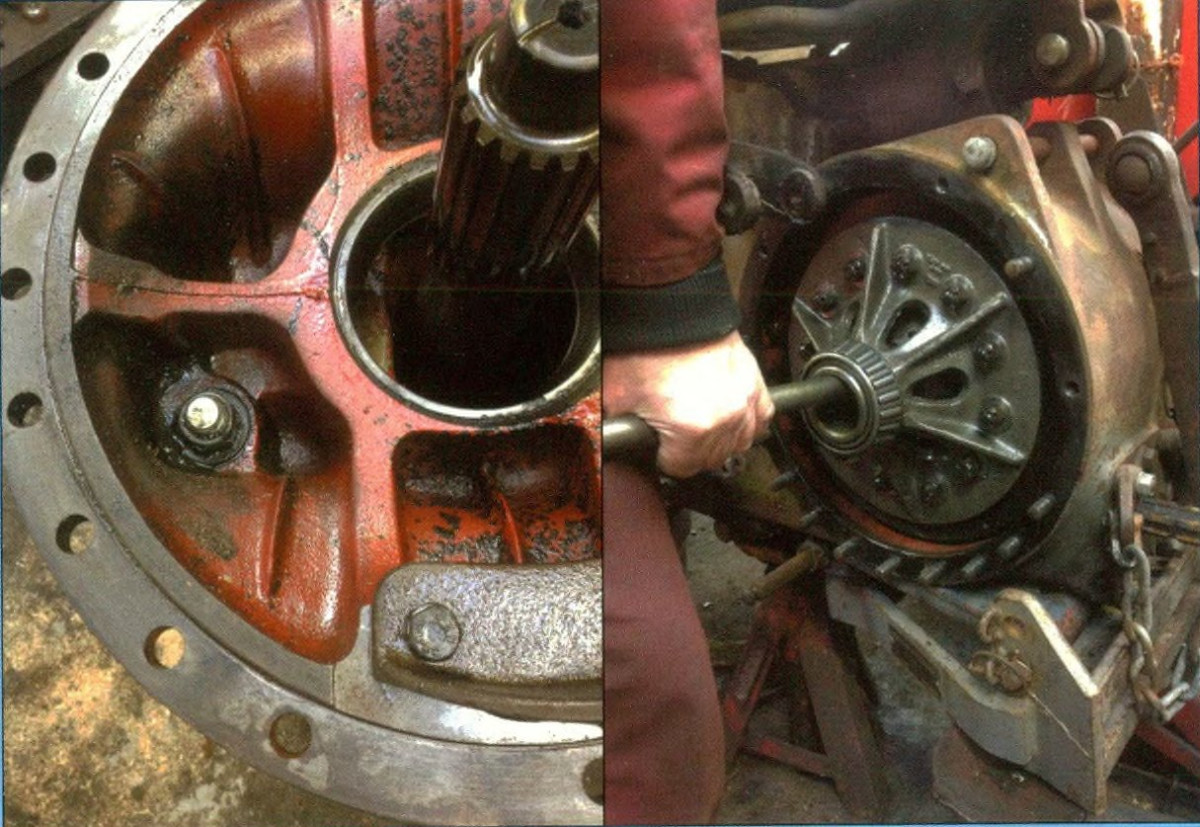
The anchor pins for the lift arms which are situated in the rear axle trumpets can also become very worn and sometimes break. These pins are held in place by an internal nut. To replace the pins a partial strip down of the rear axle is required. The left hand (near side) trumpet housing has to be removed. Jack up the rear of the tractor and remove the nearside wheel. Make the tractor safe by using axle stands or suitable blocks. Drain the rear axle oil ITom the two drain plugs on the nearside of the gearbox and the centre housing. The brake rod clevis pin also needs to be removed.

The ring of nuts holding the trumpet housing to the centre axle can now be removed and the trumpet removed. Take care this is heavy, an engine crane is ideal especially for assembly. With the trumpet removed the anchor pin nut is accessible, (see bottom left photo). With the nut removed the pin may need a little persuasion with a hammer to remove it ITom the housing as they are a taper fit. To replace the offside anchor pin we need to remove the crown wheel. Again this is heavy and is not an easy piece to handle. Sliding a bar or tube up the half shaft hole makes it a little easier to manhandle. (see bottom right photo). With the crown wheel removed we can now replace the offside anchor pin.

When refitting the link arms the castle nut and washer from the anchor pin should grip the link arm ball firmly, this will ensure the wear takes place on the link arm ball rather than the anchor pin.

Published in Journal No.76, Spring 2014 Jim Hall


MF35 Rebuild 🔑

Part one of a regular update from Stuart Mitchell of his eBay MF35 purchase and restoration.

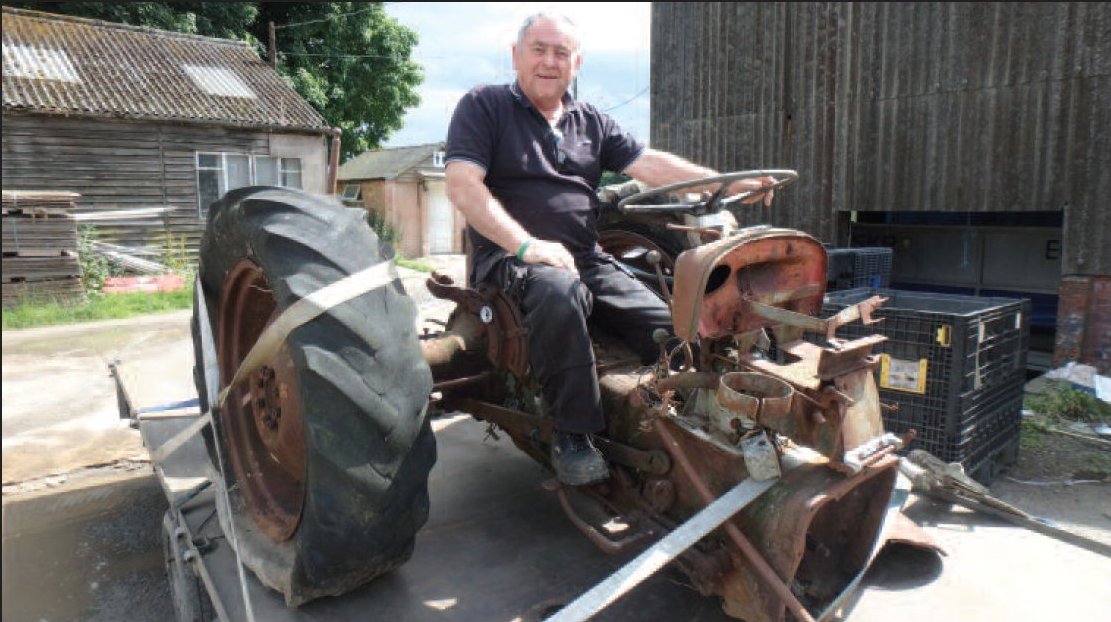
I started looking on eBay at Ferguson adds back in June 2016. There it was a MF35 missing the engine, just a rear end and part of a front axle at £250. So I made an offer of £200, that won’t break the bank (how little did I know then). Two days later my offer was accepted. On the 13th of July 2016, off I went with trailer in tow to Llandovery to pick up the MF35 only seen in a set of photos on eBay’

It was a nice sunny day and I found the address which was a gateway to a field and bam, I phoned the owner who turned up twenty minutes later on a smoky old telehandler.

So into the bam we went to dig out the rear end unit. We loaded it onto my trailer and went back into the barn to look for the rest of the MF35. Soon I was on the road, all loaded and strapped down for the start of a long journey. Two and a haft hours later I arrived home with the MF35. At this point my wife didn’t have any idea of what I was up to (sleeping dogs and all that).

The first photo is of me sat on the rear end of the MF35 on my trailer all smiles (no tears yet).

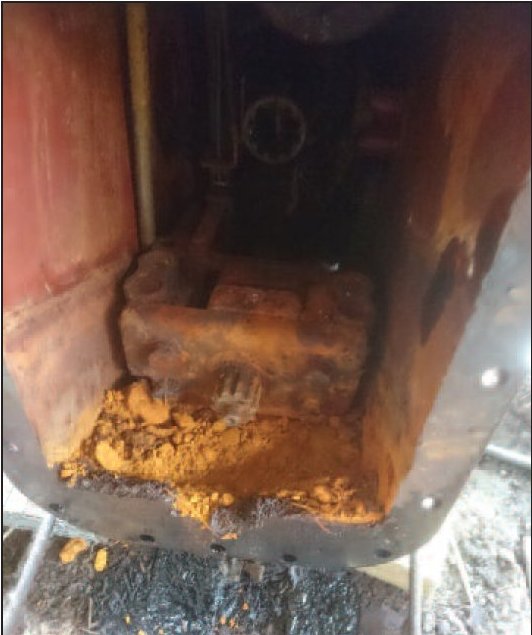
The next day with the help of a Moffett lift truck it was unloaded and I discovered that the drain plugs were missing and you could see the tide mark were it had been sat in water well above the plug holes, (there will be trouble ahead) as the song goes.

The MF35 was placed in its new home, an old elephant shed (that’s another story). For the next year there was little action, just keeping soaking things in diesel to start freeing it all up to start the strip down.

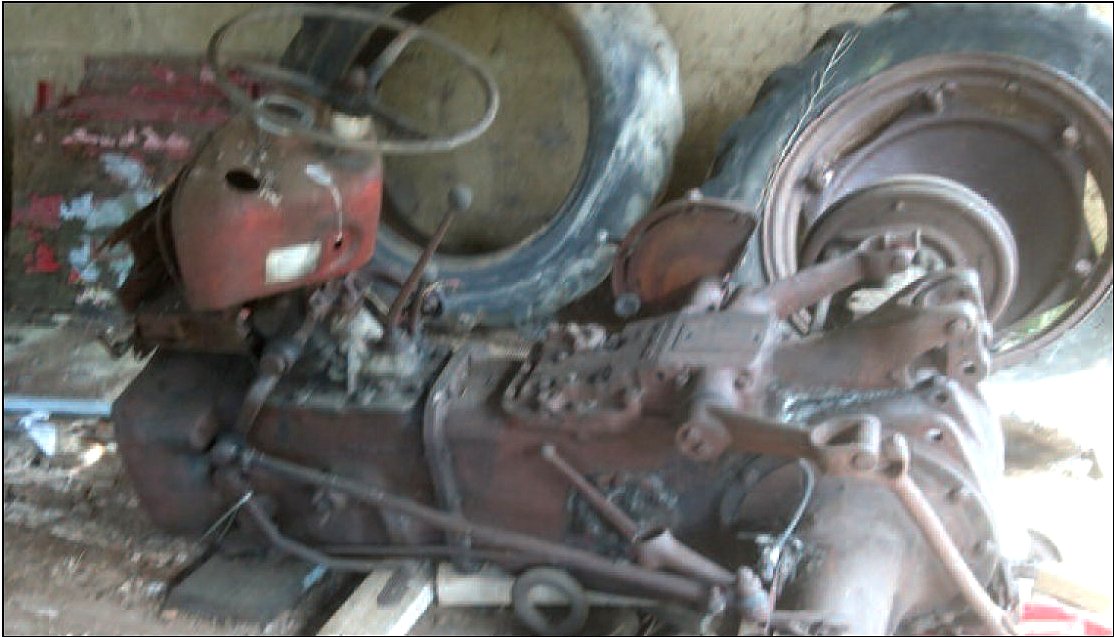
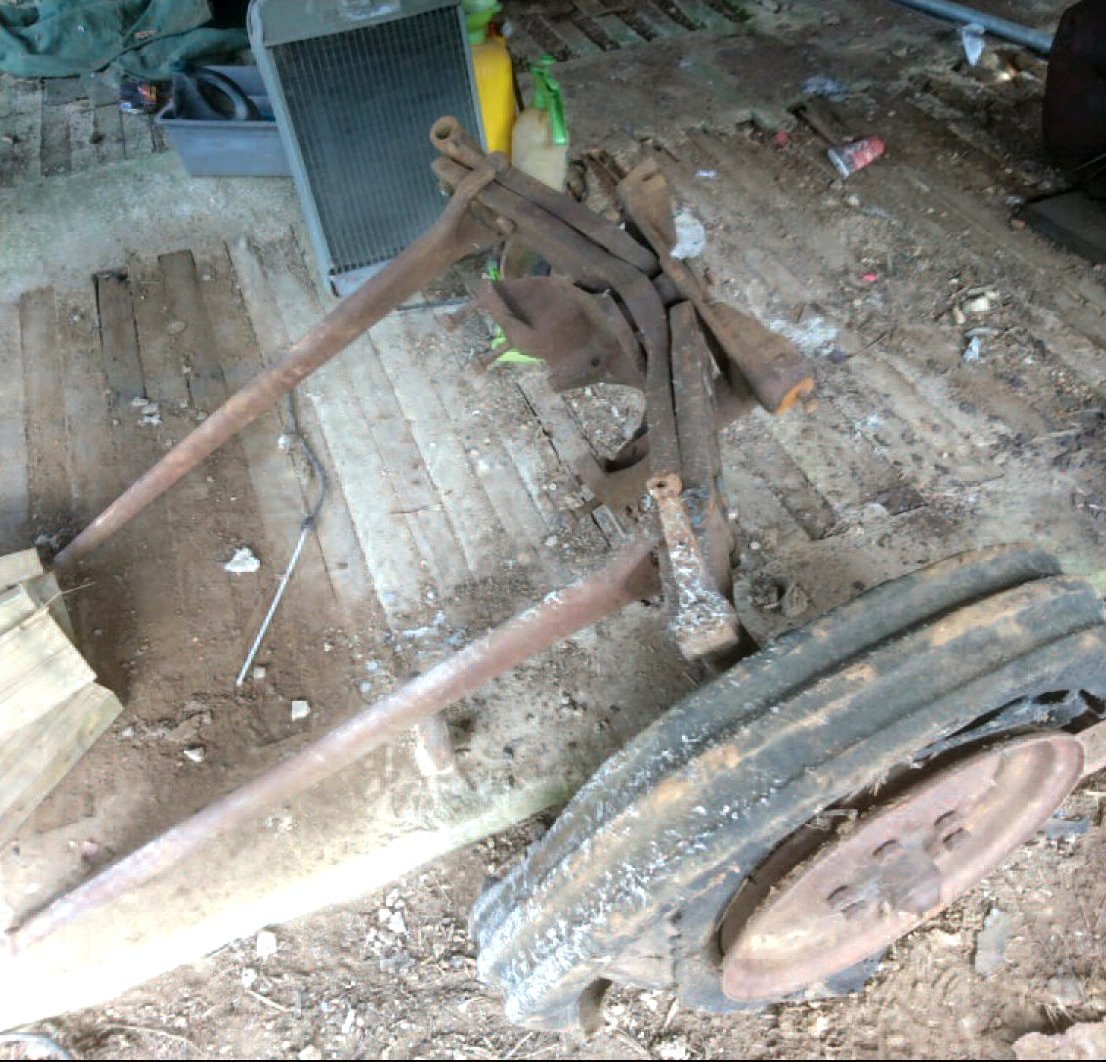
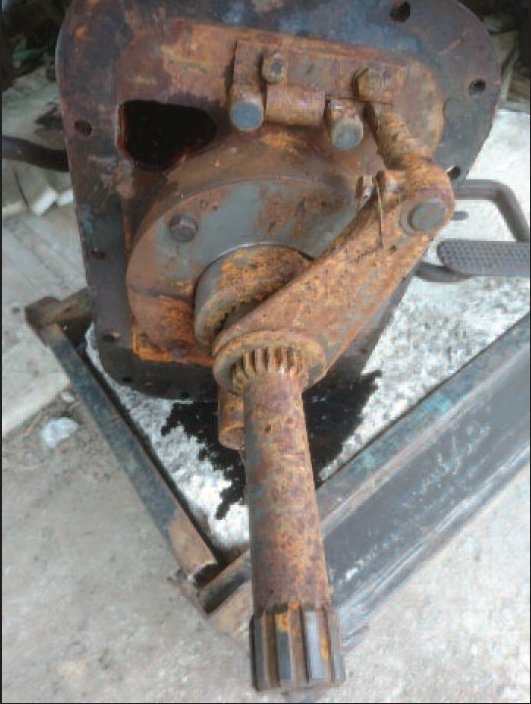
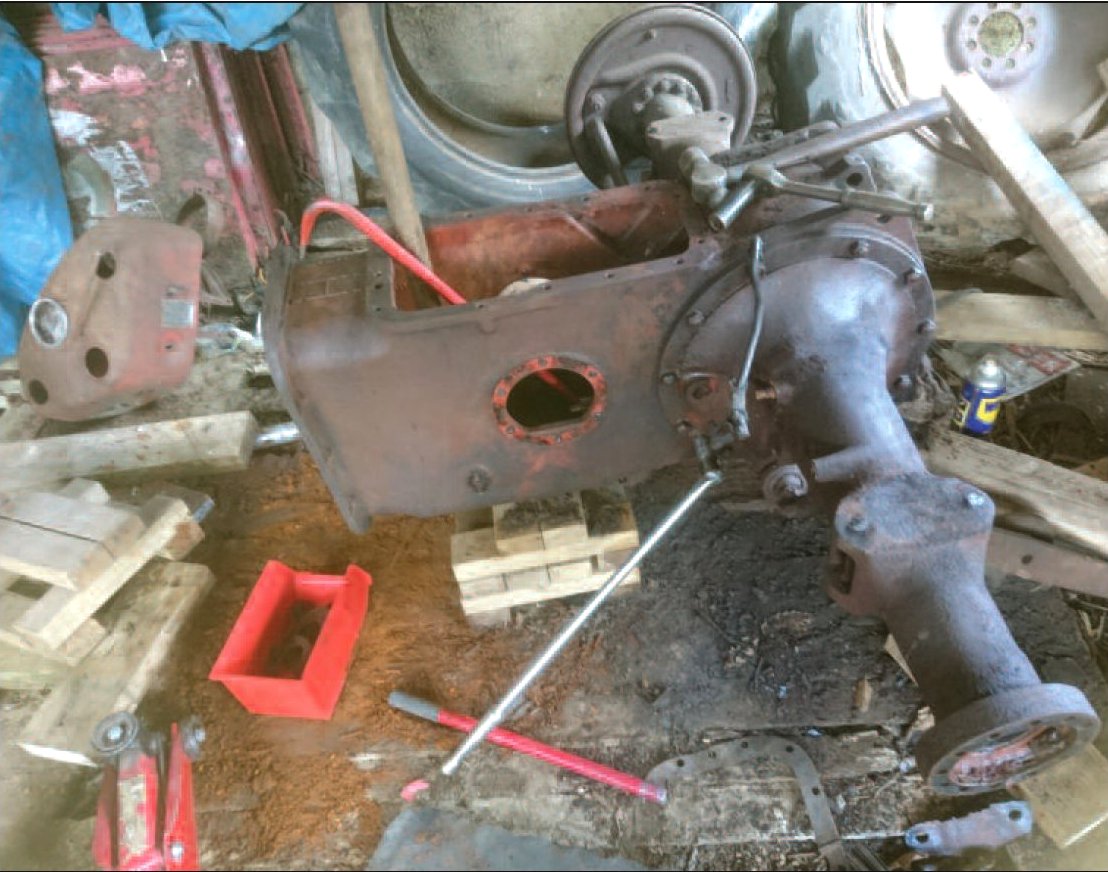
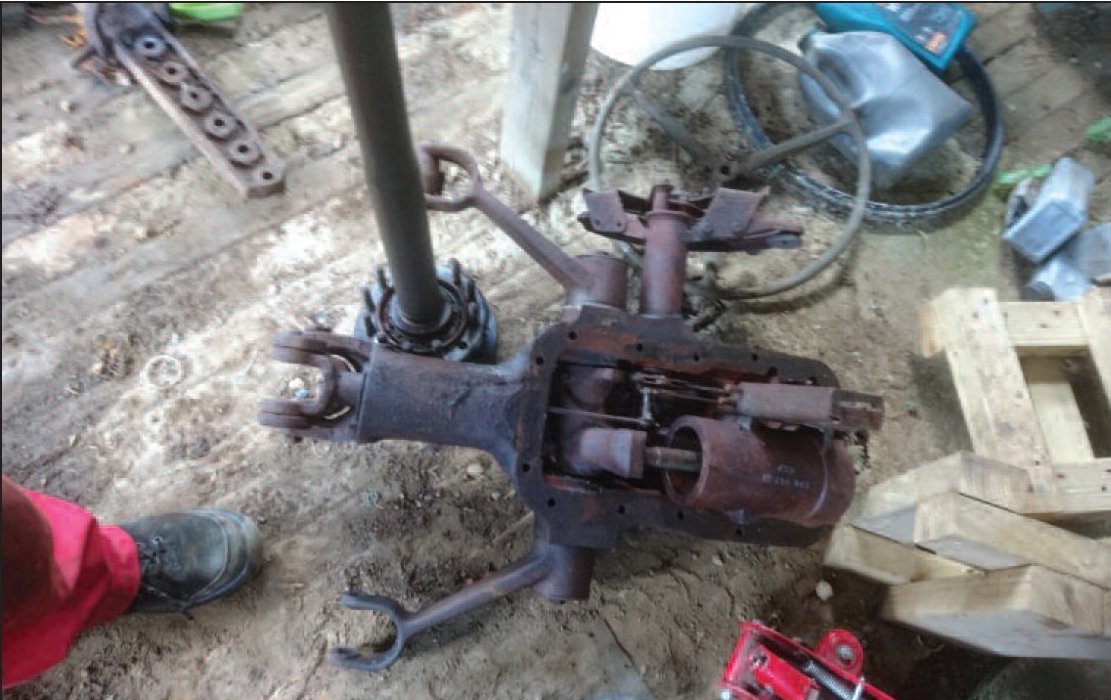
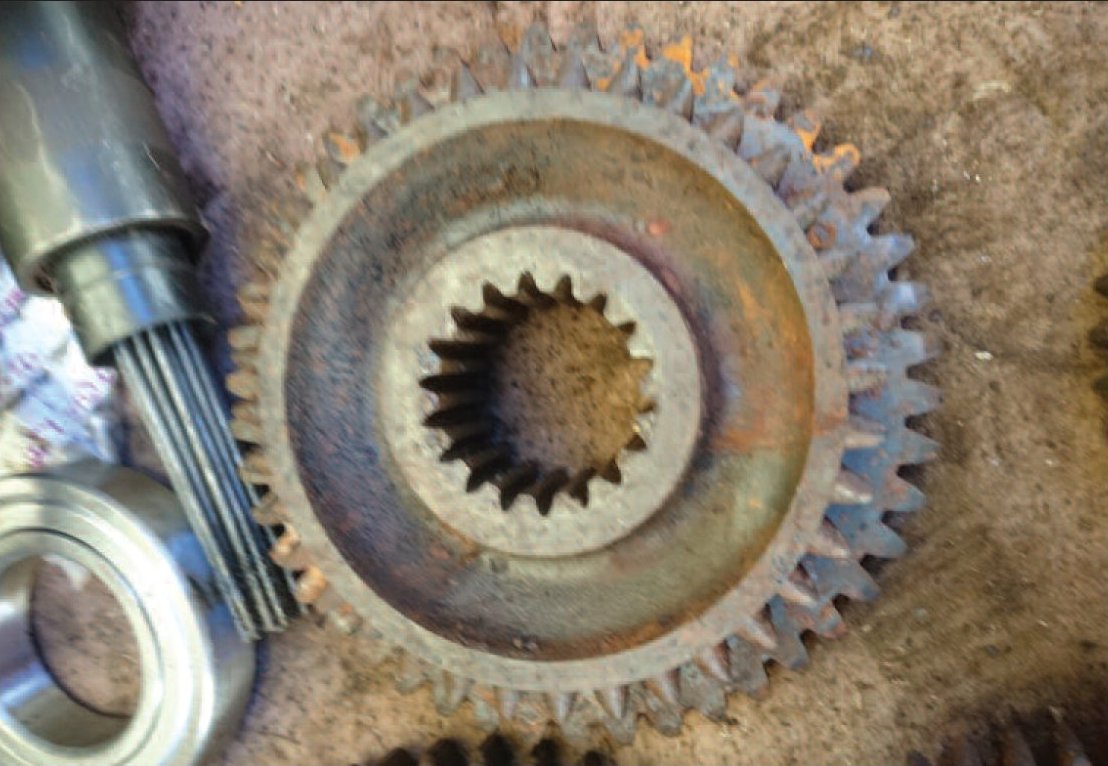
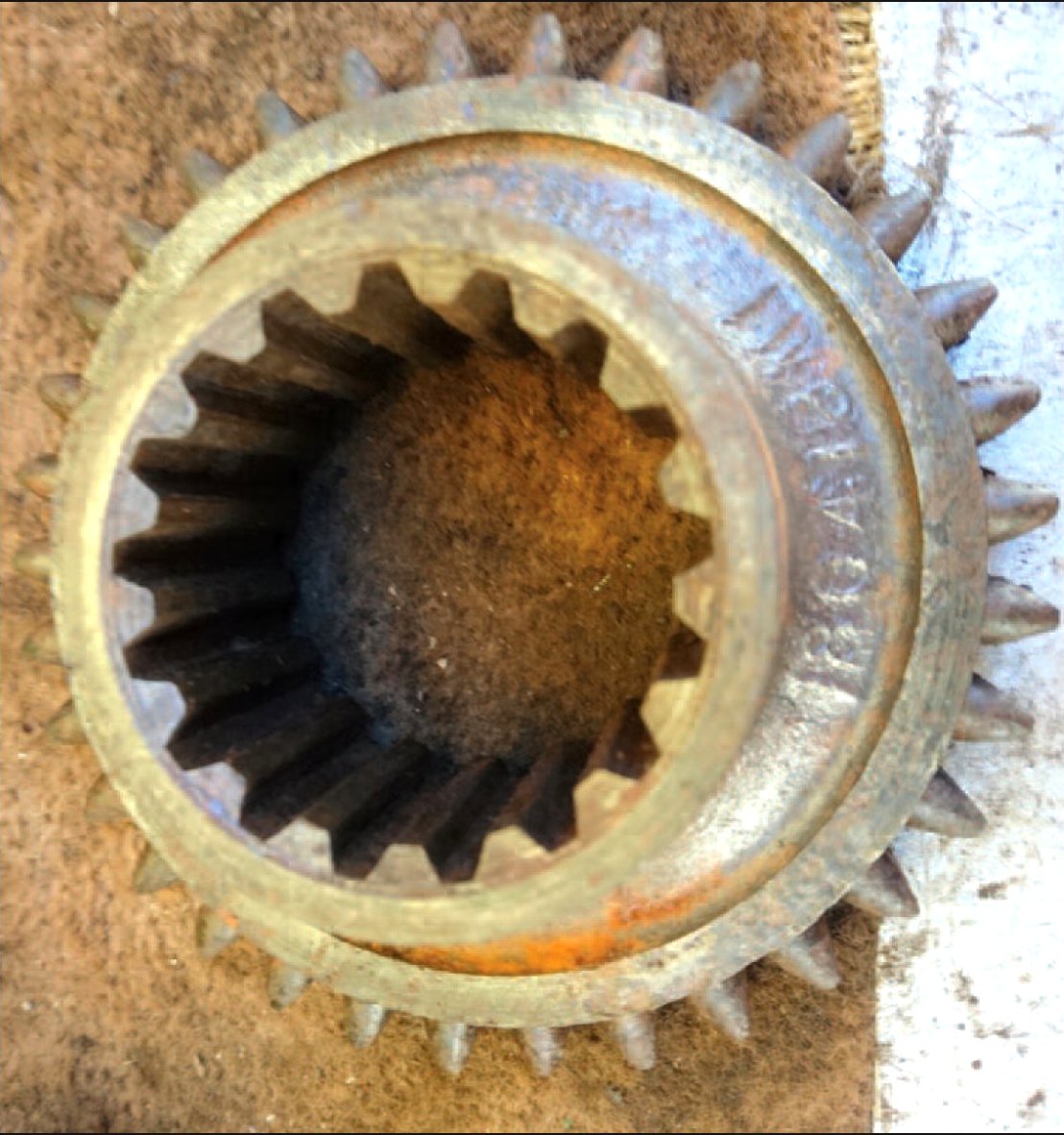
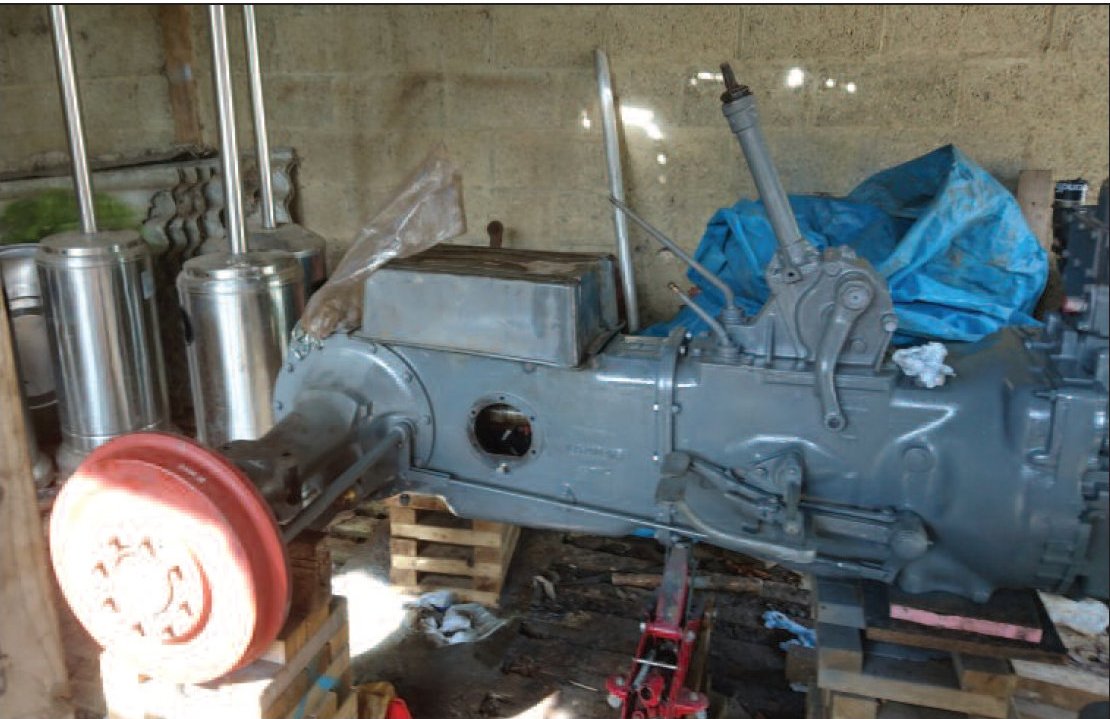
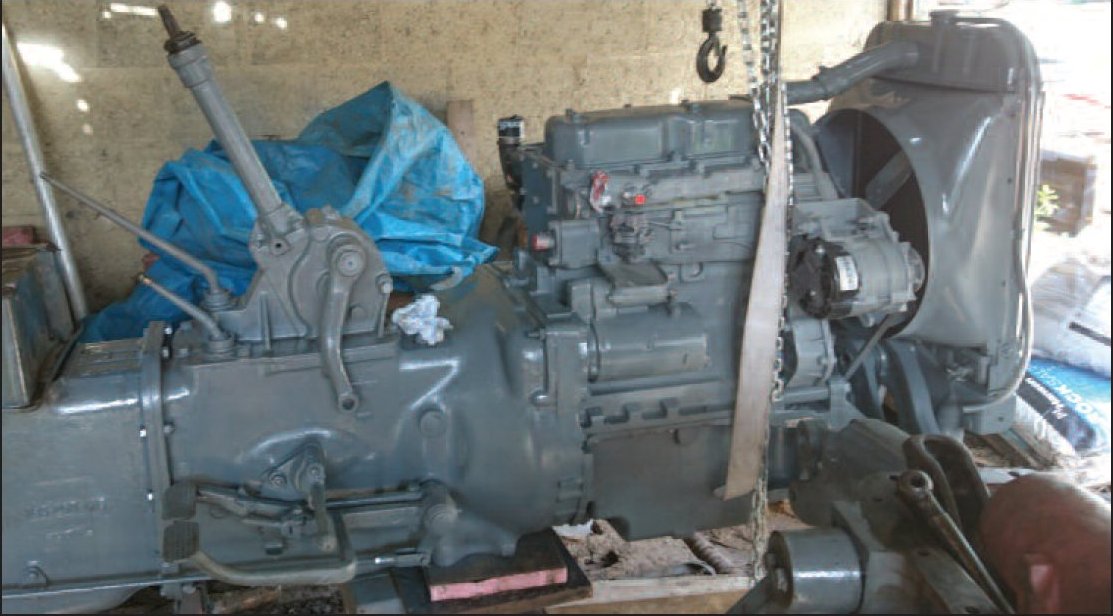
On a cold day to the end of November I started removing parts, all tyres and rims were beyond useable condition, the tyres rotted out and the rims were rusted paper thin. Off carne the steering box from the top of the gearbox and the gear box was detached from the back end. That’s when I discovered the state of the inside. (see photos). Time for a stiff drink and think about Christmas.

That’s it for now, watch out for part two in the next issue ‘the gear box and the gas torch and my discovery of some magic liquid’.

Published in Journal No.98 Summer 2021 : Stuart Mitchell


Massey Ferguson 35 rebuild Part 2

With Christmas over it was time to look at stripping down the removed gear box. As I said in part one with the drain plugs removed water must have been up to six inches deep in the back end and gear box. The gear box was totally sized, I was only able to remove the epicyclic unit from the rear of the box and the selector forks by hand using hand tools and with the aid of a hammer and punch. With the input housing and shafts removed, more drastic measures were needed and a stiff drink.

Time to order a spanner that has never failed to remove any nut. A butane/oxygen cutting torch. Sorry, no photos of me working on my own, I was unable to use the cutting torch and a camera at the same time (the wife still had no knowledge of what I was up to) .

By cutting the rear and lower bearing sets and with care the circlips by just heating them, I managed to remove both lay and main shafts.
I started to clean up all the part using a drill mounted wire brush. This was not working well, so back to the good old YouTube.com (if it’s been done it’s on YouTube). That’s where I found the ‘magic liquid’ apple cider vinegar. Someone had filled a seized motorcycle gearbox with it, and after a week it was freed off and could be turn over. That was good enough for me. I found some on eBay and ordered 25 Us.

With the use of a bin with a lid, I placed some of the gears and parts in it. After three or four day they looked like new, apart from heavy pitting on the rear teeth.

The gearbox was cleaned off and repainted and a number of parts ordered from one or two of the vintage tractor part suppliers.

Time to start on the rear end. Apart from cutting the wheel nuts off, it all came apart fairly easily. Ram plate off, PTO shaft out and hydraulic pump removed.

With the use of heat from the gas torch off came the brake drums, the only place oil shouldn’t be. It was there from leaky half shaft seals (would you believe it). Half shafts removed and brake backplates off (for later work).

On removal of the L/H trumpet housing and the diff it was clear to see the water damage to the crown wheel was passed any clean up and would need replacing (stiff drink time). My £200 Ebay find is starting to look costly (I have started so I will finish).

Looking in the rear end under where the crown wheel fits was the remains of a mouse nest, how did he get in there?

All the bearings were removed by running a bead of weld around them (they all fell out, no puller needed). Both trumpet housings and rear end housings were cleaned up and painted.

Now the world has gone into lockdown and I am forced to abandon work.

Next time ‘the start of the rebuild and a new engIne.

Published in Journal No.98 Autumn 2021 : Stuart Mitchell


Massey Ferguson 35 rebuild Part 3

Now we’re starting to come out of lockdown and its time to make a start on reassembling. With the rear end casting cleaned and repainted, this was mounted on blocks ready to rebuild.

The differential was stripped, checked out and rebuilt only needing new thrust washers and a new pinion was fitted. Following the painting of the trumpet housing new bearings were fitted for the crownwheel. Next I fitted the right hand trumpet housing to the main casting allowing the crownwheel assembly to be refitted. The left hand trumpet housing was fitted next. Its now starting to look more like a tractor.

Time to start on the gearbox. Following the cleaner of the gears using the apple cider vinegar (magic stuff) it was slowly and painstakingly reassembled. This took me back to my time with Cherwell Tractors. With the help of two strong colleagues the gearbox was refitted to the back end casing.

I now looked at stripping and rebuild the half shafts. I have a small machine shop not far from me who made up a plate to allow me to press the old bearings off. So with the pressure of nearly 30 tonnes and some heat they both came apart. The reassembly with new seals and bearings went straight forward. With brake backplates cleaned, both were refitted to the trumpet housings. Now I was able to check the crownwheel and pinion back lash using engineer’s blue.

Now thinking about the engine, do I rebuild an engine out of old parts or do I go for a new engine. When looking at the cost it was cheaper to get a new engine, so instead of the 35 engine I went for a 135 engine as this is a better starter.

I fitted a new clutch assembly, thermostat housing and inlet and exhaust manifold’s. I decided not to use a dynamo and control box but to go to the later alternator, (some will say it’s not in keeping with its original specification).

The engine was remarried to the rear end assembly, and time for another coat of paint.

As yon all have seen from part one I only had the rear end of the tractor. So radiator, fuel tank, fuel pipes and filters etc had to be found. All these items were sourced with the help of a tractor dealer in the Midlands.

The hydraulic pump was beyond repair so a new one was purchased. The hydraulic ramplate was stripped, cleaned and rebuilt with new ram and piston. The quadrant controls were beyond repair so a replacement was found. The ramplate was reassembly and re-fitted. This really now is looking like a tractor.

I now turned to the front axle. From my earlier photographs you’ll see the condition on this. With the aid of a press the arms were stripped out cleaned and rebuilt with new bearings in the wheel assemblies.

With the aid of eBay I was able to acquire a genuine bonnet. This was stripped and shot-blasted and most of the dents removed. New bonnet lower panels and wings were needed before painting could start.

Most of you will be aware electrical fuses were not fitted on a tractor of this age, so following the fitting of the instrument panel a fuse system was fitted together with a road lighting set.

Brakes were reassembled with new liners. New tyres and rims were fitted with only one centre dish being usable.

Time for a road test. This is the best part seeing the fruits of your labour come to fruition. During a family get together my two granddaughters must have picked up what I was doing and let it slip. My wife was not amused so humble pie was on order but thankfully she’s now got over the shock.

With the help of the Ferguson Club the tractor was registered, insured and now is able to he used on the road.

So, I’m the proud owner of a lovely MF35. I hope my story has inspired you to follow my path, like so many others who have done the same thing.

There are still tractors out there looking for new owners to put them back together.

Published in Journal No.100 Winter 2021/22 : Stuart Mitchell


MF35 23C Clutch 🔑

More memories of my time as a young apprentice

I have written many harsh words about the 4 cylinder 35 but here are 2 more points I thought might be of interest.

Firstly the double clutch which I can only describe as junk. Although improved very slightly with the fitting of a fluted flywheel, when the clutch was put to work, particularly with a loader on, it didn’t last very long. There was however, a serious design problem which came to light in the very early days.

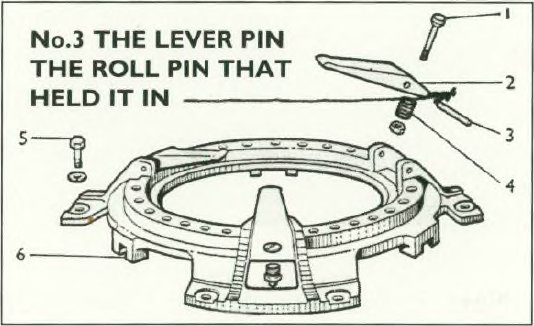
I split the first 35 at Bedale Garage tractor shop as a young 16 year old apprentice, as the clutch on this tractor was non-existent. The fault was there for all to see, the pin that carried the clutch lever (better known as the finger) had worked it’s way out of the clutch and was rolling around in the bell housing leaving the finger to be only held in place by an adjusting screw. This carrier pin was only held in place by a thin roll pin, a stupid idea, however I refitted the pin with a new roll pin and the job was done.

However, within a week I was doing the same job with the same problem on another 35, again only a few months old. My foreman Maurice Wilson, a brilliant engineer who I was privileged to work under, rang M-F and explained this fault and asked if we could weld a washer shaped like a D on to the pin and also drill a hole at the other end to take a split pin. As M-F agreed to this it was obvious other dealers were having the same problem and these pins were soon modified by M-F to what became D pins.

The same problem occurred many times.

It soon became apparent that this clutch was going to be trouble and it certainly was. I recall doing 22 of the 35- 4 cylinder clutches on the trot in the space of a couple of weeks.

Now a little heard of fact about the 35 4­cylinder engine. Again I stripped down the 1st 35 4-cylinder engine to be done at Bedale Garage which, at 150 hours, needed pistons and sleeves under warranty (I did dozens and dozens of these).

However being the man he was, Maurice Wilson had me strip the cylinder head for inspection. It was very clear that large amounts of oil had been drawn down the inlet valves in particular, the problem being too much oil being supplied to the rockers, drowning the valves and then going down the valve guides. Some engines, the Fordson Major engine springs to mind, had a seal on each valve to prevent this.

M-F must also have picked up on this fault and brought out a modification to restrict the amount of oil going to the rockers. This involved drilling out the oil way in the cylinder head to take a stud, I think 5/16 but remember it was over 50 years ago. The head was then tapped to a depth of 1/2 to 3/4 inch, the stud sawn off to a length so it finished a few thou under the head surface and a screwdriver slot made so that it could be screwed tight. This stud was then drilled I am sure, with a 1/8 drill (not 1/16).

Maurice always made sure that this mod. was done on every cylinder head we did (I did most of them anyway) but how many dealers did this, I don’t know. Has anyone noticed this mod. when examining a cylinder head from a 23C.

Now after reading the Quite Interesting article on page 15, Journal 61 concerning the 28G carb, yes, Arnold Staples is quite correct in that the last TED20s were fitted with this carb and then on to the 35 TVO engine. At the same time the steering wheel was changed to the TEF type. It was said that the TED never really took to this carb and some changed back to the 24T. But going back to John Selley and his problem with starting the engine with the 28G unless he opened the throttle, something must be out of adjustment because, as with the 24T, the 28G carb was fitted with a linkage so that as the choke was pulled bt, the linkage from the choke to the throttle was opened enough to allow the engine to start.
Finally I would like to mention Ken Richmond, another brilliant man who took me under his wing when I was just 15 and made it possible for me to do advanced work which 18 year olds were not able to do. I am sure sure members will remember him.

Published in Journal No.63 Winter 2009/10 : Malcolm Rainforth


FE 35 PTO Lever
Repair🔑

Sometimes you find your tractor PTO lever and cover has oil leaking and your handle has excess free play.

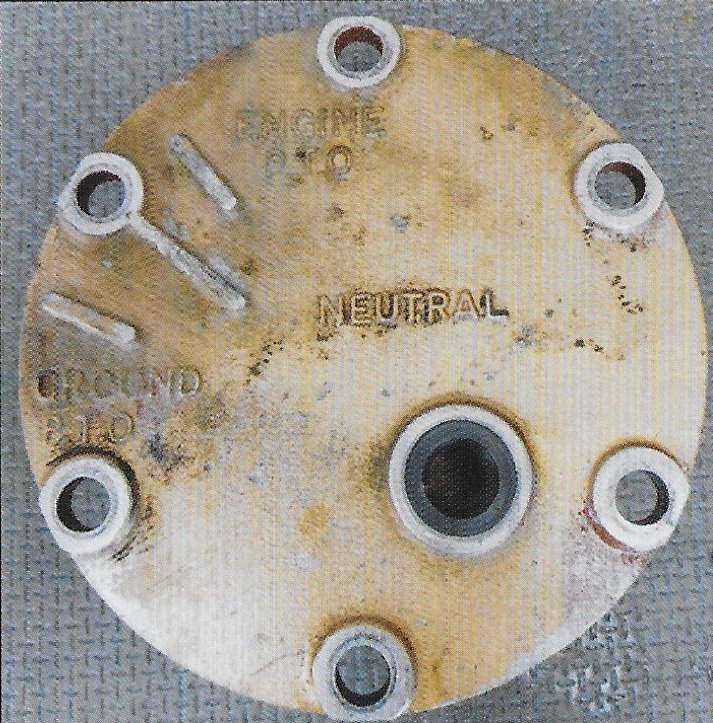
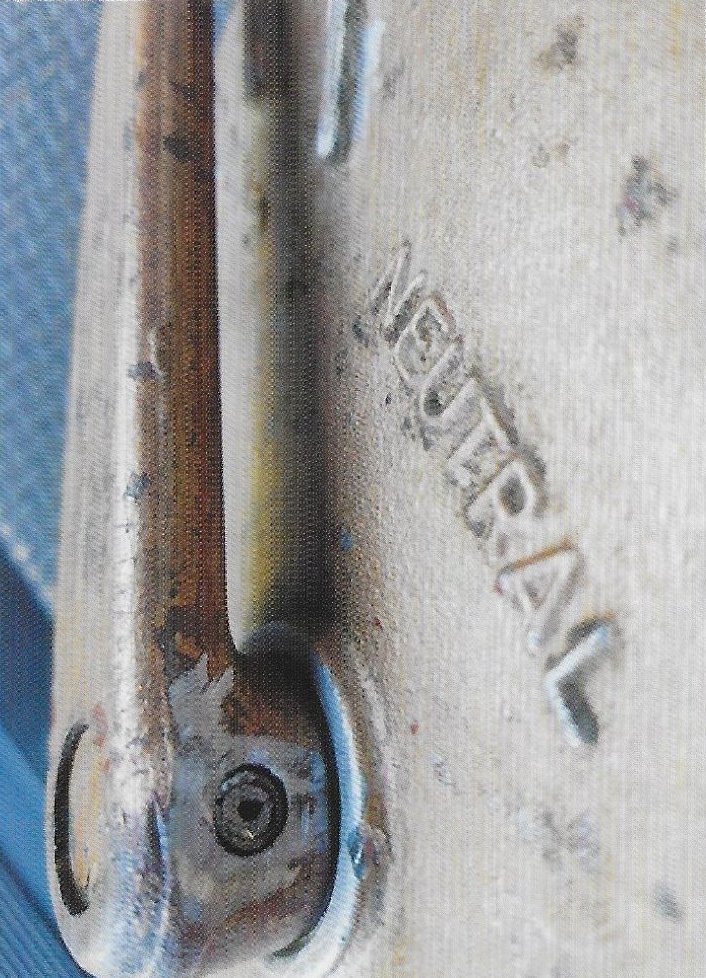
It is worth removing the cover plate and dismantling to replace the seal and improve the play on the lever. Remove the roll pin or bolt to separate the handle from the shaft so it can be pulled through, always be careful not to loose the spring that is used to hold the lever in different positions when assembled.

New seal fitted to plate

This now allows you to see the worn lip seal that will get replaced before reassembly, this can be purchased from your local seal company, part number and sizes are listed at the end of this article. The other important job that needs to be done is to drill out the handle and shaft from 1/4 to 5/16 or 6mm or 8mm, so when all together you can tap in your new roll pin as required, as this will take away the free play.

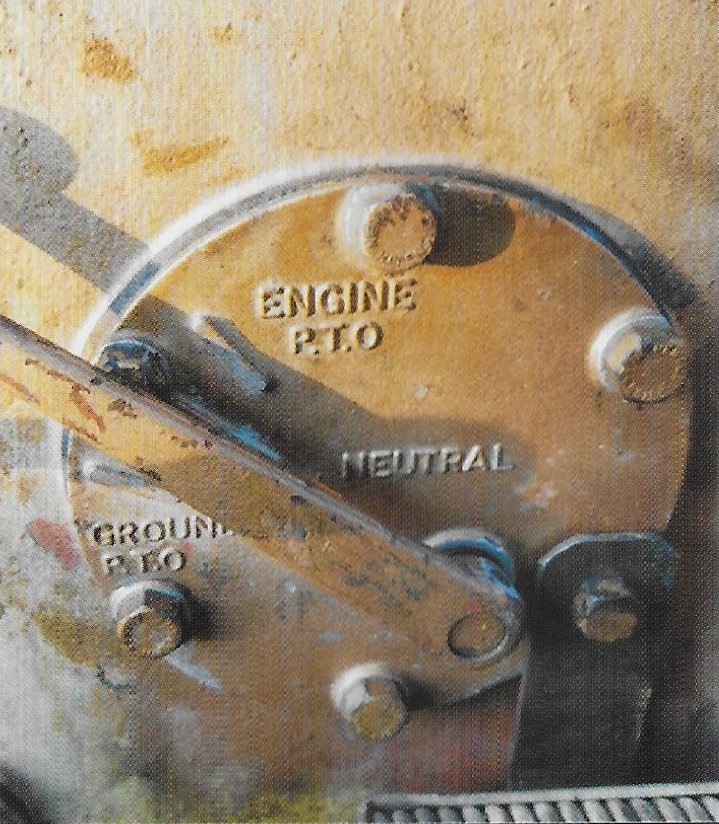
Fit the PTO lever plate back onto the tractor with a new gasket and make sure the lever is connected to the shaft that engages land drive, neutral and engaged. If you use sealer, a top tip is to wipe off any excess silicon as it looks more professional.

New seal size is 5/8 – 3/16 old seal number 610020.
Original seal part number 195 467 MI.

Handle drilled and larger roll pin fitted.

Lever repaired and refitted to the tractor.

Published in Journal No.101 Summer 2022, Kevin Britton


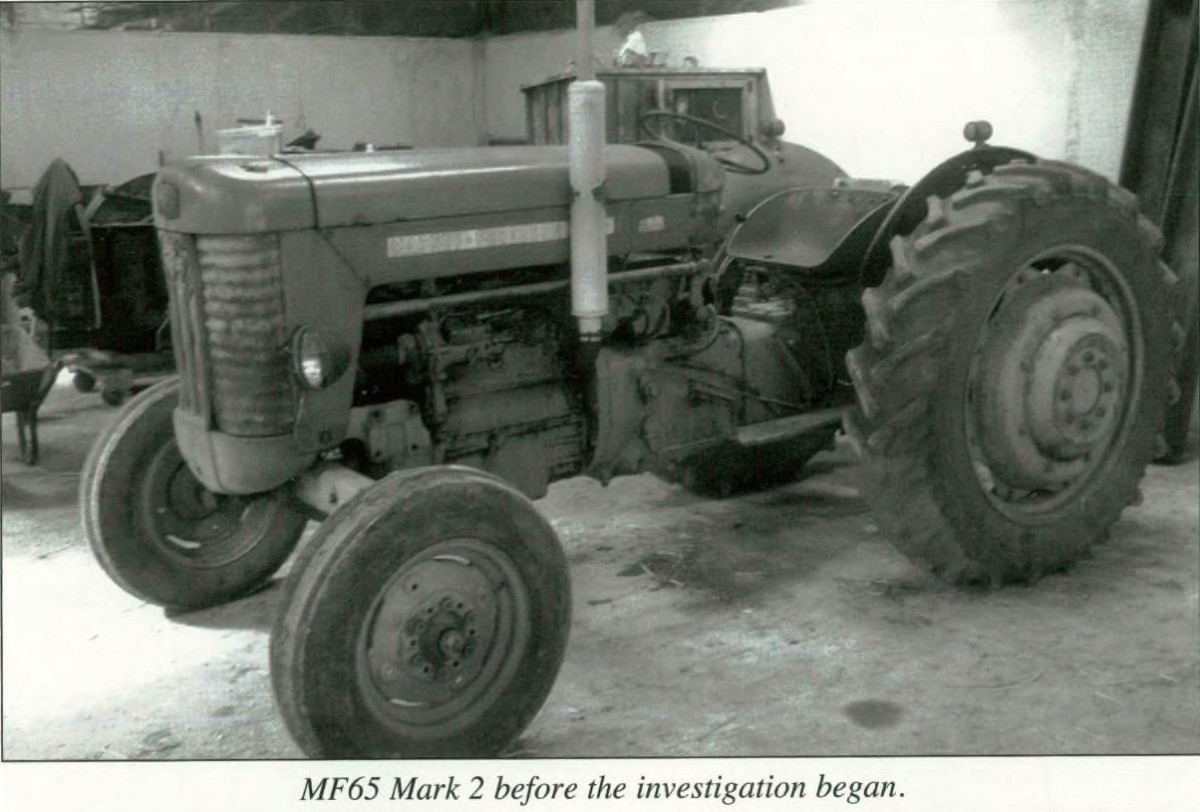
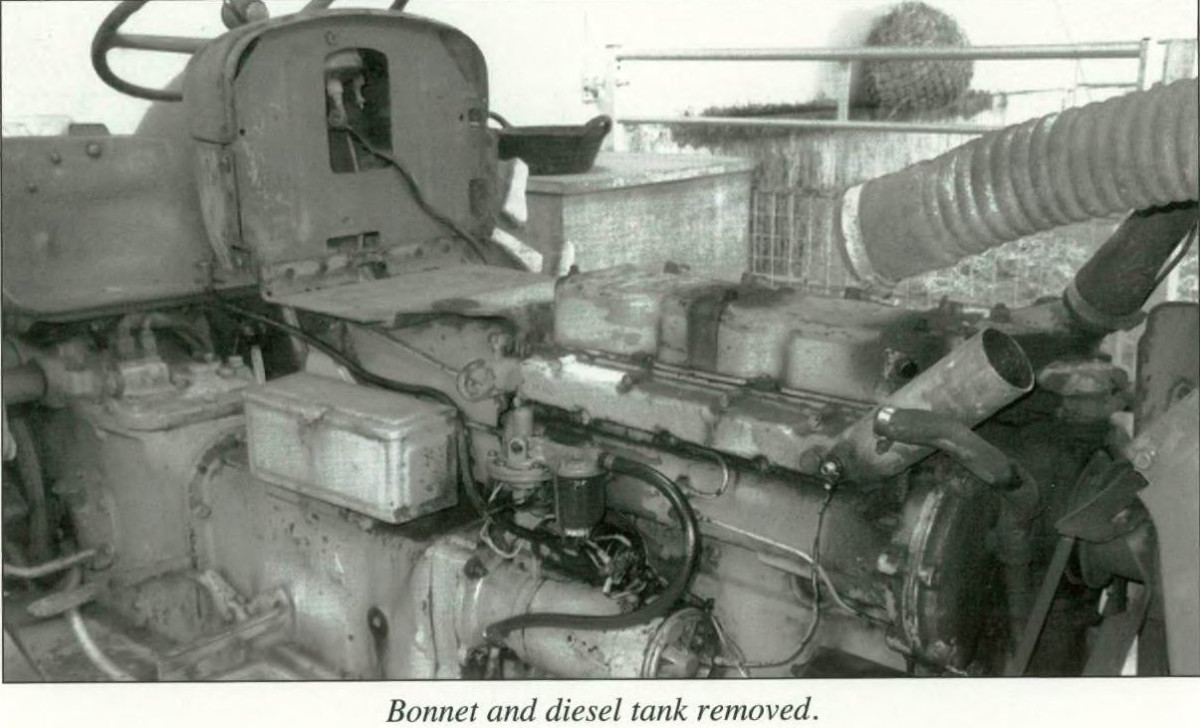
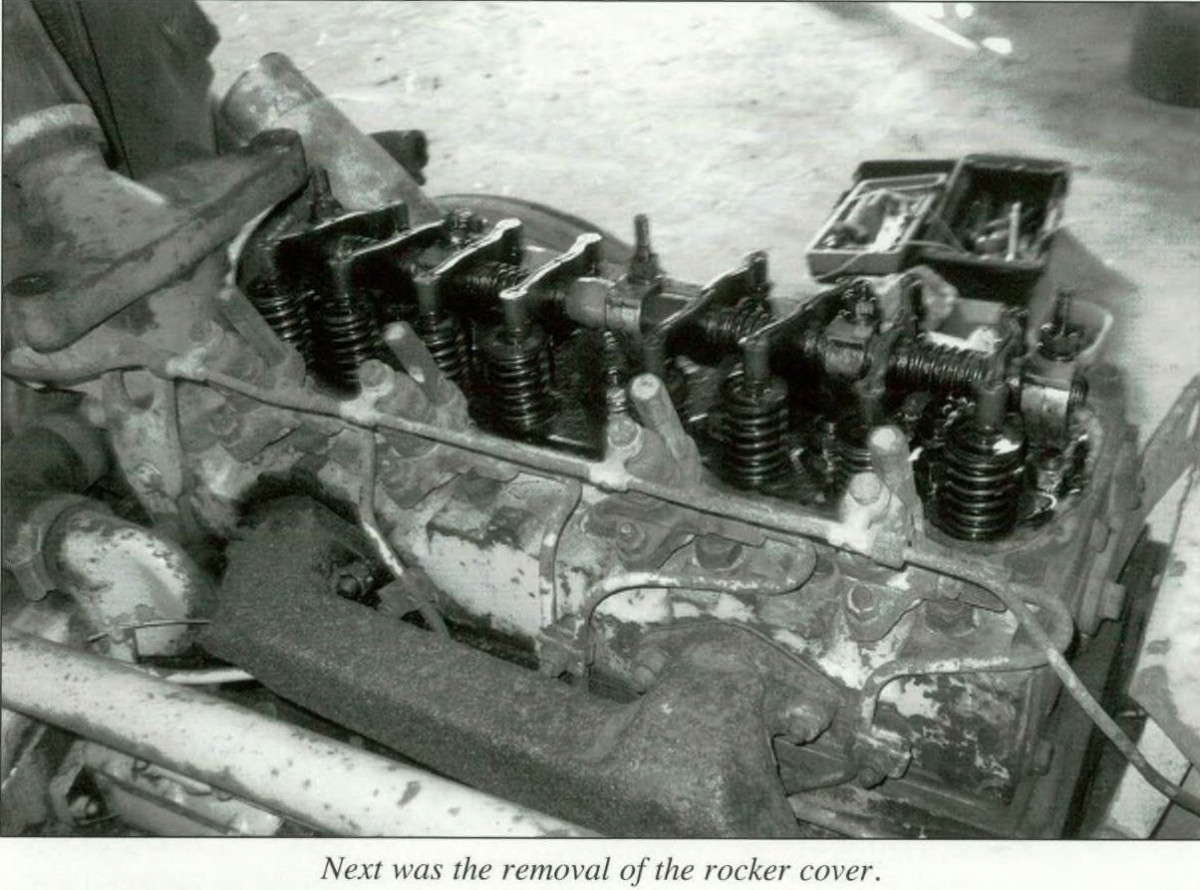
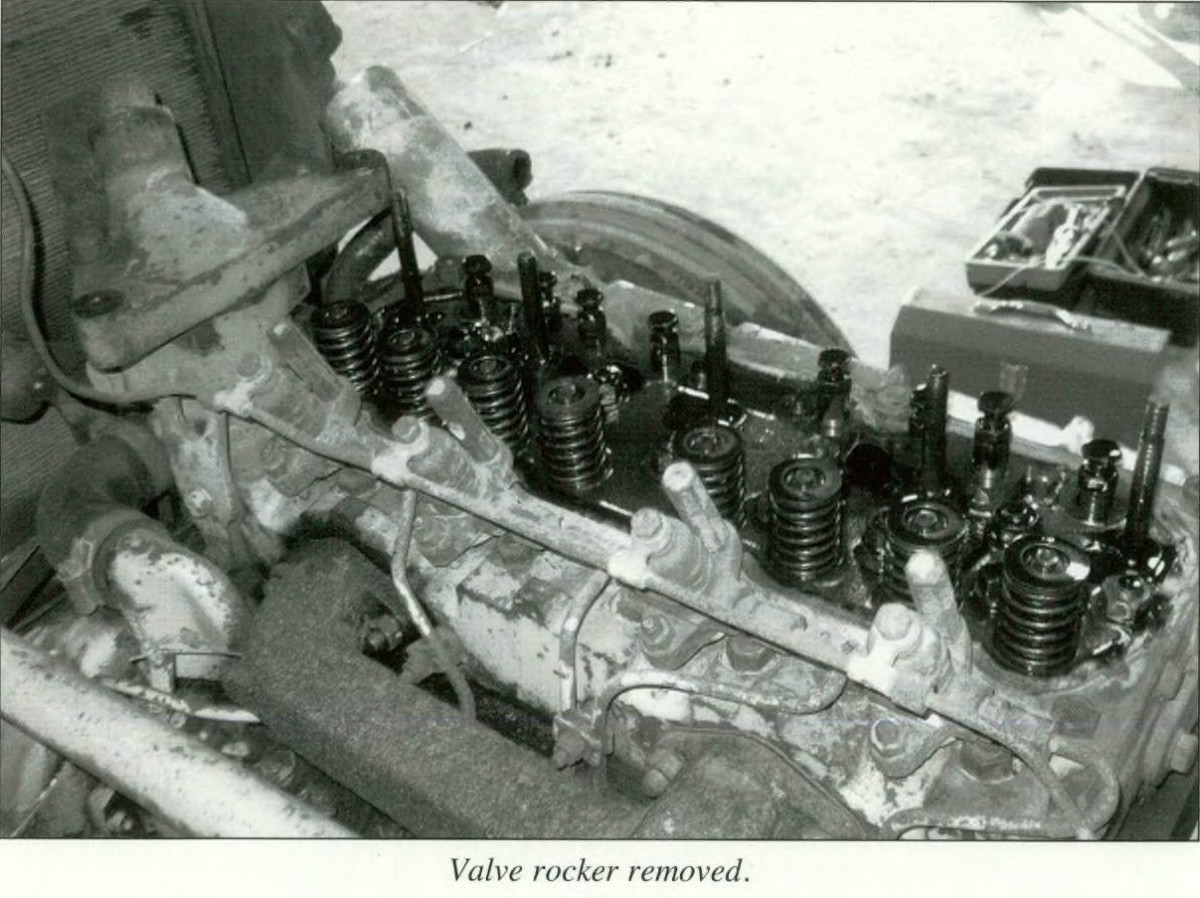
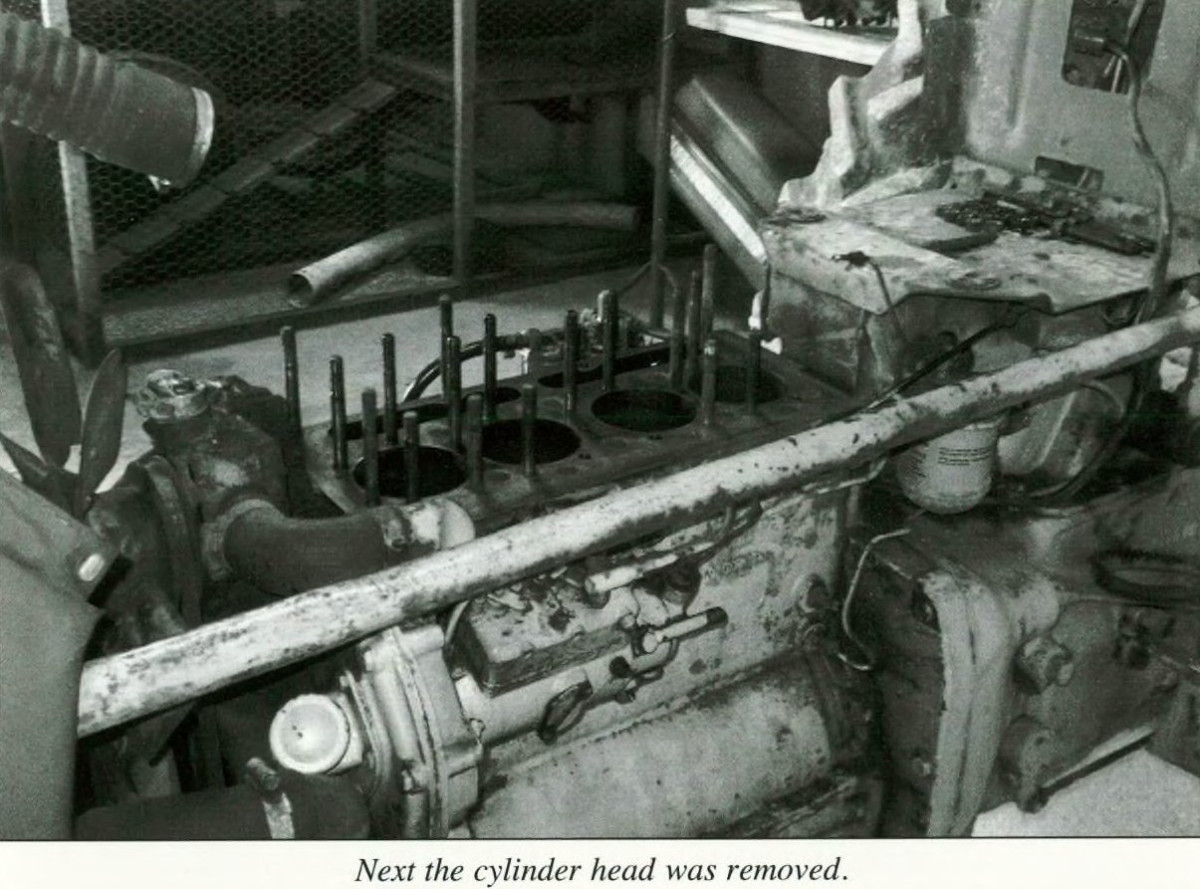
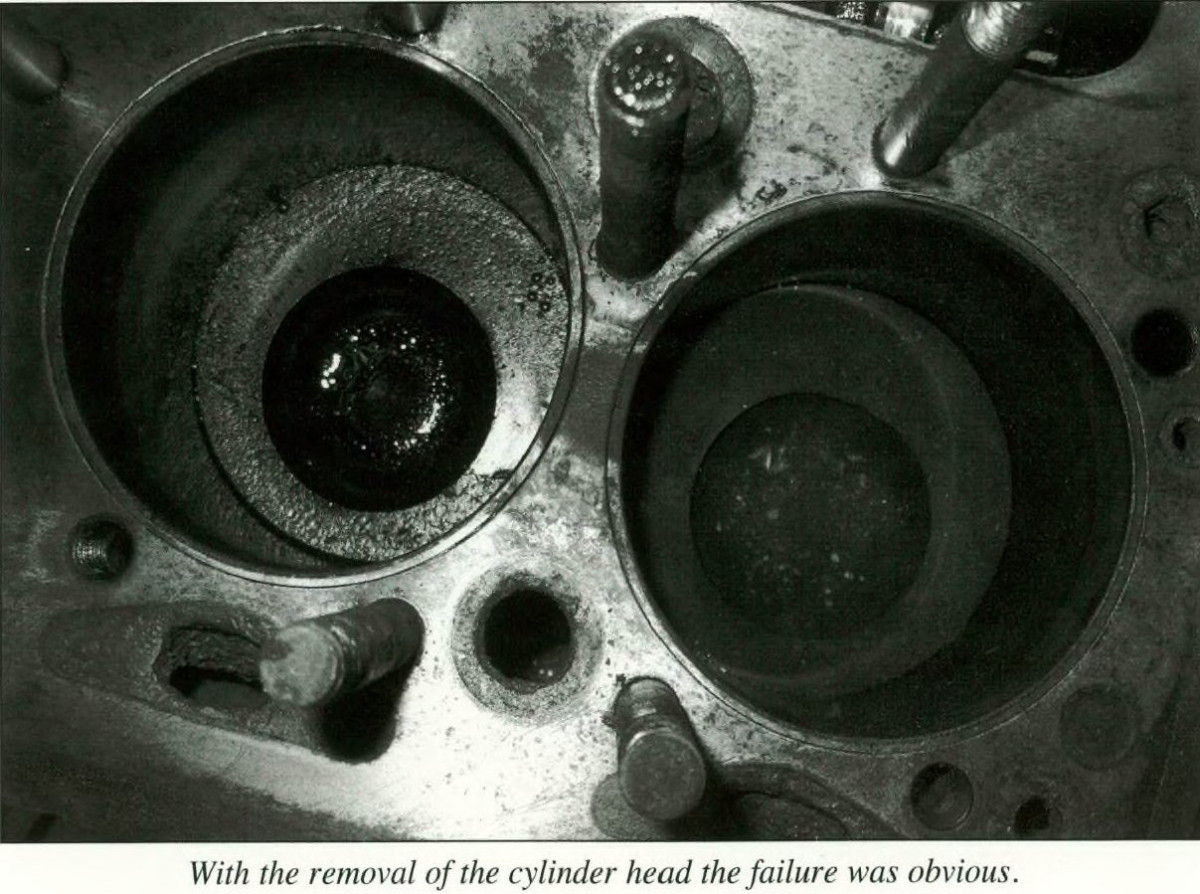
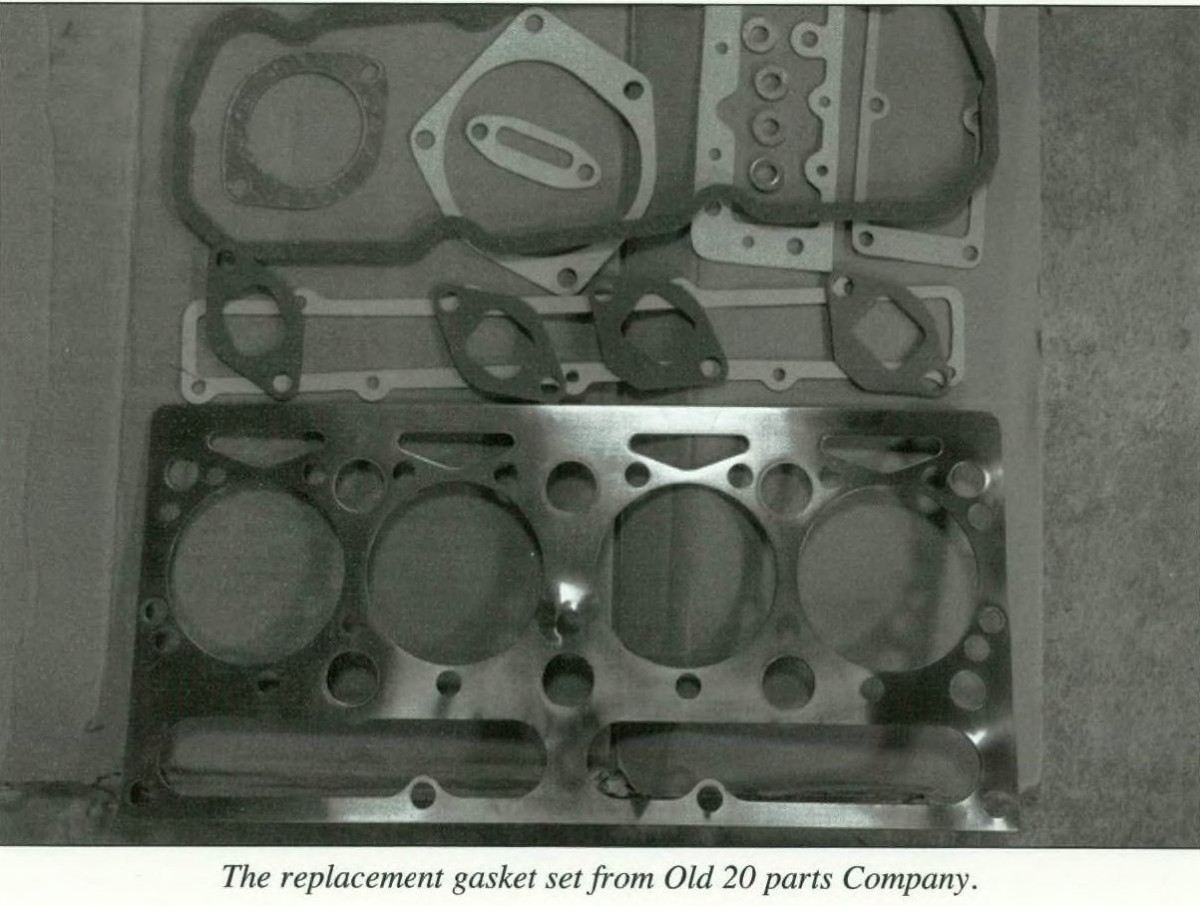
MF65 Engine Failure Investigated 🔑

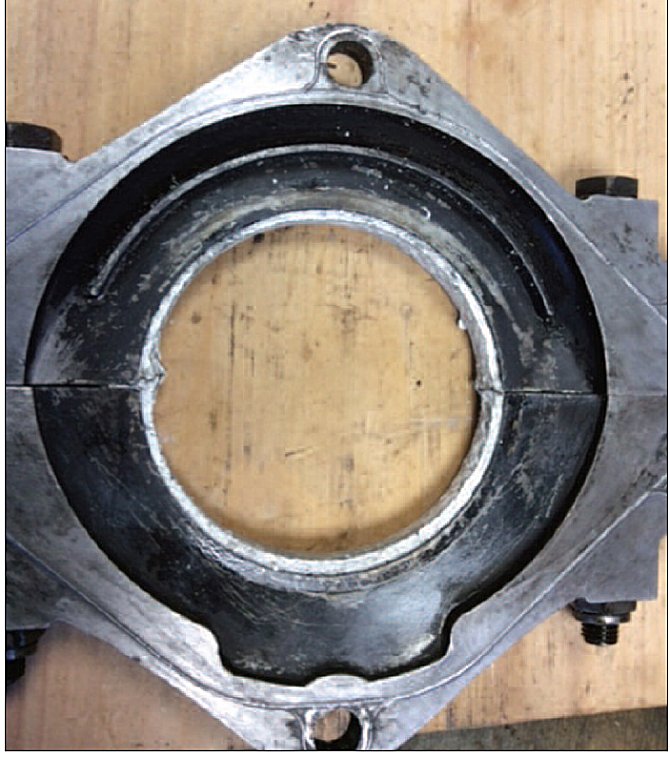
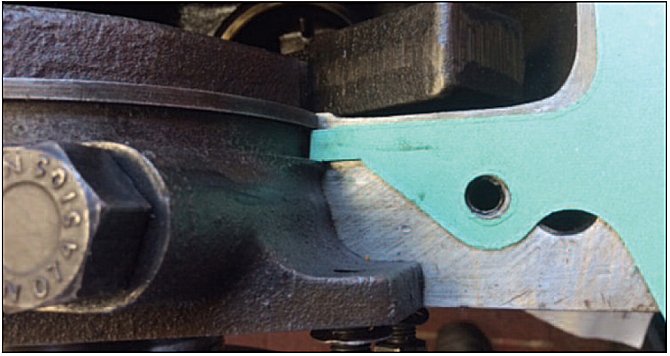
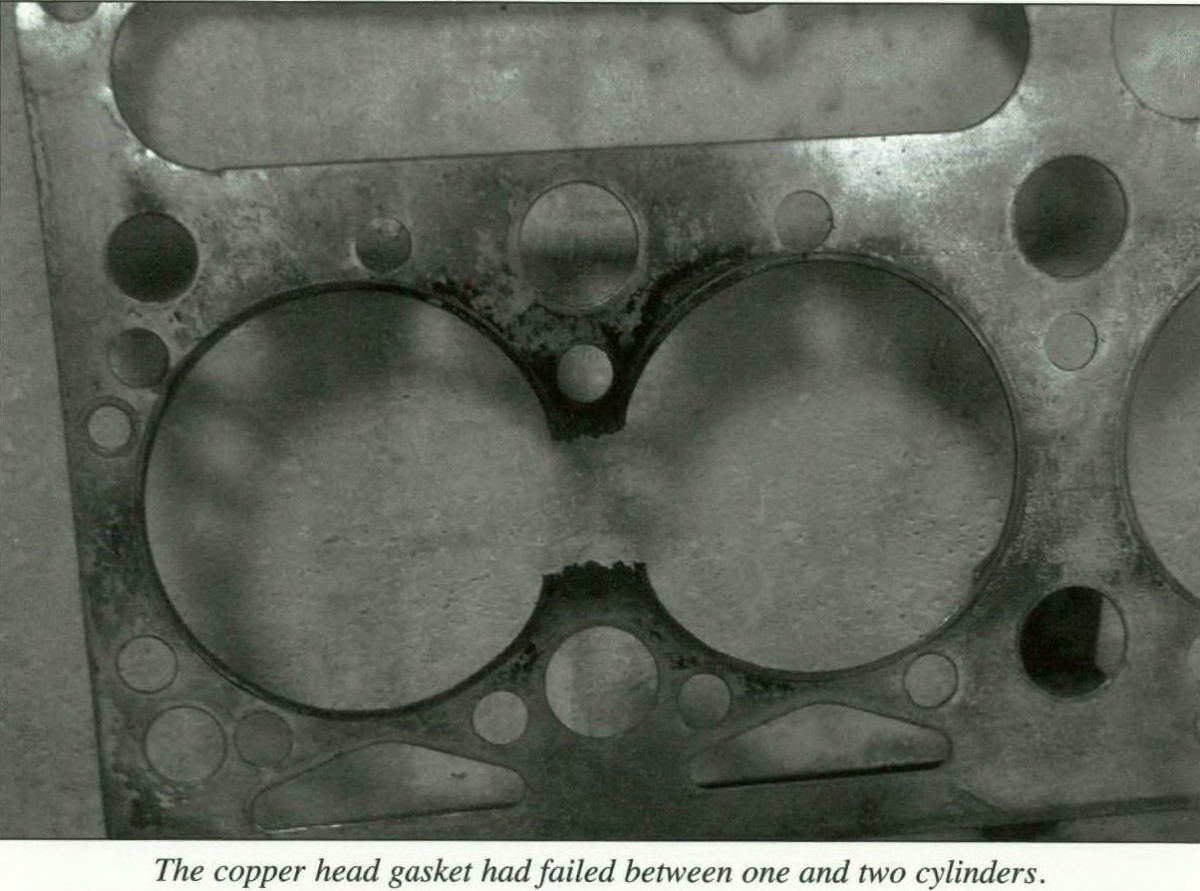
While using the MF65 in April this year the tractor started to cough and splutter and generally start running badly with a total loss of power and performance. The tractor was immediately parked up and the investigation started. Here is what we found.


Published in Journal No.80 Summer 2015 : Tim Hanson & Barry Moody


Perkins Rear Engine Oil Seal and Sump Gasket Replacement🔑

Fitted to Perkins 152, 192 and 203 Engines with Rope Seals
Sandy Donald

There are two places where oil can leak at the back of the engine, rear main seal, and the sump cork gasket. Both leaks show oil at the split pin hole, with the rope type seal there will always be dampness at the split pin hole. If you think you have a rear engine main seal leak the best way to check this is to remove the starter and look at the end of the starter where the gear is. If it is damp with oil, this will come from the back of the flywheel which indicates the back seal is leaking when the engine is running.

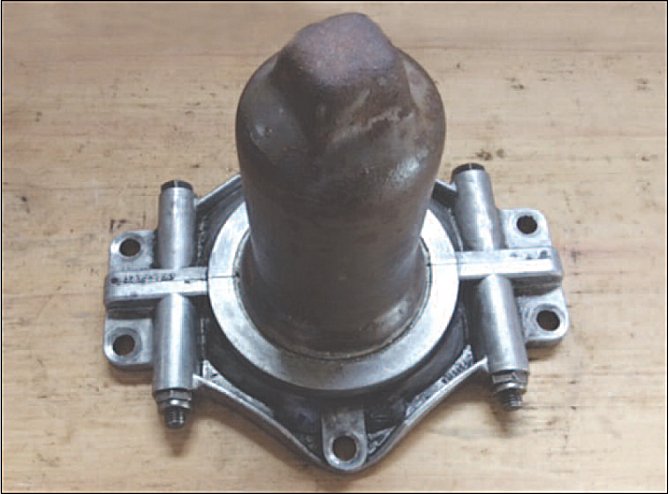
If the back of the flywheel is dry it is a good chance the oil is coming from the sump cork seal which leaks down the back of the adaptor plate and out the split pin hole. The rope seal works like a centrifugal pump gland packing, it requires a small amount of oil leaking to keep it lubricated.  Before fitting the new seals into the aluminium housing, put the two-seal halves in a small plastic bag along with some oil and soak them overnight, some people prefer to fit them dry but I prefer to pre soak them first.

The two seal halves can then be pushed into their respective housing using a round piece of wood or metal pipe. Try to get as much of the seal into the housing as possible. If you must trim the ends, try to leave about 1.0mm sticking up. When I have fitted the new seals into the housing and if I am not happy with the way they look I use a PTO shaft end cap to clamp the seal around to help shape them to the size of the crankshaft as shown in the picture below.

You can also use the end of the crankshaft to fit the seal around and tighten the two seal halves together. Before fitting the seal to the engine make sure there is oil or grease on the seal halves; Perkins recommends using graphite grease on the seal halves. The gasket is best put on with gasket sealant, also put some gasket sealant where the two halves bolt together, the seal half with the oil shroud on the inside goes to the top. See the picture below.

When removing the old sump gaskets, care should be taken, the original sump gaskets contain a very fine wire mesh. The new sump gaskets should be fitted first making sure the ends of the gasket fit into the cork seal groove, then fit the cork seals carefully into the grooves. The gasket in the picture opposite requires about 1mm cut from the end to make a perfect fit. To hold the gaskets in place, use some grease on the gaskets, this will be all that is required to make the seal for the sump to the engine block. Before fitting the sump, I always put a small blob of instant gasket where the cork seal meets the sump gasket.

Published in Journal No. 107 Winter 2023/24
Sandy Donald


MF65 Brakes Investigated 🔑

From the day I purchased my MF65 MkII the brakes have been appalling, making the most horrendous binding noise and uncontrollable lock up. It was time to investigate the cause and to get the MF65 brakes operating correctly.


Published in Journal No.83 Summer 2016 : Tim Hanson / Barry Moody