Author Archives: Peter

Timing a TED20 🔑

I had a call recently from someone who said their TED had just stopped with a “clatter” at the front of the engine. I was 90% sure what the problem was so , called round to have a look, taking a timing chain and governor parts with me.

Sure enough, no drive to the distributor so broken timing chain. This engine had been professionally overhauled and had not done much work since so, knew what had happened.

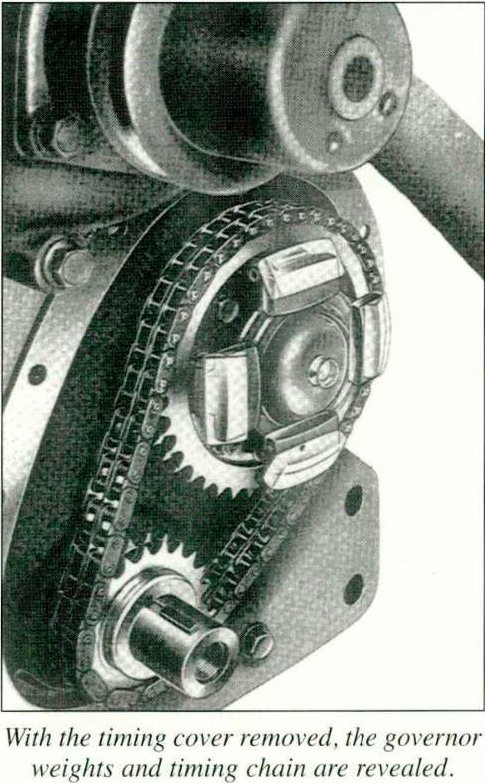
Off with the bonnet, tank and radiator, then remove the front axle after placing some blocks underneath the engine. Next remove the timing cover and sure enough, a governor weight had broken away from the mounting plate, got mixed up with the timing chain which then broke. Fortunately the timing cover was not damaged.

Strip out the governor plate and mushroom that are all mounted on the camshaft sprocket then remove the sprocket. Check the new chain is correct then proceed to fit the chain and retime the engine. Forget what’s printed about timing marks and start from scratch as follows:

Remove the rocker cover and turn the crankshaft until the keyway on the end of the crankshaft is at 6-0-clock or bottom. Make sure this is accurate. No.1 and No.4 pistons are now on top dead centre or at the top of their cylinders. No.1 cylinder being on its “firing” position or stroke, No.4 cylinder has just finished its exhaust stroke and is starting it’s inlet stroke.

Now fit the camshaft sprocket to the camshaft and loosely secure with the 2 studs. Turn the camshaft slowly and, watching the position of the rockers, when No.1 exhaust valve is fully depressed, go to No.4 cylinder and set up the exhaust rocker to 0.022 inch clearance. Next turn the camshaft further until the inlet valve on No.1 cylinder is fully depressed then go to the inlet valve on No.4 cylinder and set this to 0.020 inch clearance. Turn the camshaft again and watch the rockers on No.4 cylinder.

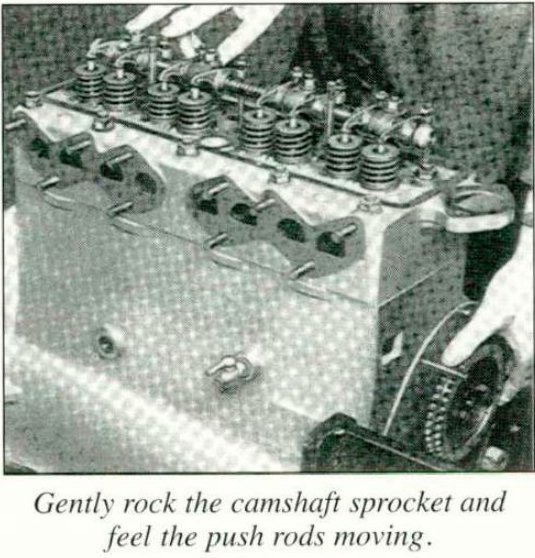
Watch closely as the exhaust valve starts to rise because as it gets to the closing position the inlet will start to open. The valves are now “on the rock”. By turning the cam wheel back and forth, use a 0.010 inch feeler gauge and when you can get the gauge to go through both tappets the valve timing position is correct.

Now make sure the crankshaft is in the same correct position, remove camshaft sprocket, fit the chain and turn the sprocket within the chain until 2 of the stud holes line up with 2 in the camshaft. If this can’t be done without moving the camshaft, turn the camshaft sprocket onto its opposite side (this alters the mounting hole by a quarter of a tooth). Repeat the process and you should find 2 holes that line up. Fit the studs and lock them with the locking tabs. It is most important not to cheat at this stage by moving either the camshaft or the crankshaft to find 2 stud holes.

OK, timing done. Next turn the crankshaft and watch the rockers. Reset in reverse the No.4 rockers to 0.010 clearance inlet and 0.012 clearance exhaust. Now rebuild the governors with a new, or very good 2nd hand plate, weight, pins and mushroom. If the mounting plate is 2nd hand do make sure the pin holes are ok and not worn or you could soon have a repeat mishap. Also when you have done the valve timing and before you turn the engine, take off the distributor and the rotor arm should be pointing to no.1 plug hole. Should this not be the case then, as a Club member found out last year, the ignition timing is set incorrectly, however if the tractor was running ok before then the chance of this is remote.

Now to governor setting, this is really too complicated to try to describe so if the governor was working ok before, just do a couple of checks. Go to the adjusting screw on the timing cover, slacken the locknut, and with a screwdriver turn the screw anti­clockwise, say a couple of turns, and then screw in until the governor arm moves. Turn screw anti-clockwise a quarter of a turn and tighten the locknut.

Now go to the rod with a fork on the end and with this rod pushed back towards the carbo and the throttle lever set in the tick-over position, the clevis pin should slip in through the fork and the governor arm. If not, the fork can be adjusted until it does and when you can do this, screw the fork onto the rod I full turn to in effect shorten the rod. If the engine is governing ok then leave it at that.

After refitting the tank and before refitting the front axle, have the engine running for a few seconds. There will be those reading this article who will say I have gone over the top with regard to timing the engine but I was taught to time engines from scratch as an apprentice and that still sticks. Engines with timing gears are marked so they can be timed as such but I still get a buzz when I have valve timed a TEF and then spill timed the injector pump but that’s another story.

Published in Journal No.62 Smmer 2009 : Malcolm Rainforth


TE 20 Continental Z 120 Distributor & Timing Cover Rattle 🔑

Distributor

I am the owner of Ferguson TE 20 tractor No 15596 fitted with a Continental Z 120 en­gine. and as I take considerable pride in the sweet running of the above. I was very dis­concerted a short while ago when it developed an uneven ‘miss’. I immediately put this down to a faulty plug, but on trying all four in another tractor. perfect running resulted so that was ruled out.

I then fitted the distributor cover and plug leads from a tractor which I knew was in or­der. but this gave no better results so I changed points and condenser – again no im­provement. The next move was to remove the plate which carries the points. giving ac­cess to the automatic advance and retard mechanism. which appeared to be in perfect order.

At this point I would advise anyone who in­tends to dismantle the advance and retard springs and weights to get a piece of paper and a pencil and make a sketch of these as it is so easy to put them back in the wrong or­der.

I now felt that I had to remove the entire dis­tributor, so after taking out the switch key. hiding the starting handle and noting the posi­tion of the rotor arm. I removed the stud at the base and lifted the assembly out of the engine block It was now clear what was wrong. The base plate which carries the automatic advance and retard mechanism was loose on the drive shaft. and this, it would seem. was affecting the opening and closing of the points. The next job was to remove the shaft by punching out the pin through the gear at the base and then withdrawing the shaft. It would seem that the plate is fitted onto a short length of splined shaft and then rivetted over, and in my case the rivetting had worn off allowing the plate to work up.

My chances of finding another shaft were not very good, so what was to be the next move? If the worst had come to the worst, I could have brazed the faulty shaft with oxyacetylene. but I was reluctant to put so much heat into it.

It was at this point that I remembered that I had a spare distributor from a TE-D. and when dismantled it was found to be inter­changeable and on fitting it I found to my great delight that the tractor ran perfectly.

Timing Cover Rattle

Another fautt which occurred quite recently on the same tractor was that when the engine was idling. a very pronounced rattle came from the timing cover which led me to believe that the governor weights were to blame. and knowing what could happen to the timing gears and other parts if this was so. and the governors broke up. I decided to investigate. I removed the bonnet, radiator and fan. then pulled off the crankshaft fan pulley. removed the timing cover and to my great relief the governors were perfect. but the cause of the rattle was now obvious. At the front of the crankshaft gear, and driven by the key hold­ing the gear, is a slinger ring, a saucer shaped disc about 4″ in diameter. Its pur­pose is to throw oil away from the front crankshaft oilseal. The keyway in this disc was worn to about 3/4″ wide, 1/2″ over size, ­and this was allowing the disc to vibrate back and forward on slow running. The remedy here was to turn the disc through 1800 and carefully file another keyway to give a tight fit on the key. After reassembly the rattle had gone.

My reason for writing these notes it that there are still quite a few Continental Z 120 en­gines about, all of them over 40 years old, and while both repairs described were simple and inexpensive, it was the time taken to lo­cate them which troubled me. If this article helps any other Z 120 owner it will have ful­filled its purpose.

Published in Journal No.20 Vol.6 No.3, 1993 : WilIiam R Smith


TE20 Hydraulics Workshop Day 🔑

This West Yorkshire workshop day was again held at J & R Groves’s Oxenhope home, members came from Scotland, Worksop, Hitchen and all points east of the country. It’s noted that the western half of the country is to have another day in March in the Preston area.

As this workshop day was vastly over subscribed, another venue has been arranged at short notice to accommodate and not disappoint these enthusiasts.

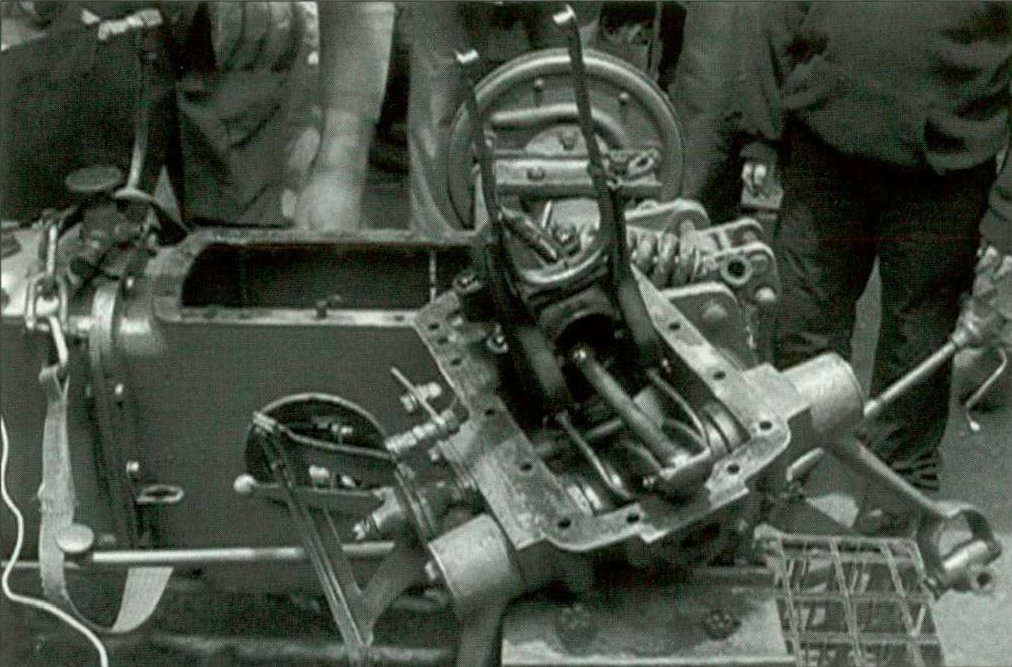
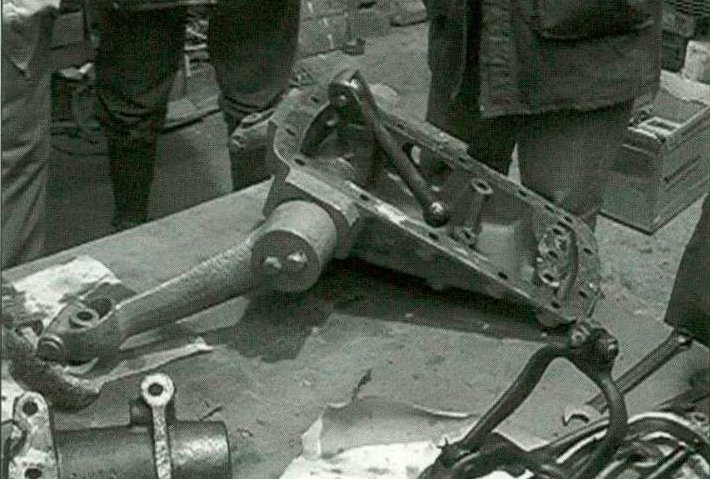
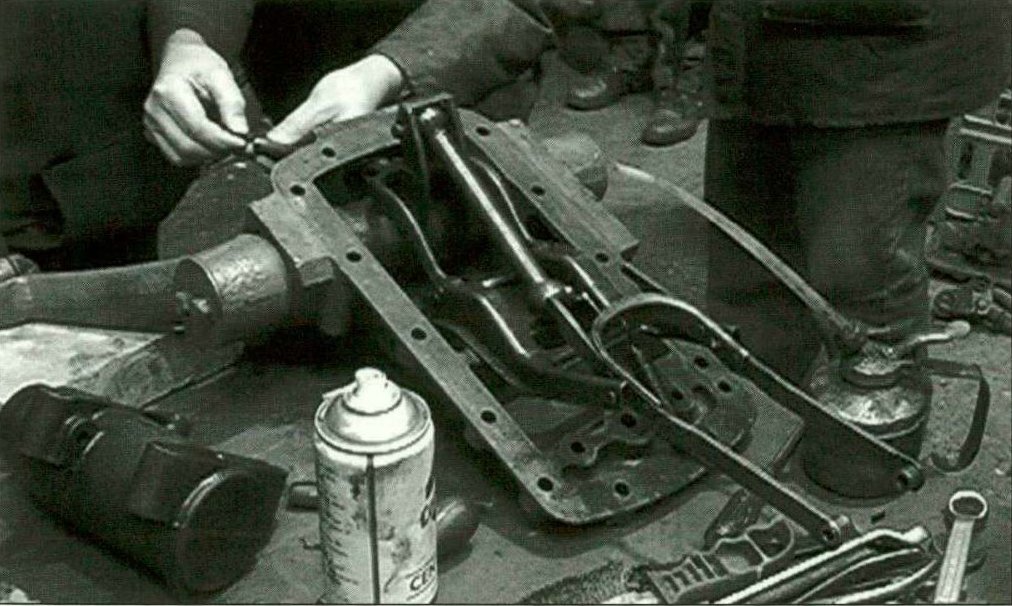
Control fork and top cover removed.

Control quadrant being removed

How the Yorkshire men are to cross the border into Red Rose country is anybody’s guess, but knowing Lancastrians the welcome will be on a par with that of the Yorkshire Tykes.

The day started with a short welcome from John, who then passed the proceedings over to Arnold Staples for the rest of the day.

He began with a short slide show explaining the principle of the hydraulic pump and system. Then it was into the workshop where John had removed the seat, mudguards, and wheels to give us all a better view of the rear end and most of the nuts and bolts that have to be removed (this was to save time on the day). Arnold then went on to remove the various parts in order, their condition, and what was acceptable after 50 years of service, being explained.

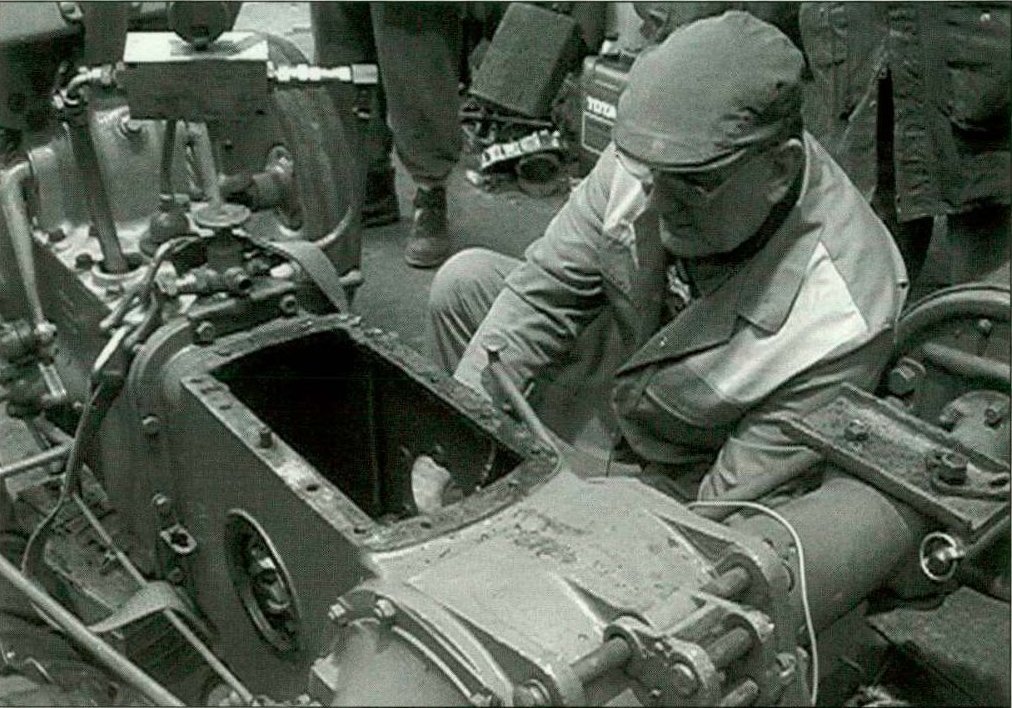
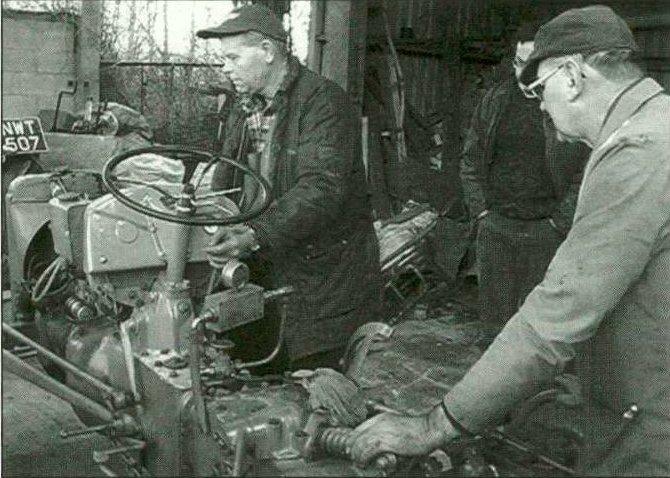
Arnold Staples works underneath to drop the pump out.

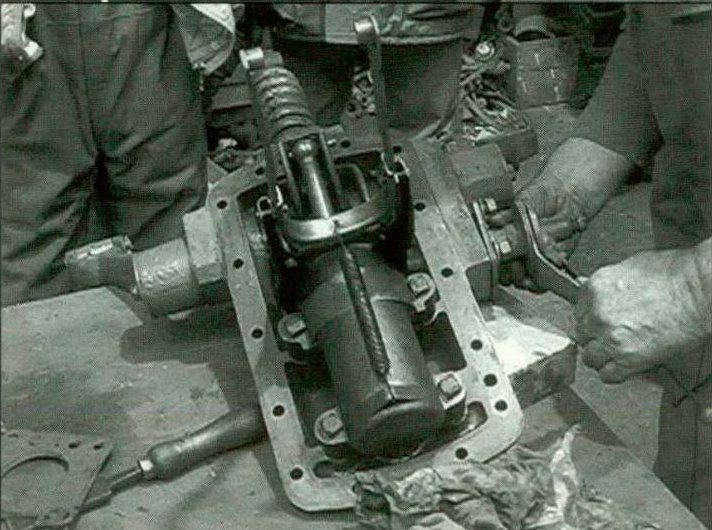
Top cover with cylinder and linkage removed.

Starting the rebuild. Control spring and plunger being fitted.

Once again John was able to find various parts that Arnold required to show the differences between models.  When the order for lunch was announced we made our way into the house, and while having our lunch a video taken by Alwyn Pickles, of a previous engine workshop weekend was playing. It is a well made video of a high standard and kept us all enthralled. It was still playing when we went out again for the afternoon session. I believe that the video being filmed on the day will be available shortly and is expected to run for up to two hours!

In the afternoon session Arnold refitted the pump and top cover that had been reconditioned in the morning session, again explaining in detail the preferred assembly order. As the afternoon wore on all the parts were in place, ably assisted by a young apprentice Luke Jones aged 13. (We should encourage these young ones to come to these days, as they will hopefully be the next generation of Ferguson owners and restorers, Luke already has three tractors of his own). John was asked to fill the rear end with oil. The tractor was then pushed outside, petrol put in a small tank attached to the battery carrier as the main tank had been removed for some reason. The tractor was started. At this point I should mention that the tractor used was a continental TE serial No.865. Arnold then tried the quadrant lever, and after a couple of movements of the lever up and down to prime the system, the lift arms started to rise. After a number of lifts and drops it was realised that the quadrant was way out of adjustment. After several major adjust­ments he was satisfied that the plough could now be attached. As he expected, the quadrant, and top link spring needed final minor adjustment. After these minor adjustments, Arnold was satisfied that the days work was not in vain, and that the hydraulics were in good order. Any further adjustment would not be necessary unless the tractor was to be used for ploughing, or heavy draft work, then the top link spring may need further minor adjustment if the im­plements failed to maintain an even depth.

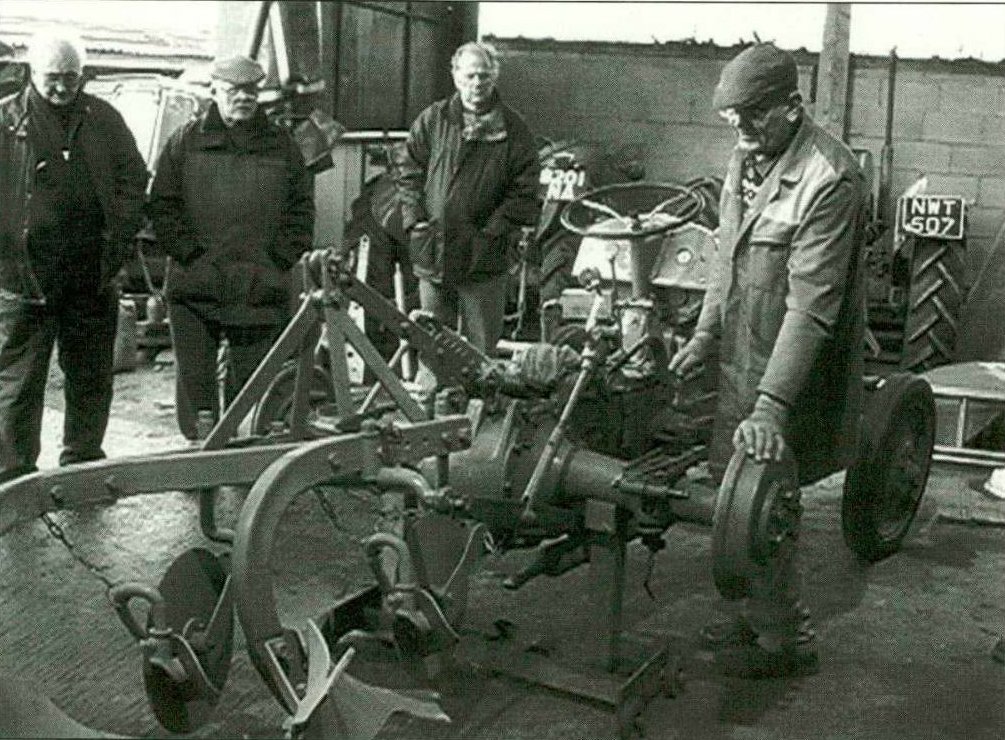
The Startup, ‘Will it work’.

After a short question and answer session we all departed, with more knowledge of the intricacies of the Ferguson System.

I wish to express my appreciation to Arnold for taking the day, and explaining things in layman’s terms, in an interesting way. To John for the use of the facilities, and Ruth for lunch, ably assisted by Martha, wife of Dr. Peter from Hitchen (maybe we should encourage more wives & partners to come to these events, and give a little help with food etc. or just winge on about our passion for this “little Grey menace” just a thought they do do mar­vellously behind the scenes). I wish the next workshop in Lancashire to have the same success as we have enjoyed in Yorkshire.

Final adjustment. Checking quadrant setting.

All pictures taken from Alwyn Pickles’ Video

Published in Journal No. 43 Spring 2003, Peter Snalth


The Little Grey Fergie

The Ferguson Club’s Gary Anderson’s tractors are featured in in a front page article in the May/June 2023 edition of Classic Massey magazine.

Journalist and magazine editor Chris Graham visited and interviewed Gary and took many excellent photographs of Gary’s tractors.

A copy of the article is on the Club website:The little Grey Fergie


Tractor Hydraulics
The Basics 🔑

Hydraulics was one of the greatest inventions for helping man compound the work he can do. It’s amazing how a little floor jack can lift tons and tons of weight with just the flick of a handle. What’s even more amazing is that all the principles of hydraulic theory can be wrapped us in such a small package. This same package applies to any hydraulic system from the largest bulldozer to the oldest and smallest tractor. This short series will take a look at the basic layout of a simple hydraulic schematic and then give some maintenance tips for long operation.

All hydraulic systems start with oil. Oil is the lifeblood of the beast. Since oil is a liquid it cannot be compressed. That means it will flow and transmit power virtually anywhere. As with any fluid this form of power transmission needs to be channelled and told where to go. In simple terms that is what a hydraulic system does. The oil is the lubricant and vehicle for transmission of this power. Hydraulic oil is not just any oil. It is formulated to withstand a wide variety of temperatures and has additives that control its reaction to the rubber seals and plastic parts found in the components of the system. A wrong oil type can cause o-ring swelling and dissolve seals. Use only hydraulic oil recommended for your application.

First thing we want to start with is a can to hold the oil. Actually we’ll call it an oil reservoir. This container can be a rectangular box mounted to the side of a loader or welded to a log splitter. It can also be the transmission casing of a typical tractor. A special1y formulated Hydrotrans fluid performs functions for the transmission and hydraulic needs. The reservoir contains the hydraulic fluid and protects it from the outside elements. It will usually have an air breather screwed into the filler cap, which permits air to circulate in and out of the reservoir as the fluid level

changes and might also have a dipstick to measure the level of oil.

Let’s next look at the hosing one might find on a hydraulic system. Typically there are three types of hoses or conduits for directing the oil to where you want it to go. The low-pressure hoses are usually a larger diameter nylon reinforced rubber. These are found as the supply lines to the pump or a return line from the spool valve. Smaller diameter wire reinforced hoses usually have pressed pressure fittings on the ends. These are high-pressure lines that carry the oil under extremely high pressure to various parts of the machine. They go from the pump to the spool valve and from the spool valve to the cylinders and back. Depending on the system pressure these can be steel mesh reinforced. A pressure around IOOOpsi will general1y have one coating of wire reinforcement while a 3000psi line will have double wire mesh. A rubber coating for protection from rubbing and weather penetration then surrounds the mesh. The pressed on fittings are installed at the hose supplier although reusable fittings can be purchased at a higher cost. When using reusable fittings make sure they match the hose size diameters inside and outside, as they don’t always conform to the crimp style hose size. One last type of hose is the rigid style. This consists of steel line with pipe or tubing fittings made onto the line. These are usually used for very tight elbows and angles that would crimp a normal hose. They are also used for lengthy runs where proper mounting can keep them from vibrating and rubbing against other components.

From the reservoir, the oil flows through a low-pressure hose to the pump. The pump is powered by any number of sources. A front-end loader will usually have a pump attached by a PTO shaft to the crankshaft pulley of the engine. A typical tractor will have an internal drive running a pump mounting in the transmission casing that runs the three-point hitch. A log splitter will have a small five-horse engine with a coupling attached to the pump. Either way, some power source will run the pump. A pump can be of a number of varieties ranging from a piston style with an adjustable swash plate to a simple vane type. Many tractors, though, use a simple gear type pump. The oil comes in the larger of the two openings, enters the gear tooth cavity, and then is expelled when the gears mesh, thus forcing oil into smaller high ­pressure line. The tolerances are very close on these pumps and it is not wise to disassemble one unless the tools and gauges are present to do adequate service.

After the oil is exhausted from the pump it travels through a high-pressure supply line to a spool valve. A spool valve is a fancy name for a switch that controls fluids. Oil is directed through the spool valve to the selected circuit of choice. If nothing is selected then it flows through the valve back to the reservoir. When a lever is actuated the oil flows through the valve and into the now opened circuit of choice, usually to a hydraulic cylinder performing some function. As the oil flows under pressure to one side of the selected cylinder the ram extends or retracts depending on the selection. Oil from the other side of the cylinder flows back through its high-pressure hose, through the spool valve and back to the reservoir. When the spool­actuating lever is pulled in the other direction, the process is reversed and the hydraulic cylinder actuates in the opposite direction. A spring detent keeps the shifting lever in a neutral position when not in use. A spool valve can contain any number of individual spools each controlling its own circuit. A log splitter, for example, will have one spool operating one cylinder, the ram that splits the wood. A backhoe can have six or more functions operating off one spool valve assembly. Manufacturers of heavy equipment design spool valve assemblies to accommodate any number of circuits and provide for bolt on attachments much like adding another couple of slices of bread to the spool sandwich. For the most part all the spools perform the same identical function: to direct the oil someplace else.

Loose ends found on hydraulic systems include oil coolers, pressure relief valves and oil filters. These are installed at various locations in the system depending on the manufacturer. Some relief valves have an adjustment on them but it is best not to disturb the setting, as it is factory set to flow in harmony with the rest of the system. Adjusting the setting to a higher psi rating can do damage to other parts of the system along with overstressing rated hose pressures. Other servicing components will be discussed in the next part of the series.

Published in Journal No.56 Winter 2007


Ferguson Brown Hydraulic Problems 🔑

Ferguson Club member, David Hodgson owns a Ferguson Brown. David has made a wonderful job of restoring this tractor. It gets many admirers at local shows and usually wins its class. David bought a plough earlier this year and has been busy restoring it to match the Fergie Brown, however, he encountered problems the first time he fitted the plough to the tractor. The tractor would lift the link arms with no implement but refused to lift the plough (catastrophe).

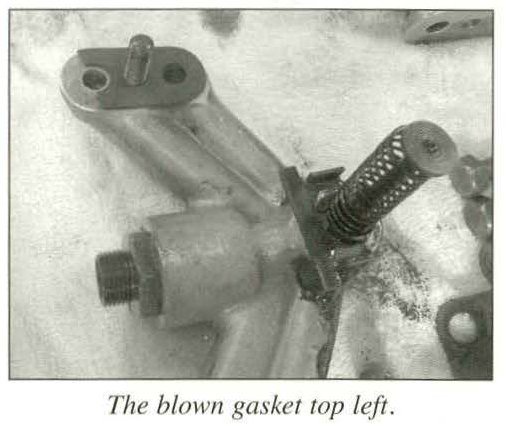
David came to see me, a worried man not sleeping very well. I explained that I had no previous experience with Fergie Browns but agreed to have a look. After arranging a time and day and having a quick ride on the Fergie Brown we decided (much to David’s disgust) that it required a strip down. Not much to start with, the oil drained and the round side panels removed. Unlike the Fergies and Massey Fergies I am used to, the Fergie Brown’s hydraulic pump is located in front of the gearbox and is driven by the transmission lay shaft. This means the tractor has to be moving for the hydraulic pump to work. With the side panels removed and the rear wheels jacked up, we could turn the wheels and watch the pump working through the side panel holes. This revealed the first of our problems. The piston pump, being very similar to the later Fergies has a manifold joining the opposing valve chests in the pump; which transfers oil under pressure to the lift cylinder. On turning the wheels, we could see oil leaking from a gasket joint between the manifold and the pump.

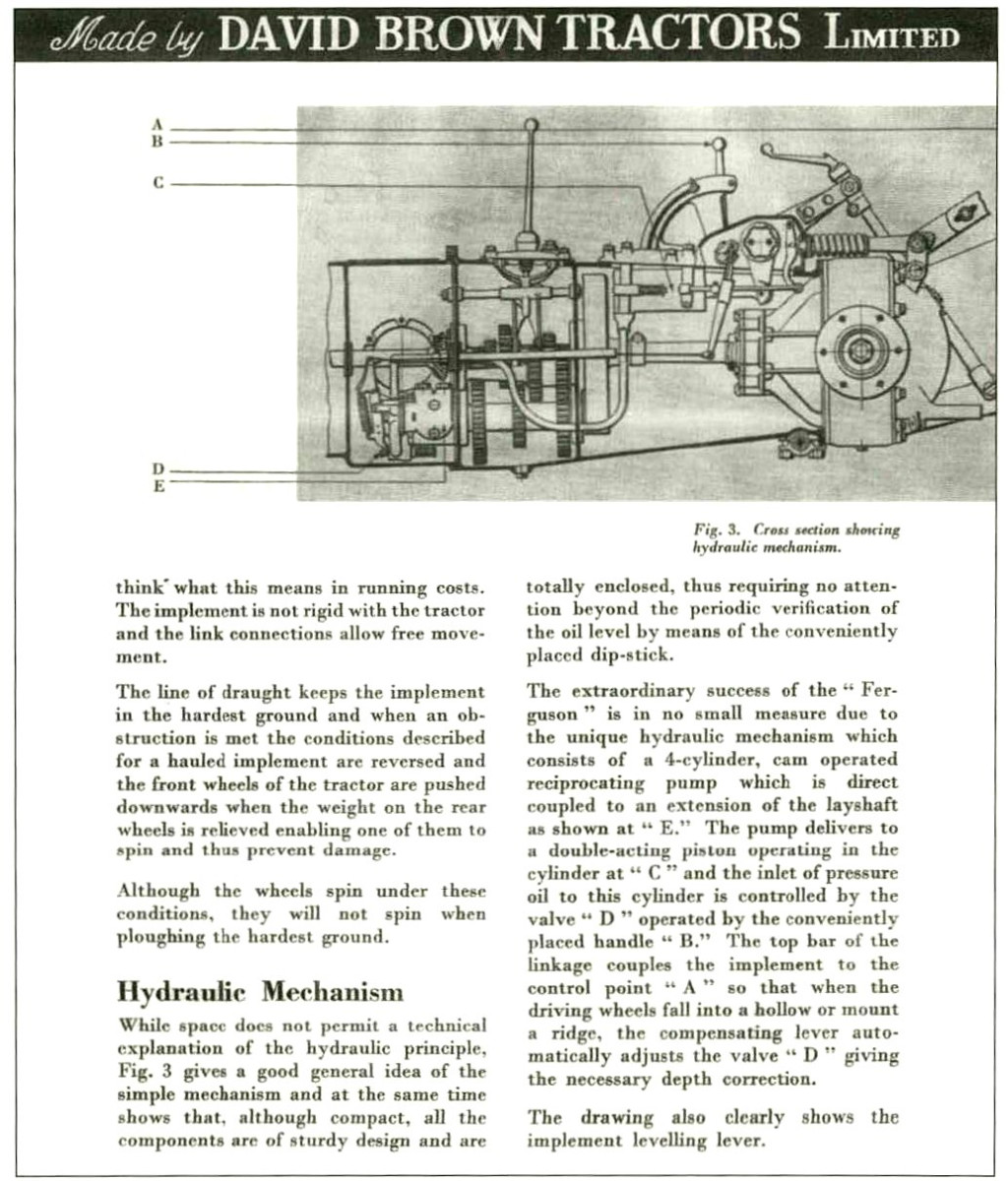
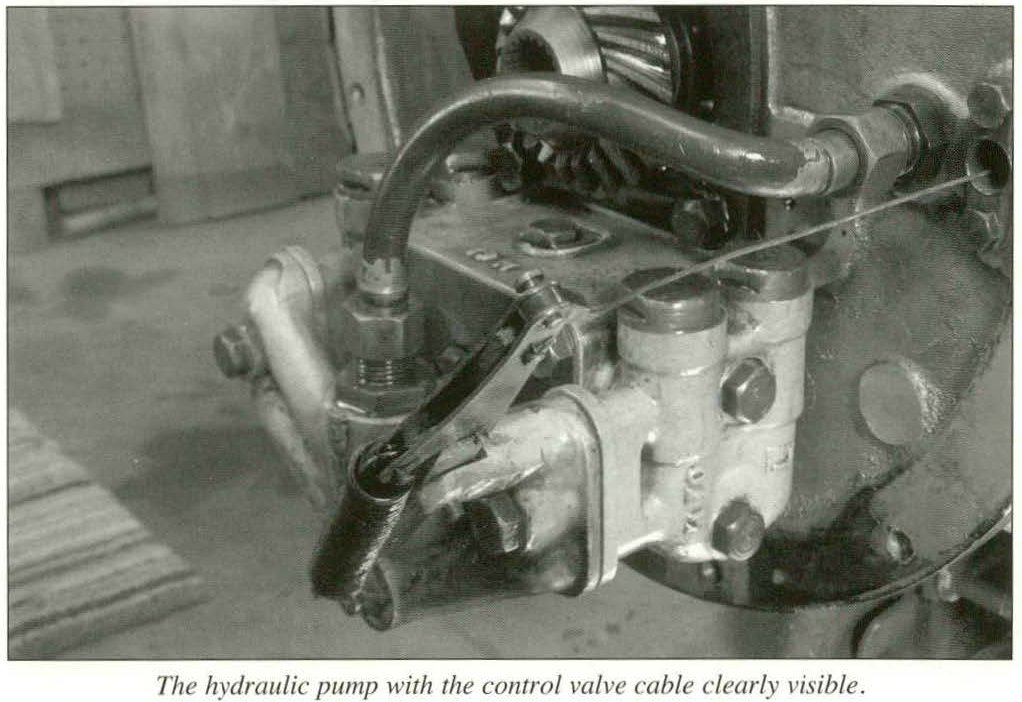
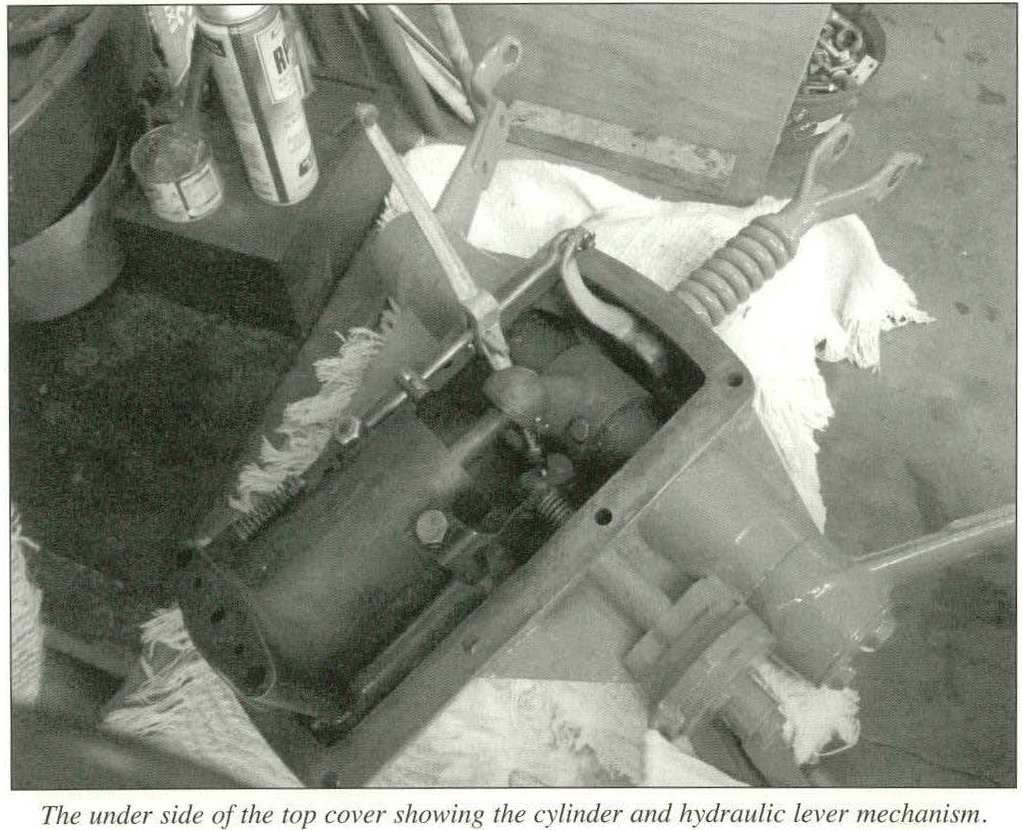
Oh dear, the tractor has to be split. David is not a happy bunny and still not sleeping! We also decide to remove the top cover to check the lift cylinder, rings, seals, gaskets and release valve. The control valve which controls the pump intake and outlet of oil is located in the pump assembly and as with all later Fergies, controls the oil before it enters the pump. With the Fergie Brown’s pump being forward of the gearbox, a cable is used running from the control valve to the hydraulic lever.

When removing the top cover the cable has got to be disconnected before the top can be removed completely.

So, with the tractor split and the top removed, we decided to call it a day and I leave David to clean out the transmission casing, make new gaskets, clean all nuts and bolts etc. We had spoiled the paintwork on all the nuts and bolt heads. Spanners and sockets had to be forced on due to the thickness of paint, much to the owner’s disgust!

On returning a couple of days later I find everything spick and span, waiting for assembly. David has made new gaskets where needed and done a great job. He even surfaced ground the manifold where the old gasket has blown. Before assembly we decide to strip the top cover and the lift cylinder etc. The system release valve is in the lift cylinder and it’s here where we find another fault. A small rod runs from the top link through a hole in the cylinder casting towards the release valve. When the tractor and implement hit an obstruction the sudden compression force down the top link moves the small shaft forwards to come in contact with the sliding release valve and releases hydraulic pressure thus letting the wheels spin and not damaging the implement. The shaft was not in the correct position and not running through its correct hole. This must have been a previous assembly fault. With the cylinder, piston and rings checked the top cover was ready for assembly back on to the tractor.

After a brew or two (thanks Christine, David’s partner), a bit of lifting, pushing and thrutchin’, the little Fergie Brown was back together and in working order and best of all, David’s sleeping again!

Published in Journal No.81 Winter 2015/16 – Jim Hall – Lancashire Representative


Ferguson TE Tractors Ignition System 🔑

IGNITION SYSTEM  TE, TEA and TED tractors

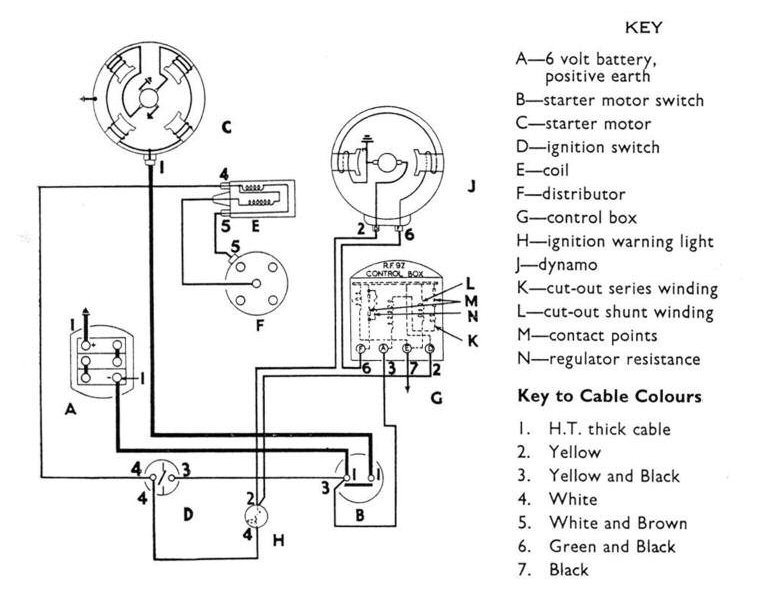
First it is necessary to ensure a fully charged battery is fitted, 6 or 12 volts, 6 volts was fitted up to tractor No. 200,000. You may find some tractors have been converted from 6 to 12 volts, if so check that a 12 volt coil has been fitted, voltage is stamped on the side or base, also check the polarity of the system, this may also have been changed.

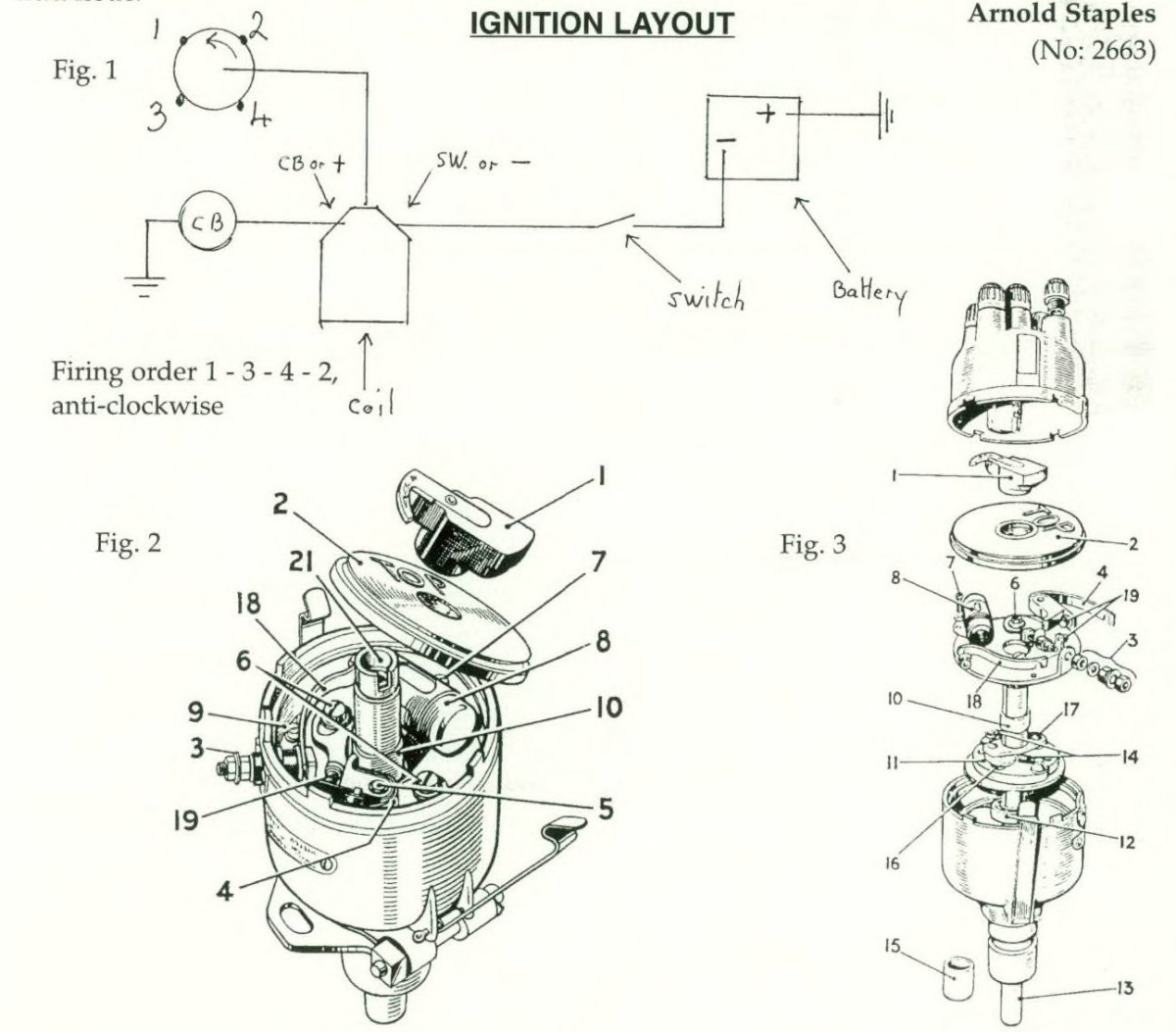
The original and correct system, (6 and 12 volts) is for the battery to be connected positive (+), earth, also the coil low tension (small wires) must be the same polarity, see Fig.1

Fig. 1 also shows the correct position of the high tension plug leads, number 1 lead is usually at about 10 o’clock on the cap. Other positions will work but the original positions are shown, in all cases the firing order MUST be 1, 3, 4, 2 in an anti-clockwise direction.

Assuming the system looks correct externally we can look inside the distributor and check the moving parts.

1) With the system switch OFF, remove the distributor cap, this will reveal the rotor arm. Just try to twist it on the shaft. It should twist a little and then spring back, this tests the working of the advance and retard mechanism. 1£ there is no movement, or no spring effect we need to strip out the base plate and effect the necessary repairs. As these units are now many years old the springs are often badly worn.

2) Remove the rotor arm (pull up, it may be stuck and require levering with a small screw driver) and then remove dust plate. Now we can see the contact breakers, etc. If the tractor has been stood a while the contact breakers should be removed, cleaned, or if necessary replaced.

3) Remove nut (No.3, Fig. 2) and the small wire (coming from the coil) and slacken second nut, push bolt into distributor body. Lift off contact breaker spring No.4, the moving part of the contacts can now be lifted off its pivot No.5. Note: If the original type of contacts are fitted an insulation washer is fitted between the moving and fixed parts. Omitting this washer will cause a dead short. Some new type contacts have an insulated pivot which does not require a washer.

Take out the two screws (6), which secure the fixed contacts and remove plate.

Examine contacts for pitting and discolouration, clean, using oil stone or smooth file. If badly pitted fit new unit.

At this stage rebuilding would take place if distributor advance mechanism is correct, but if the unit has not worked for a long time it is as well to strip and check for faults.

4) We now need to remove the base plate assembly. So, remove the second nut (3), insulating bush, washers, etc. from terminal bolt (noting order in which they fit) and push bolt out via inside of body.

Remove two screws (9) from loose base plate and lift out plate complete with condensor.

We can now examine the advance assembly, Fig. 3(11), bob weights (16) and springs (14). The springs are likely to be worn, stretched or broken, so they may need replacing. New springs are available, usually from Lucas agents.

Note: They are not of equal strength and the eyelet of the stronger spring is elongated.

5) Now we can start to rebuild:- Which is basically putting together in reverse order, but various points need to be noted. Hook springs on pegs, ad a few drops of oil to weights, shaft, etc.

Refit base plate and screws.

Place contact breaker fixed unit to base, replace two screws, nip up (adjustment will be needed later).

Fit insulated washer, terminal bolt with insulating bushes.

Fit moving contact breaker, slide spring over terminal bolt and tighten inner nut, fit coil wire and nut.

Turn engine slowly until the cam bob contacts the fibre heel of the contact breaker and so opens the contacts.

Adjust the gap between the contacts to give a gap of 0.010″ to 0.012″ (0.25 – 0.30mm) when fully opened.

This adjustment is made by moving the fixed contact on the base plate. Tighten both screws firmly when setting is correct.

6) Replace dust cover and rotor arm, ensure the peg inside the rotor engages in the slot in the shaft and the rotor is pressed fully down.

7) Replace distributor cap and plug leads in correct order, ego 1 – 3 – 4 – 2 anti-clockwise.

Note: 1 have not mentioned replace the condensor. The reason for this is that in the past 50 years 1 can only recall one or two ever needing replacement. They made quality stuff years ago.

Running adjustments of timing, etc. will be dealt with under running adjustments next issue.

IGNITION DATA

Distributor Number Lucas Ignition Timing
TE 20 40084J T.D.C
TEA 40132E 6°BTDC
TED 40186A 6°BTDC

Contact Break Gap: 0.010″ – 0.012″

Plugs Old New
TE 7-Com D16
TEA L-10 L86C
TED N-7 NSC
Plug Gap
TE 0.025″ – 0.028″ (0.64 – 0.70mm)
TEA 0.030″ – 0.032″ (0.56 – 0.64mm)
TED 0.032″ (0.56 – 0.64mm)

Edited from Journal No.30 Winter 1998 – Arnold Staples (No: 2663)


IGNITION TIMING

Having serviced all the system,

adjustment of the timing may be necessary, some people just go on performance or sound but let’s be a little more technical.

  1. Firstly, warm up the engine, visually check the position of number one plug lead in relation to the distributor cap (usually at 10 o’clock)
  1. Stop engine remove distributor cap.
  1. Turn engine by hand until rotor is about 12 0′ clock.
  1. Remove wire joining coil and contact points and insert a test lamp (see fig 4) switch ON ignition, the lamp should now light.
  1. Now look at the engine block flange, where it fonns the flywheel housing (above the starter motor) and you will find a small hole. Insert a bar (possibly a cross point screw driver in hole) then get an assistant to turn the engine slowly whilst you push the bar against the flywheel. The bar will eventually drop in a hole in the flywheel and so LOCK the engine.
  1. This is ignition point at which the lamp should go out. If the lamp goesout before this point, the ignition is ADVANCED, if it is still on then it is RETARDED .
  2. To adjust – slacken the small bolt on the clamp at base of distributor (7/16 AF spanner). If retarded, lamp still on, turn distributoropposite way to rotor (clockwise) until lamp goes OUT. This will advance ignition to correct timing.To retard system, turn distributor with rotation i.e. anti-clockwise.Whilst the engine is locked in the timing position, take a piece of chalk and mark the crankshaft pulley and timing case, so you can have external timing marks.
  1. Having adjusted the timing, remove the bar, turn the engine one and a half turnsof starting handle (engine). Insert bar again and turn until engine locks at which point lamp will go out so timing is correct.
  1. Remove lamp, refit wire, and distributor cap etc. Check running.
  1. If you possess, or have access to a Stroboscopic timing light, it can be connected into number one plug lead and the engine started, the light should flash when the chalk marks line up, if the system is correct.

Published in Journal No.31 Spring 1999 –  Arnold Staples


6 Volt Battery Servicing up to TE S/N 200,000 🔑

Battery

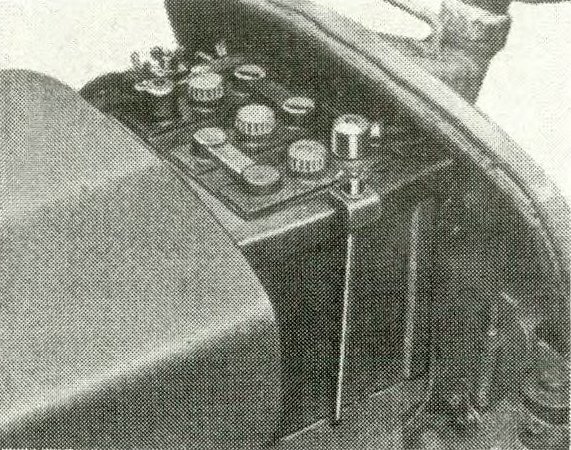
The battery is a six-volt, thirteen plate unit and has a capacity of 75 ampere hours at 10 hours discharge rate. It is located under the tractor hood as shown in Fig 1 and is readily accessi­ble for inspection and refilling with distilled water.

The battery is protected from damage due to vibration and physical shocks by means of rub­ber mounting pads fitted to the support plat­form and attachment points of top securing frame. Incorporated on tractors of later manu­facture is a battery cover hinged to the top frame.

To remove the battery, disconnect the earth strap and the positive lead to switch, unscrew wing nuts and remove top frame assembly. Slide battery to the left.

Note: Disconnect earth strap first when remov­ing battery and reconnect last when installing battery.

Battery Maintenance

About every two weeks or more often in hot weather, take out the three filler plugs from the top of the battery and check the level of the electrolyte in each cell. Contrary to the usual procedure, sufficient distilled water should be added to bring the electrolyte just level with the top of the separators.

Note: Always use distilled or deionised water when topping up a battery. Do not use a naked light when examining the condition of the cells.

A hydrometer will be found useful for topping up, as it prevents distilled water from being spilled on the top of the battery. If any is spilled, however, wipe it away and ensure that the top of the battery is kept clean and dry. Remove any dirt from the holes in the vent plugs with a piece of wire.

Clean any corrosion from the battery terminals and smear them with petroleum jelly. Examine the connections to the terminals and make sure that they are tight.

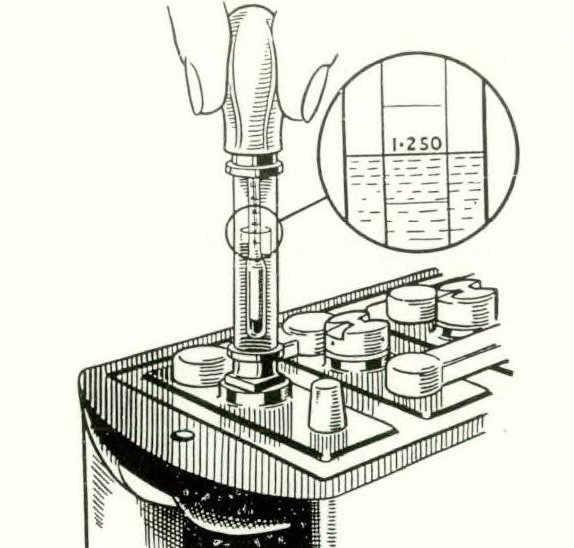
It is advisable to check the state of charge of the battery occasionally by measuring the spe­cific gravity of the electrolyte in each of the cells by means of a hydrometer, as shown in Fig 2, and comparing the result obtained with the figures given in “Test Data”.

When taking specific gravity readings, exam­ine the condijion of the electrolyte in the hydrometer. It should be fairly clear. If it is very dirty, it is possible that the plates are in bad condition, and the battery should be sent for overhaul. Ensure also that too much elec­trolyte is not drawn up into the hydrometer bar­rel so that the float is jammed and a false read­ing given.

Published in Journal 21, Vol 7 No.1 Spring 1994
From Lincoln Batteries, Leigh-on-Sea, Essex:

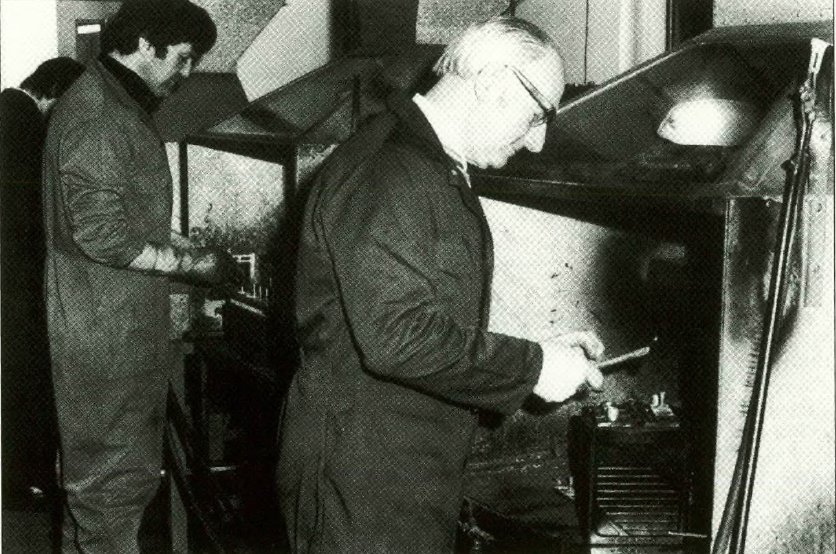
Although this part of the Assembly shop has been rebuilt since the picture below was taken, the method is still the same. The first man (just in the picture on the left) is ‘separating ‘ the plates and separators i.e. he is puttng them in the order in which they will be assembled – Negative plate / Separator / Positive plate / Separator / Negative plate and so on. Each cell is made according to the number of plates per cell in each battery size, this ranges from 7 plates and 6 separators per ecll to 31 plates and 30 separators per cell.

The middle man is using on oxygen/gas torch to weld the plate lugs together – this is known as group burning.

The last man is assembling the final battery. He removes the elements from the group buring boxes and places them in the final battery container. He positions the lids, pours on the bitumen and then bums the bars and posts on to the finished battery.

It is very difficult to describe this method unless you can see it for yourself. The important feature is the care taken by the men themselves. Modern methods of production rely heavily on machines, but these traditional methods are still reliant on the accuracy of the individual.

Original article republished with Lincoln Batteries addendum in Journal No.55 Spring 2007.


TE-A 20 12V Conversion 🔑

Brute Force or 12 Volt?

My oId Fergie and I have been friends for quite a while but that friendship is sorely tested when it comes to starting. The Fergie is a 1948 TEA20 which means it has always had a six-volt battery and starter. I am only the third owner of the tractor and know its history from new. I’ve therefore tried to keep it in original condition, including the electrics.

Since owning it I’ve replaced the battery, and all the electrical components hoping that the starting would improve, the results have been marginal, albeit one swing on the starting handle and its away. The tractor seems to be ageing better than me and doesn’t seem to be afflicted with arthritis, so having to resort to a tow start from a 12 volt Fergie recently meant the time had come to ‘do something’.

After much delay and a bit of research the decision was made to upgrade to 12 volts. I have had the starter motor checked over a couple of times thinking it might be the cause of all my troubles, so I knew it was good and would take the periodic 12-volt start. So my shopping list included: battery, coil, regulator box, charge indicator bulb, dynamo, dynamo bracket and pulley. Not a long list but still a pricey one! I opted to buy most of the bits from Agriline who had everything in stock and made a 24-hour delivery at basic cost. I sourced the battery from a local auto parts supplier.

On a bitterly cold day I fitted the battery and coil straight away and tried a start-up, it was like the old girl had just had a red¬hot poker stuck up her trousers, the start was instant – this was going to be good’.

That was the easy bit, the next job was trying to get the charging side to work. I’m a bit clueless on vehicle electrics so I labelled everything with tags, then unplugged all the wiring and unbolted the old dynamo and removed the old control box. The dynamo was fairly straight forward but the control box is under the battery aud rather difficult to get out but the job was done. I fitted all the new bits temporarily, together with the new charging indicator bulb and to my surprise everything worked and the charging light went out correctly. However, I did have to grind a little bit of metal off the new dynamo bracket as it was too close to the governor arm when bolted up tight.

As the dynamo was painted black and its new bracket was bare metal and starting to go slightly rusty. I took it all to bits again to paint the dynamo and bracket and to put new bullet connectors on the control box. Once painted the new bits went back on easily, not so the control box which requires a certain amount of gymnastics because of its back-to-front-upside-down position under the battery with short connecting wires. After two attempts it was all back together, a quick start up revealed that the charging light wouldn’t go out! After much cursing and skinned knuckles, I realised that the field connector had come out of the control box as I battled to reassemble it with its moisture seal and insulators.

Anyhow, a final start-up revealed all was now well with the world. Since then the Bendix gear has been prone to sticking in the engaged position. I removed the starter motor to find some congealed grease on the extremity of its travel, this has now been cleaned up and the starter works well. I think it wasn’t used to having to have such a hefty electrical whack when required for action.

At least I can now go to the shed without grumbling and not expecting to have to wrestle with a starting handle, I’m now too old for that.

Published in Journal No.96 Winter 2020/21 : Peter Gibbs