Ferguson 4WD

The Ferguson Formula Four Wheel Drive Matters

Welcome to the first edition of this regular feature on Ferguson Formula, the vehicles and the people behind them and who own them now. Though of course by far the greatest number of club members are tractor enthusiasts, there are some amongst you who do have an interest in what is the second great project to which Harry Ferguson’s name is associated, I hope to find a few more fans out there.

I specifically chose to say that Harry Ferguson’s name is associated with the fourwheel drive company that bears his name, as many people believe that it was Ferguson himself who instigated the four-wheel drive business, and indeed designed the early vehicles. In fact, as you may have read on The Ferguson Club website, the story goes back to the mid-1930’s and to racing drivers Freddie Dixon and Tony Rolt, who, through their company, Dixon Rolt Developments Ltd developed a prototype car, called ‘The Crab’, which had four-wheel drive and four wheel steering.

‘The Crab’ in the Ferguson Family Museum on the Isle of Wight

War held up progress, but when peace returned, Rolt knew that he needed finance to develop the company’s ideas and approached Harry Ferguson, who had known Dixon since the days when he garaged Dixon’s Riley during the Ulster TT races. Ferguson was impressed, and being the man he bought the company outright and renamed it Harry Ferguson Research Ltd. When the second-generation car, retrospectively named R2 failed to cope with the specially selected wet going in tests at Abbotswood, Ferguson identified the means to solve the problems. What was wanted, he said, was “a diff that diffed when it was supposed to and didn’t when it wasn’t”.

That idea, brought to fruition by HFR’s engineer Claude Hill evolved into the Ferguson Formula and was the core of the prototype ‘Research Cars’ that were demonstrated at Abbotswood, the Jensen FF and all other vehicles that followed. Thus Harry Ferguson’s contribution to Harry Ferguson Research Ltd, the fourwheel drive company that bore his name, was to fund it, to define the principle upon which the technology worked, and to put monumental efforts into trying to sell it. Ferguson’s direct involvement lasted for barely more than a third of the thirty-two years between the creation of Dixon Rolt Developments in 1939 and the closure of Harry Ferguson Research in 1971, Ferguson himself dying in 1960.

That said, it was always the Ferguson name that was to the fore, and although Dixon would never have the temperament to work with Ferguson, Tony Rolt, an exarmy officer who fully understood chains of command, held Ferguson in the highest esteem. That is why Rolt remained with the company as its driving force until 1971 and subsequently, with Tony Sheldon’s full agreement, formed a successor company, FF Developments Ltd.

Four-Wheel Drive News

Since the publication of Traction for Sale, I’ve kept in touch with all the people I interviewed, including owners of many of the unique prototype cars that were built by Harry Ferguson Research LTD, FF Developments Ltd and GKN Ltd.

Ferguson-Climax P99

The Ferguson Climax P00 at a Goodwood Revival.

Stuart Rolt informed me in May of this year that he had sold P99 to a German owner. He’d owned it for quite some time and thoroughly enjoyed being its custodian, but felt it was time to move on. Following a disaster at the start of The Richmond Trophy at the Goodwood Revival in 2017, when a driveline sheared, Stuart pulled the car out of its racing programme. After a lengthy and, presumably costly gearbox rebuild, he decided to retire the car from racing, though he planned to run it in demonstrations as and when asked.

The new owner, though wanted to race it and after satisfying himself that the chassis and suspension were in sound condition, he bought it. He entered it in the 2024 Historic Monaco Grand Prix and, in its class, Série A2: Front-engined Grand Prix cars built before 1961, Australian driver Thomas Schlereth brought it home in a creditable seventh, from tenth on the grid, behind the winning Ferrari Dino, four Maserati 250F’s and one of P99’s old nemeses from Goodwood, the Tech-Mec Maserati.

The GKN Ford Capri FF

The Ml1 Ford Capri converted to four-wheel drive by Harry Ferguson Research and GKN.

Several of the original Mk1 Ford Capris were converted to four-wheel drive by Harry Ferguson Research and GKN, all of which were powered by 3-litre V6 engines. Unique amongst them is a one-off car fitted with De Dion independent rear suspension. This system, which first appeared on De Dion Bouton’s earliest cars had the differential firmly mounted to the chassis, with driveshafts connected to the rear wheels by universal joints. A transverse bar keeps the hubs in a vertical position. Expensive to make, it was not widely adopted. Perhaps the car fitted with it that is most familiar to British eyes is the Rover 2000 (P6) series.

The power train of the Mk1 Capri four-wheel conversion.

The owner of the Capri pictured above spent seven years rebuilding it, completing it in time for its first appearance in public at an Old Ford Show at The British Motor Museum at Gaydon last June.

The 1969 Matra MS84 F1 Car

Matra, the French Aerospace company had several links to the French automobile industry. They began building racing cars in 1967, moving to Formula 1 in 1969. For that season, they had HFR’s Derek Gardner develop a four-wheel drive system for the MS84 F1 car, to investigate whether it had any advantages over conventional twowheel drive. Matra engaged up-andcoming drive Jackie Stewart to the team, offering him the option of the MS84 or a conventional MS80. Stewart tested the car and, in an email exchange with me, much later described the car as not having a brain in any particular area. Team-mate Jean-Pierre Beltoise declared the car “undriveable”. The project was abandoned and the car was scrapped. However, last November I received an email from a team who is rebuilding the car. Almost unbelievably, all that remains of the car is the unique transfer case and driven front axle. The car’s owner is also said to have other four-wheel drive F1 cars, including the Cosworth, the McLaren M9A and one of the Lotus 63’s.

Published in Journal No. 110 Autumn 2024: Bill Munro.


Bill Munro – accomplished Author and Publisher

Bill was principally well known for being the published expert on the history of the London taxi, after having spent most of his life driving one. He was the official historian of the London Electric Vehicle Company Ltd, makers of the TX purpose-built London taxi and its commercial vehicle variant, the VN5. Another of his interests was Ferguson four-wheel drive and Bill researched Harry Ferguson Research Ltd. and FF Developments extensively, ending up writing the excellent book – “Traction For Sale” with Pat Turner in 2019.

Bill really embraced the Ferguson Club and committed to writing an article on Ferguson vehicles in every Journal. For the last 12 months Bill worked closely with me on behalf of the Club, taking Peter Warr’s detailed story of working with Harry Ferguson to the book it is about to become. Sadly, Bill passed away just before the book went to print. Peter’s and Bill’s legacy will live on through this book – “Harry Ferguson. The Man, the Machines, the Memories”

Gary Anderson.


Ferguson Formula Four-Wheel Drive Vehicles (April 2024)

Ferguson Formula Four-Wheel Drive Vehicles (April 2024)

The story of Ferguson Formula Four-Wheel Drive is told in this article, ‘After the Tractor’ Harry Ferguson & the R5 4WD; (See article below) Here is a list of most of the vehicles made by the three companies involved, Dixon-Rolt Developments Ltd., Harry Ferguson Research Ltd., and FF Developments Ltd. up to 1994

Categories

  • Research cars, built by Dixon-Rolt Developments Ltd or Harry Ferguson Research Ltd
  • Formula 1 cars, single seat racing cars and sports racing cars
  • Indy cars
  • Limited production or production cars built by other companies with components supplied by Harry Ferguson Research or FF Developments
  • Vehicles converted by Harry Ferguson Research, FF Developments or GKN as prototypes or special conversions for private customers
  • Vehicles converted by Harry Ferguson Research, FF Developments or GKN as limited production runs
  • Proof of concept vehicles built by FF Developments, or vehicles for which transfer case components were supplied by FF Developments
  • 4WD vehicles engineered and built by other companies using FF technology

—————————————————————————————————

*Indicates vehicle or vehicles’ whereabouts unknown, or not known to have survived
**Indicates vehicle is understood to have been scrapped

Research Cars built by Dixon-Rolt Developments Ltd or Harry Ferguson Research Ltd

Dixon-Rolt Crab
R2
R3E **
R3G **
R3F (RPE 4)
R4/1**
R4/2 **
R5/1
R5/2
Ferguson-Climax F1 car, P99
Note: RPE 4, the car commonly referred to as R4, which is on display in the Coventry Motor Museum is actually R3F

Formula 1 cars, single seat racing cars and sports racing cars

Lotus 56B
BRM P67
Felday 4
Felday 5
Hepworth-Ferguson Guyson Sandblast Special
Techcraft-BRM
Matra MS84**

Indy cars

Novi-Ferguson P104
Granatelli-Novi 4WD **
Paxton Turbocar
Lotus 56/1, 56/2, 56/3, 56/4

Limited production or production cars built by other companies with components supplied by Harry Ferguson Research or FF Developments

Jensen FF
Schuler Super Ranger
Ford RS200
Stonefield

Vehicles converted by Harry Ferguson Research, FF Developments or GKN as prototypes or special conversions for private customers

Fiat Panda 4×4 VT *
Ford Capri Mk1 facelift (green)
Ford Capri II (black)
Ford Custom 500*
Ford Mk4 Zephyr estate (ex- Pat Hall)
Ford Mk4 Zodiac Estate (ex- Tony Rolt, aka ‘The Shed’)
Jaguar XJ6 V8 FF *
1965 Ford Mustang Tudor
1966 Ford Mustang Tudor*
1968 Ford Mustangs (believed 2) built for Borg-Warner*
1968 Ford Mustang Cobra Jet
1968 Ford Mustang Super Mach I *
1971 Ford Mustang Boss 305 convertible *
Jensen FFF100*
Reliant Scimitar GTE (GKN)
Triumph Stag (automatic)
Triumph Stag (manual)
Triumph 2.5PI Estate
Triumph 2.5PI estate with Stag engine
Triumph 2.5PI saloon*
Plymouth Fury Police car*
Ford Fairlane Police car*
Volvo 144*
Volvo 164*

Vehicles converted by Harry Ferguson Research, FF Developments or GKN as limited production runs

Bedford CF 4×4
Opel Senator, MVEE**
Opel Senator, civilian**
Ford Capri Mk1
Ford Capri Mk1 (German built)
Ford Mk4 Zephyr saloons, including police cars *

Proof of concept vehicles built by FF Developments, or vehicles for which transfer case components were supplied by FF Developments

AMC Eagle
BMW 323iX
Buick Century, 1985
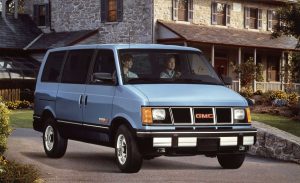
Chevrolet Astro / GMC Safari 4×4
Fairchild-Hiller (New York) Safety Car
Ford Sierra 4×4
Fiat 128
Jaguar XJ220 4WD
Mazda 323GTX
MG Metro 6R4
Opel Manta B Group B rally car

4WD vehicles engineered and built by other companies using FF technology
(including Viscodrive and Ford Europe, GKN, Steyr-Daimler-Puch and Tochigi Fuji Sangyo)

Audi quattro Sport S1 (final, 1986 Group B version only)
Audi R8
Audi V8 quattro
BMW 325iX
Ford Escort Cosworth Turbo
Ford Sierra XR4x4/Cosworth 4×4
Ford Granada Scorpio 4×4
Jeep XJ Cherokee
Jeep WJ Grand Cherokee
Jeep ZJ Grand Cherokee
Lamborghini Diablo VT
Lancia Delta S4
Lancia Delta HF 4×4 and Integrale
Land Rover Freelander
MG Metro 6R4
Nissan Pulsar/Sunny GTI-R
Peugeot 205 T16
Peugeot 405 T16
Peugeot 405 Mi16 4×4
Range Rover Classic, 1989-on
Renault 21 Quadra
Renault Espace Quadra
Subaru Legacy
Subaru Rex
Toyota Camry
Toyota Celica GT4
Toyota Vista
Volkswagen Golf Syncro
VW Passat GT Syncro
Volkswagen Transporter Syncro
Volvo 850 T4 4×4
Volvo XC90 (first generation)

Photographs of many of these vehicles can be found Below:-


P104 A one-off Ferguson Formula Racing Car project that became a Sleeping Beauty’

P104 A one-off Ferguson Formula Racing car project that became ‘Sleeping beauty’

Story told and written by Henri Greuter, edited by Chris Maughan.

This article is dedicated to the memory of Bill Munro.

It may be hard to imagine about a company that is best known for its agricultural vehicles, but among all the vehicles built by the company in its history two of them were racing cars! This is a story about one of them, the least successful of the two and for the British people, also almost certainly the least well-known one. Indeed, not many British people will be able to say that they have ever seen this Ferguson built vehicle.

Within the many Ferguson Formula Pnumber projects there are several that were one-offs. P99 and P104 are two such examples. They were both racing cars built for paved tracks and, as such, they are rarities within the Ferguson Products catalogue. P99 was the first one built, according to the then current Formula 1 rules. However, the potential success of the car was massively reduced as the P99 was built with a front-mounted engine just as the rest of the F1 world was transitioning from front to rear-mounted engines. A further problem for the P99 then transpired as the engine formula changed and engine capacity was reduced from 2.5 litre to 1.5 litre. The loss of power was even more pronounced for the P99 due to its more complex 4WD drive line. Nevertheless, P99 gained some creditable results in competition and showed promise when it came to demonstrating how a race car could be made to deal with large amounts of power.

Within their book Traction for Sale Bill Munro and Pat Turner have described the history of P99 and how the driver Stirling Moss got involved with the car. Munro and Turner also described nicely the story of the second built Ferguson racer, the P104. What follows in this paper is a briefer history of the P104 and my involvement in its story.

When in the USA, Stirling Moss met the Granatelli brothers who, at that time, were the owners of the, even by that time, already legendary Novi Indycars. These cars were powered by a brutally powerful centrifugally supercharged 2.8 litre V8 engine of which the first example was built in 1941. The rules then permitted a capacity of 3 litre, but from 1957 on therules reduced it to 2.8 litre swept volume.

Despite stupendous power advantages, success for the Novis had remained limited. The Novi history up till that moment was a chain of mishaps, bad luck, and human tragedies, including the bankruptcy of the first owner of the cars and engines as well as fatal accidents for some of his drivers. Even while active, the cars were said to be cursed one way or another. There was talk about the ‘Novi Jinx’ among Indy fans and railbirds. Since 1959 no Novi had qualified for the 500 miles race, even despite a change of ownership after the original owner, Lew Welch, had gone bankrupt in early 1961. Despite everything, the Novis had been crowd favourites from their very first appearance, not in the least because of its deafening loud screaming engine. (130 dB was possible!). Fans who supported other teams and drivers first did not mind should their favourites be defeated by the Novis and their drivers. Their popularity with Indy fans could be compared with that of the Ferrari cars elsewhere in the world.

In the early 1960’s Stirling Moss felt that 4WD could be a solution to reduce the tyre wear on the Novis so he made such a suggestion to the Granatelli’s. For the full story of this you should read the book by Munro and Turner, but it was late 1963 when the Granatelli’s finally took up the idea, but then they went in deep! The ‘Old P99’ was brought over for some tests at the Indianapolis Motor Speedway. Despite the fact that the then installed engine wasn’t very healthy, or fresh, P99 surprised the Granatelli’s with being only marginally slower in the corners than on the straights, and its handling was praised by both Jack Fairman, who knew the car, and American driver Bobby Marshman, who knew the track.

The Granatelli’s then ordered the Ferguson Company to build a dedicated 4WD car around their Behemoth powerplant. Time was limited and short, but by late March 1964 Ferguson Formula had completed the construction of what was for them project P104. Late March 1964 the car was sent off to the USA and arrived in time at the Indianapolis Motor Speedway for an early test.

It might be seen as strange as of why in late 1963 the Granatelli’s decided to go for a front-engine car while only a few months before, during the Indy 500, Jim Clark and Dan Gurney had clearly shown the longterm potential of rear-engine chassis with their Lotus-Fords. A reason for sticking with a front engine was that the Novi, due to its basic design of the entry of fresh air into the supercharger, was not really suited for a rear engine installation. In addition, several specialists at Indy still felt confident that the front engine lay-out remained as being the way to go. What favoured a front engine lay out was the high-speed stability of the car, just like a dart arrow is way more stable with the mass at the front of the arrow. Finally, remaining with a front engine layout gave Ferguson Formula the opportunity to fall back upon its experience gained with the P99.

However, almost as soon as it had arrived in the USA, P104 had to endure its first hit by the now infamous ‘Novi Jinx’. The first laps for the car at the Indy track were on 30th March 1964, and one of the drivers that day was the team owner, Andy Granatelli, since he wanted to have personal experience with the vehicle he had spent a small fortune on acquiring. Another funny anecdote from that day was that when the car was taken out on the track one of the Granatelli brothers (Vince) was following in a passenger car for some observations. He had a passenger with him, no less than the well-known and popular driver AJ Foyt. Foyt told Vince that he did not like the shape of the rear end of the car. To which Vince Granatelli replied that he better had get used to it because he was going to see it for a much longer time in the race!

Now, was this comment too much temptation for ‘the Jinx’? After being driven for the first tests at the Indianapolis Speedway on March 30th, 1964 it was stored overnight in one of the garages in Gasoline Alley, the area where the teams had their garages and stored their cars and maintained them. Big fires in the Garage Area were a rarity. There had been one shortly before the start of the race in 1941. Another one was in the night from March 30th, 1964, and it took place in the garages of the Granatelli’s! As a result, P104 was reputedly severely damaged and one of their older 2WD cars also needed a major overhaul.

The Granatelli’s and their crew got the job done in time and a revamped version of the P104 was rolled out early May. The bodywork on the car had been changed from how it had arrived in the USA and that’s why pictures of the still unpainted car during the March test session make the car look very different from later versions. As for the driver who didn’t like the shape of the rear end of the P104, his prayers were answered because the rebuilt car had a much different, more boxy, shaped rear end.

What has been relayed as opinions about the car depends on the year when the statement was printed. Shortly after its construction the car was praised by the most vocal and prominent member of the Granatelli family, Andy. In later years he was less positive about it. When the author met Andy in 1989 for an interview, he said with a voice that expressed near disbelief, “A tank! A tank! I ordered a racing car and they built me a tank!”.

Not all crew members were permitted to know certain details of the car they were working upon. When the car was inspected and had to be weighed all crew members who had nothing to do at that moment were instructed to leave the garage when the car went up on the scales. In any event, no-one believed the press kit information about the car actually being lighter than the older 2WD chassis the team fielded that year as well.

Now there had been a good reason to build a study, solid chassis for Ferguson. A Novi V8 weighed in at about 240 (!) kg and in 1963 the three 2WD cars that had started the race had engines with a power output of a reputed 742hp. From what appeared in print, the Ferguson P104 supposedly got less of a torture to endure with the power, said to have been some 640hp.

The team had hired two drivers; Jim McElreath was the primary driver and Bobby Unser the second. Both drivers had normally been assigned to 2WD roadsters.

At this stage in the story, it needs to be pointed out that practice and qualifying at Indy at that time were unlike anywhere else in the world. Practicing started at the beginning of May, and there were four days allocated for qualifying. In 1964, the first two were the weekend of May 16th and 17th, the next and final two the following weekend, May 23rd and 24th. The race itself was held on May 30th.

Jim McElreath got the first shot with the P104 in practice, but he felt the car to be ‘heavy like a Cadillac’ and he had more faith in a tried and tested Novi Roadster than the innovative heavyweight. P104 was then tried by veteran driver Duane Carter who really liked the car and was willing to drive it. Regrettably for everyone involved, Carter had strong connections with Champion spark plugs while the Novi team used Autolite plugs, and a compromise wasn’t possible.

Bobby Unser was then offered the opportunity to try P104 and he eventually decided to make it his primary car, but again the ‘Novi Jinx’ hit big time during the first weekend of qualifying. An innovation that had worked on other engines had been put on the Novi engines for the pole weekend; sodium filled valves. For whatever reasons, they didn’t work on the Novis and the chance to qualify the cars high up in the field was lost for both Unser and McElreath. Now if that had been the only setback resulting from this mishap!

The following weekend all went well for Bobby Unser and the P104 and Unser qualified with an impressive 5th fastest qualifying time for the race! But due to the regulations, his spot in the field had to be behind the slowest qualifier of the first qualifying weekend, Bobby eventually ended up on the 22nd starting spot. As for Jim McElreath’s faith in the older 2WD cars, his original car (the Blue #3) failed on him during two qualifying attempts and eventually Jim took over the other 2WD Roadster (the White #28, initially Bobby Unser’s primary car) and qualified that car.

The failure to qualify in the first weekend became even more of a definitive factor in the outcome of the race for Bobby Unser. Starting in the back of the field, Unser had the misfortune to be behind a fiery accident at turn four during lap two and the beginning of the front straight. Approaching the inferno, Bobby instantly decided to use the large mass of the Novi and its momentum when at speed, stood on the gas to get through the fiery mess in front of him, hoping that the momentum would keep him moving and would save him from coming to a standstill within the fire as well. It worked, but in the process, he ran into a few cars in front of him and others ran into him as well. Still, Unser and the P104 got through the sea of fire, though his car was damaged beyond repair with a broken front suspension when eventually P104 did come to a standstill, parked against the outside wall. More importantly for Bobby, apart from a slight burn in his neck he had escaped alive and virtually unhurt. His race was over, but at least he was still alive. Racing drivers Dave MacDonald and Eddie Sachs had been killed in what has been one of the biggest infernos ever in the history of Indianapolis. Sadly, P104 had been denied to prove its Race Day potential on the one, if not the only, occasion that could have been its best chance ever for a decent result.

Including photographic images taken at Indy in 1964 is difficult due to availability and copyright issues, together with the fees charged for their use. How P104 looked in May 1964 is shown with this picture below of a 1:24 scale model, released as a kit in the mid 80’s by a little company named Garage 97. It required a skilled and patient builder to get a decent result. My kit ended up in good hands and the result was worth waiting a few years for.

The car was rebuilt and prepared for duty one year later, but by then it had been degraded to backup status. Because the Granatelli brothers, a bit incensed about the tremendous weight of the P104, had built their own chassis although still for a front engine car. Ferguson Formula had offered to build a new chassis themselves, but that suggestion was turned down by the Granatelli’s. But they did order the components of a 4WD driveline for their new car and that became Ferguson Formula Project P120.

The new, lighter car became the primary entry for the Novi team in 1965. But yet again the Novi Jinx hit the team. The Friday before Pole day poor Unser could not avoid a spinning car in front of him and hit it hard. Unser was sent to the hospital for examination but released as fit for driving. However, his new ‘lightweight 4WD Novi’ was damaged beyond repair.

The Granatelli’s and their men then hurriedly prepared the P104 for active duty on the next day (May 15th) when the Pole was up for grabs. Unser amazed many with a splendid qualifying attempt with a car he had little to no actual experience with that year. He ended up 8th fastest of the day and fastest of all the front engine cars that had managed to gain a qualifying spot that year.

Part 2 next issue.

Published in Journal No. 112, Spring 2025.
Henri Greuter, edited by Chris Maughan.
This article is dedicated to the memory of Bill Munro.


P104 A one-off Ferguson Formula Racing Car project that became a ‘Sleeping Beauty’ (Part 2)

P104 A one-off Ferguson Formula Racing Car project that became a
‘Sleeping Beauty’ (Part 2)

Story told and written by Henri Greuter, edited by Chris Maugham

This article is dedicated to the memory of Bill Munro

In the final practice session for the race there were engine troubles, forcing the team into a major engine overhaul. That appeared to have gone well when Unser managed to keep P104 in the front of the field during the early part of the race itself. But trouble struck after 69 laps when an oil line came loose and the team was forced to retire from the race, for a final 19th place classification.

This turned out to be the end of the racing career of the P104. The following year there was one more attempt with a Novi powered car, based around the lightweight chassis with P120 components. But despite a staggering power amount of over 800hp, that car could not be qualified for the race by driver Greg Weld who put the car in the wall on the final day of qualifying after a more than troublesome period of practice.

The Ferguson Formula P104 had earned the distinction to have been the chassis that had housed a Novi V8 engine in what were the last ever laps in the Indy 500 for one of these legendary engines. It can be argued that it had achieved the mission to prove the merits of 4WD and give the powerful Novi V8 a better chance to cope with tyre wear. However, the improvements had been marginal and not enough to give the big V8 a chance to fight off the rear engine revolution that was taking place at Indy at the same time. What didn’t help either was a tyre war between Goodyear and Firestone that brought such big improvements in tyre developments that were more beneficial for the opponents of the Novis than for the ‘big brutes’. Another important contribution P104 gave to the efforts of the Granatelli racing team was invaluable experience with 4WD that was used in later very spectacular Indy entries by the Granatelli brothers.

The P104 faded from sight after retiring from active duty. It took some 18 years before the car came back to sight again and became part of another big project before returning to the dark yet again. During that period of time to some extent, P104 entered my life.

You might be wondering, by now, who is the author who spoke to Andy Granatelli, and the ‘me’ whose life P104 got into briefly?

My name is Henri Greuter. I am a Dutchman who, in early 1988, had the fortune that the American writer George Peters realised that I was enough of a fan of the Novis, and knew quite a lot about their ‘Legend’, that I could be a useful partner for him in a project that eventually resulted in the publication of two books about the engines and cars powered by them and the men behind all that. I also had the honour and pleasure to be of some help for Bill Munro and Pat Turner when they wrote their book Traction  for Sale.

About one of the earliest rumours about the fate of P104 after its career had come to an end was the story that components within the driveline of the Novi had been used in the legendary 1967 STP turbine car #40. Strangely enough, most of the time it was assumed that it had been P104 that had donated its driveline components to the Paxton-Pratt & Whitney car. A suggestion that seemed to be supported by the statement of Andy Granatelli’s son Vince to me in 1988 that the 1965 built lightweight chassis had been trashed. Other first-hand information I got also hinted about the use of P104 components in the 1967 Turbine car. Later on it  became clear to me that this had not been the case after all and that I had to rewrite the history of the later years of P104.

Some documentation in print about P104 appeared in 1983 in the American magazine Autoweek. In an article it was told how people in the City of Novi had got the idea to promote their town by trying to obtain a Novi race car. They had contacted Andy Granatelli and after a while they worked out a deal in which step by step the city could take over the remaining engine hardware as well as one of the cars Granatelli still owned, the 1964 built 4WD car. This was not one of the cars once owned by Novi citizen Lew Welch. All of those (five) cars were out of reach or not even in existence anymore. The P104 was still a genuine Novi and one of the most interesting cars built in the 60’s for Indy, thus worth going for.

Then, in 1986 the very same magazine mentioned the City of Novi had started with plans for creating a Motor Racing Hall of Fame. The article also mentioned that an engine-less but otherwise fresh-looking Ferguson-Novi P104 was seen as well as no less than five original Novi engines.

I was at Indianapolis for the first time in my life in 1988 and on Friday May 13th I met one of the few people still alive who had been part of the Novi team in the years of first owner Lew Welch; mechanic and jack-of-all-trades James Bell Gardner, better known under his nickname ‘Radio’ Gardner. When I met him again two days later he was angry with me. As I had not been around the day before I had spoiled a surprise he had organised for me and as a result of that someone living in Michigan missed out on meeting a man who was restoring the Ferguson P104 and also owned the leftovers of another Novi that he was also restoring. The man had left some  pictures with ‘Radio’ for me and looking these over I realised what a unique opportunity I had missed.

My host, with whom I was staying while at Indy, and I went home utterly disappointed that evening. But once home a string of events that we could not have dreamed up occurred!


Bobby Unser practising with the Ferguson P104. The black box located on the rollhoop by the drivers head is a film camera that registered the measurements on the different tachos and instruments on the dashboard. The Granatell brothers wanted to verify what their drivers told them!
Photo Copyright: First Turn Productions LLC, used with permission

Henry Ford endorsed the construction of 10 front wheel driven chassis built by famed car
builder Harry Miller between March and May 1935, all powered by Ford Flathead V8 engines.
Nine cars were finished in time to make it to the track and only 4 drivers managed to qualify. All
of them retired from the race with the same failure, a poor designed steering arrangement, being
too close to an exhaust. All the lubrication grease was lost and the steering ‘froze’ solid. This is
the 10th car, not finished in time and is located in the Henry Ford Museum. Henri Greuter

The 1946 Novi nowadays resides within the Brumos Collection in Florida. It is repainted in the
1952 colours. This is how Chet Miller drove the car that year, and was the fastest qualifier for
the race but due to regulations started in 30th place. Since qualifying at Indy is based on the
average over 4 laps, and no other front wheel driven car ever went faster than Miller in 1952.
It still holds the record for the fastest ever front driven car at Indianapolis! Henri Greuter

The second front wheel driven Novi has been in the possession of the Indianapolis Motor
Speedway Museum since around 1960. Shortly before he went bankrupt Lew Welch
donated the car to the Museum, though without an operational engine. Somewhere between
1983 and 1988 the car was restored as close as was possible into its 1948 configuration.
The year when Duke Nalon finished third, the best ever finish for any Novi. Thanks to the
tremendous popularity of the Novis, this car was for a long time one of the few non-racewinning
cars on near permanent display on the Museum floor. Henri Greuter

In 1953, the car looking like in this picture, driver Chet Miller crashed fatally in this Novi
which was then retired and cannibalised. Restoration was finished in 1998, originally back
into the 1953. Sitting in the car is the then current owner who restored the rolling chassis,
Robert ‘Buck’ Boudeman. During his life, Boudeman made it to the Goodwood Festival of
Speed on several occasions with this car. Henri Greuter

That very same evening my friend was called by a friend of his in Texas, a man who would be staying with us as well from the next weekend on. My friend told his Texan friend how it had been for him to drag a Dutchman around (fortunately, he had some fun with that!) and then also told about what we had missed out on that very same afternoon. The Texan then replied that he was in touch with someone in Michigan who claimed to have Novi hardware and had been invited to come over and have a look at it. But the Texan didn’t believe that story, knowing how rare Novi hardware was. To which my friend replied that we had missed out on someone from Michigan who had left us pictures of what was most definitely Novi hardware. He and his Texan friend concluded that the chance that there were two different men in Michigan who each owned Novi hardware was close to zero.

After describing what was visible on our pictures, the Texan went wild because we were describing one thing that as far as he knew could not exist anymore according to all known data. He then told us that he had to verify a few things but wanted to make a phone call with his contact. This because the Texan would come over for the race and be with us in Indiana too in the week before the race. But since for his standards he would then be close to Michigan, if the invitation was still valid, he wanted to visit his Michigan contact in that week. And if it was indeed as we assumed the same man we had missed out on, he wanted to ask permission to bring us along. While the Texan called Michigan, my host and I were in sheer disbelief about the entire situation.

It turned out that we had indeed missed out on meeting the same person as the Texan had been in touch with. After a telephone conversation by the Texan and suitable explanations an appointment was made for us all to meet car restorer Robert ‘Buck’ Boudeman at his shop in Michigan on Monday May 24th 1988.

First cursing your fate for having missed someone yesterday at noon, then go to bed with the knowledge you are going to meet him and see with own eyes what you had only seen on a few pictures before going to bed. Sometimes the truth can be stranger that you can imagine! When we did meet Buck Boudeman at his facilities the three of us were given a lot of confidential information we were not supposed to talk about for a long time. Buck was in possession of what was left of what was believed, by the wider world, to be a no longer existing car: the remains of the very first genuine Novi, built in 1946. This front wheel driven (!) car had been used for the last time in 1953 but had been parked and cannibalised for parts after driver Chet Miller had a fatal accident in the car. Miller was the second driver to be killed in that very same chassis, Ralph Hepburn had been the first in 1948. How the chassis had survived remained undisclosed. Boudeman had been collecting parts to restore the car eventually, but an engine was not obtainable for a long time. All of the engines were with the Granatelli brothers and for a long time they have had no intention to let any of them go out of their possession. However, once the City of Novi had got hold of the inventory, things changed for the good.

Owning the engineless car, but also the engines to complete it, the City of Novi wanted to have P104 up and running again. Boudeman informed me that he and the City of Novi had made the arrangement that he would finish this restoration of P104 for them for which in return he would receive the parts within the inventory that he needed to restore his FWD chassis. But P104 had the priority. At Boudeman’s shop I did not see what was to become the engine for his car, but rather work on the dual ignition 2.8 litre engine that was to be installed in the Ferguson which was taking place at the time. The engine was there, not entirely  omplete, but I could see it.

This is the Novi engine destined to be installed in the restored Ferguson P104. Standing next to the engine is Robert ‘Buck’ Boudeman who did the work. Henri Greuter

Despite being of only 2.8 litre capacity, the Novi V8 is a massive, big, heavy piece of equipment. The dual plug ignition is the same as that used on the 1954 and 1955 Mercedes F1 engines. Henri Greuter

The restoration of P104 was finished in March 1989 and there is video evidence of the car being fired up and Buck Boudeman taking it out on the streets of his hometown!

The plans for a Motorsports Hall of Fame were indeed realised and such a facility was located in Novi, Michigan for a while. The P104 found residence in the Hall of Fame, but the car occasionally went out for demonstration laps at various locations across the USA.

Over the years I visited Buck Boudeman on several occasions and followed his progress with the restoration of his 1946 FWD Novi, but that was a tardy job delayed by all kind of other projects he was involved with. For one reason or another, I somehow never managed to visit Novi and the  Motorsport Hall of Fame and see the restored P104.

Then P104 re-entered my life in the Summer of 1996. Part 3 next issue.

Published in Journal No. 113, Summer 2025, Henri Greuter


P104 A one-off Ferguson Formula Racing Car project that became a ‘Sleeping Beauty’ (Part 3)

P104 A one-off Ferguson Formula Racing Car project that became a
‘Sleeping Beauty’ (Part 3)

Story told and written by Henri Greuter, edited by Chris Maugham

This article is dedicated to the memory of Bill Munro

In July 1996 I found out that Buck Boudeman had previously participated in the Goodwood Festival of Speed when he had brought over two of his other cars. In early August of 1996 I was in the USA and went to see Buck and in talking about Goodwood, Buck made it clear how much he enjoyed the experience and that if ever invited back he would return. Very briefly I brought up the idea as to how nice it would be if one or more of the still operational Novis could be brought to England, or to have his own car finished and take it to Goodwood.

Buck agreed about the other cars coming over being a good idea but his car, even if finished was unlikely to be invited. I asked Buck what he should do if Goodwood did ask him to come over with his Novi. Buck then stated to me that should he ever get such an invitation, he would do everything needed to make sure he could accept it, but he was certain an invitation would never come. He then surprised me with the promise that, should he ever receive an invitation from Goodwood to bring over his Novi, the restoration of the car would be finished with top priority in order to make that happen. However, he did also say that he simply couldn’t believe Goodwood wanted to see his car running at their event given the car’s lethal past, but if he was proven wrong after all, it would be the best motivation possible for him to finish the car at last.


One of the 10 Miller-Ford chassis was rebuilt in 1941 be powered with the very first Novi engine. What had been a fine handling 160 HP car become an evil beast once fitted with an engine almost three times as powerful, some 80kgs more weight up front and engine characteristics comparable with an early turbocharged F1 engine. Since a number of the original 1941 components don’t exist anymore this car is not entirely genuine 1941 anymore but a recreation with many identical copies. The snailhouse in the back of tbe engine bay is the supercharger, on top of the engine the intercooler and the ducting for cool air towards the intercooler can be seen.

I knew I was on to something, but I also knew that I needed the help of Pl04.

I then contacted the organisation of the Goodwood Festival of Speed with the suggestion that it might be an idea to invite the City of Novi to bring over their Ferguson P104 to the festival for its first ever return to England after being sent to the USA in March 1964. This invitation could also include the P99 so that a reunion between P99and P104 on British soil could be arranged. I also mentioned the existence of Buck’s Novi that was currently being restored, but could also be invited as being an early example of the Novis (p104 being a very late one) so if that car came over as well there was a reunion of two examples of the Novis together as well. Something that had not even been seen in the USA.

Unattended and ignored … ‘Fergie’ back home in England at last during the 1998 Festival of Speed.

Shortly before Christmas I heard from Buck Boudeman that he had received a message from Goodwood in which they had informed him that whenever his Novi was ready to run they hoped to hear from him because of a plan they had mind to do on a future Festival in which his FWD Novi would be a welcome addition.

As a result of this invitation, and a lot of work, both Buck’s Novi and the Ferguson P104 were at the 1998 Goodwood Festival of Speed. P104 was finally back in its country of origin for once. Regrettably, it appeared to be impossible to get P99 attending the same event and thus it was not possible to reunite both the Ferguson Formula built racing cars.

Bud Bennett sitting in Pl04 when it was ready for a test run at the Festival of Speed.

Sadly, the opportunity for a reunion between P99 and P104 did not come about and, as far as I have been able to ascertain, P104 has not returned to the UK for another visit. This is now unlikely to occur because ‘the second active life’ for P104 came to an end in the years thereafter.

Though Novi engines were tremendously powerful, they were notoriously sensitive and tricky to manage. Setting them up to run properly was a challenge.

The engine bay of P104 was filled with a lot of engine hardware.

They required a lot of attention and maintenance by people who knew and understood them. Even with the engine used in P104 being detuned, to make it easier to be used for the demonstration runs, it was still difficult and complex to prepare for running. Needless to say, such extensive maintenance and service also requires enough financial support


Two entirely different kinds of Nvis standing next to each other in the paddock of Goodwood. They differ by 18 years in age. A unique sight and it happened In England. But ‘Fergie’ has never returned to her land of birth since..

It turned out that the Motor Sports Hall of Fame could not survive at Novi, Michigan. It was relocated on several occasions to different locations but eventually from 2016 the collection went to Daytona. P104, being owned by the City of Novi, was not part of the collection that was transferred to Daytona and it remained in Novi. For a while it was on display in the Novi Public Library, but in 2019 the car was moved again, this time it went to the City Hall. By that time the car was no longer in a condition to be started up. The City of Novi was not able to provide the funding to keep up with the required maintenance and, a sad result, the car is now, albeit complete, only suitable for static display.

Some 20 years after had seen the P104 at Goodwood I was in for a nasty surprise.

Back in 1988, when I met Buck Boudeman for the first time, my spoken English was not that impressive so from my conversation with Buck about the restoration of the drive line of the car I had understood that it had been newly made in England. This understanding was in line with the information I had also read in a magazine that stated ‘the 4WD Novi’ had donated its drive1ine to the 1967 Turbine car, and hence that car being named as being a ‘son of the Novi’. For more than 30 years I remained convinced that this was the true position. Furthermore, whilst there is talk about ‘the 4WD Novi’, it is assumed most of the time to be the Ferguson P104 which is by far the best known of the two. The other 4WD Novi (the 1965 built car with FF P120 components) never made it into the race and has remained much more unknown. In both 1965 and 1966,1he years it was entered Indy, the car was crashed beyond repair.

However, during the writing of ‘Traction for Sale’, Munro and Turner discovered that there had, in fact, not been an entirely new drive line made for 1he P104 restoration but rather that the original drive line had been returned to England for maintenance This new information was passed to me by Bill.

Based on all research results by both Bill Munro and Henri Greuter: whatever is still left of Ferguson Formula Project P120 (the drive line of the 1965 built 4WD Novi) eventually ended up in this legendary car: the 1967 Paxton-Pratt and Whitney Turbine car that retired from the lead with a mere four laps to go. After a crash in practice in 1968 the car was retired and restored. Though owned by the Smithsonian Institute, the car was on loan to the Indianapolis Motor Speedway Museum for a long time.

It was now clear, at least to me, that based on the discoveries of Bill Munro, the history of the three Indy Cars had to be rewritten. Because: if the 1967 Turbine car indeed had used a 4WD driveline with components of “the 4WD Novi”, that could only involve parts of the P120 project from 1965. Therefore Vince Granatelli’s comment about the Novi powered 4WD chassis built in 1965 being trashed had been only partially true as the vehicles were cannibalised for useful parts in support of other ongoing projects. In this case: The 4WD drive-line of the car being transferred onto the Turbine powered chassis used in 19617.

This new information also meant that the restored P104 contained way more original genuine, historically accurate parts than had hitherto believed, thus increasing the historical value of the car even more. In addition, as far as the history of Ferguson Formula concerns it also means that the fate of the P120 components is different to that which was previously believed. Rather than being lost the components are still in existence, fitted in the restored 1967 #40 Turbine car. Nowadays this particular car resides within the collection of the Smithsonian Institute in Washington, DC.

In March 2024 I was finally able to tick off one particular entry on my bucket list by visiting Novi, MI and see what was left of the facilities of Lew Welch’s factory and to see P104 one more time. Welch’s factory is no longer in existence, apart from the water tower (pictured left) which carries a memorial to the cars that got their name from the town where the tower is standing.

P104 can be found in the centre hall of Novi City Hall. It looks pristine and like it was in 1965, apart from some extra decals applied on the car, decals by companies who provided materials, components for its restoration to a driving condition again (sigh) now than 35 years ago.

It is also still fitted with two decals for which I am partly responsible. One of them is the decal of Lufthansa, the airline that transported the car from the USA to England and back in 1998. The other is the ‘Silver Oval that every car that is present at the Goodwood Festival of Speed gets. Many, many cars that over the years have been at Goodwood have this decal applied and retained ever since as if it was a distinction of honour. P104 also has retained its ‘Silver Oval’, the approval that the British built chassis has been back in its home country for at least one moment during its life.

But it is a somewhat sad sight The car stands in a corner, surrounded by a sturdy cage to avoid people getting too close. It also has a Perspex plate within the cockpit to make it impossible to climb into the car should you have managed to climb the fence undetected. Despite its looks, it is a sad sight to know that the car, despite being as good as complete, will likely never drive under its own power again.

The ultimate expression of fascination for the Novi? Mr Eddie Evans of Bedford, IN (1931-2006)) owned a limestone company. A big-time race fan who also owned his own car museum. He commissioned several racing cars to be carved out of limestone. One of the most famous in the collection was this half-scale tribute to Duke Nalon and the Novi as the highlight of the Novi legend. The Evans family donated it to the Indianapolis Motor Speedway on May 1,2016.

Parked within its cage, it reminded me about ‘Sleeping Beauty’. It will take time and efforts to get all the running gear sorted out and verified for active use again. In theory that could be done, but will everything else that is needed to make such an overhaul possible ever happen? Will we ever see an air pressure starter ‘kissing this Sleeping Beauty’ back into life again?

Finally: This article was written with the intention of becoming a joint venture between Bill Munro and myself. The untimely death of Bill in October 2024 prevented this to happen. Fortunately it has been possible to see this manuscript being used and printed after all. Not thanks to Bill Munro, but as my personal tribute to Bill Munro within a society of which I know he was very proud to be part of. Rest in peace dear Bill, and thank you for your friendship, it was a joy and honour for me to have known you and to be able to work with you. My sincere thanks to Chris Maughan, a Ferguson Club member, for his assistance in editing this article and in translating my ‘Dutch English’ into ‘English English’!

‘Sleeping Beauty’ or caged tiger??? All photographs Henri Greuter

Published in Journal No.114


‘After the Tractor’ Harry Ferguson & the R5 4WD

Duncan Russell looks at the development of four wheel drive and Ferguson Research. (Duncan’s article from From Journal 64, Spring 2010 has been kindly updated by Bill Munro (author of “Traction For Sale”) in October 2023, the update is below……..

Prior to the article here is an interesting video of the Ferguson flat-4 engine; It’s the only fully-operational Ferguson flat-4 engine, demonstrated at the launch of Traction for Sale at the British Motor Museum, Coventry on 12th May 2019.

The engine has a single overhead cam par bank, driven by a toothed belt. This is believed to be the first known application of a belt drive to a camshaft, though not in a production engine

Bill Munro looks at the work of Harry Ferguson Research in the field of full-time Four-wheel drive.

During the 1930s, racing driver Fred Dixon was saddened by the growing number of deaths caused by road accidents and he hatched an idea to design a super-safe family car with four-wheel drive and four-wheel steering. When he raced at the Ulster TT, his car was garaged by Harry Ferguson and the two men would discuss Dixon’s ideas at length.

Dixon’s fellow racing driver, Tony Rolt acquired an ERA racing car in 1937 and he engaged Dixon as his racing mechanic. Intrigued by Dixon’s ideas, Rolt put up some money to form a company, Dixon-Rolt Developments Ltd to pursue the work and in a workshop behind Dixon’s house in Reigate, Surrey they built a prototype, which they called the Crab. It had four-wheel drive and four-wheel steering, but it could not be steered and braked at the same time. Clearly, much more work needed to be done. Rolt was a serving army officer and when war broke out in 1939, he was sent into action in France, was captured in the retreat to Dunkirk and ended the war in the infamous Colditz Castle. When he returned to England, he met up with Dixon and the two restarted work on the Crab.


The ‘Crab’, Dixon and Rolt’s first attempt at a 4WD Vehicle.

Rolt knew that Dixon-Rolt Developments needed capital. Harry Ferguson had won £9m in a landmark patent infringement case against the Ford Motor Company and in 1952, Rolt approached him to see if he would be willing to invest in their company. Instead, Ferguson bought the company and renamed it Harry Ferguson Research Ltd. New premises were found in nearby Redhill and design engineer Claude Hill was recruited from Aston Martin. A second prototype was developed, numbered R2, with a vertically mounted 4-cylinder Scotch Yoke engine at the rear. After testing it at Abbottswood, a pressed steel body was built for it. However, Dixon’s original four-wheel drive system didn’t control wheelspin, as it needed to do. Thinking hard on the problem, Harry Ferguson said, “what’s wanted is a diff that diffs when it should diff, and doesn’t diff when it shouldn’t.” He gave Claude Hill the task of making that a practical reality. Hill devised a mechanically controlled centre differential that locked when wheelspin was detected and immediately unlocked when traction was regained. That was the heart of what was, at first called the Ferguson Principle.

Meanwhile, Ferguson moved the company to his tractor factory in Coventry, which Dixon disagreed with and he left the company. At Coventry, a new four-wheel drive prototype, R3 was developed, fitted with a fibreglass estate car body and a flat-4 engine of the company’s own design. The plan was to offer the complete package to a major motor manufacturer to build under licence, in the same way that the tractors had been built, but no manufacturer was willing to take up the offer.

In 1954, Ferguson, having parted company with Massey-Harris was obliged to move Harry Ferguson Research out of the Coventry works. A temporary home was found at Chipping Warden airfield, where a further research car, R3F was built, using a platform chassis and the R2’s body crudely modified to accept the totally different mechanical components. This was registered as RPE 4, though later, erroneously referred to as R4. It is now on display at the Coventry Transport Museum.

Ferguson R3F, an interim research car using the body built for R2 and using a Ferguson flat-four engine, mounted on a platform chassis.

A total of three prototype road cars were built, two estate cars and a saloon.

Ferguson Research Car R3F as it is today, on display at the Coventry Transport Museum

Ferguson built new premises at Siskin Drive, Coventry in 1956 and there, in 1959 work began on a fourth generation Research Vehicle, R4, with a similar platform chassis to that of R3F and an estate car body designed by Giovanni Michelotti. A year later, work began on what is perhaps the most famous Ferguson four-wheel drive car of all, the Ferguson-Climax Grand Prix car, P99.

Ferguson R5 Estate car prototype; One of two Ferguson R5 Estate cars built. Both survive, in the possession of the Coventry Transport Museum


The Ferguson P99 with Stirling Moss at the wheel, testing at British Grand Prix 1961.

P99 conformed to the new Formula I regulations for 1.5 litre cars, but all this generation were rear-engined and P99’s handling advantage was much less than it was with the older front-engine cars. P99’s racing programme was run by Rob Walker Racing and its first race was the British Empire Trophy Race at Silverstone, with Stirling Moss as the driver and Jack Fairman as reserve. However, brake failure forced retirement. It was entered for the 1961 British Grand Prix at Aintree. After practice, Moss, prioritising his championship chances, considered that the car was not developed sufficiently to be a serious contender and started the race in a Lotus. Jack Fairman started the race in very wet conditions, but after the car developed a misfire, which was fixed, Moss took over and brought the car up to second place. However, he was black-flagged because the car had been push-started. Moss drove P99 in the Oulton Park Gold Cup race in 1961 where the damp conditions suited the four-wheel drive and Stirling won by some considerable margin. It was the first and only Grand Prix win by a 4WD car.

Sadly, Harry Ferguson did not see P99 compete. He died in 1960 and the chairmanship of the company passed to his son-in-law, Tony Sheldon. A further research model, R5 was developed, as an estate car with a 2-litre overhead cam version of the flat-4 engine. Two examples were built, the grey R5/1, which later was fitted with a Paxton supercharger, and the blue R5/2. Both survive in the Coventry Transport Museum warehouse.

Tony Sheldon scrapped Harry Ferguson’s original plan, to offer a complete vehicle package and instead the company began developing a range of systems that could be offered to car makers for fitting to their existing cars. At the time, only one maker, Jensen took up the offer, introducing the 4WD Jensen FF (for Ferguson Formula). This was also the first production car to incorporate the Dunlop Maxaret anti-skid braking system, which was now an integral part of the Ferguson Formula.

In 1969, GKN bought into Harry Ferguson Research and acquired the rights to mass-produce the four-wheel drive systems, which promised to bring down the cost of the four-wheel drive systems dramatically. However, when a plan to build a four-wheel drive version of the new Ford Capri using GKN-built components fell through, Tony Sheldon pulled the plug on the research work and in 1971 the company was closed.

Just before the closure, a new type of control system for the centre differential, the Viscous Control, or VC was invented, which was far cheaper to build than the old mechanical unit and totally reliable. Tony Rolt believed this was the route to success and with Sheldon’s blessing formed his own research company, FF Developments Ltd. In the late 1970s, after several attempts to sell the system to the motor industry, American Motors took up the Ferguson Formula, with the VC, for its new all-wheel drive Eagle. This was the first mass-produced car with full-time four-wheel drive, beating the Audi quattro to market by a matter of weeks. Ford then took up the system for the Sierra and Scorpio 4×4 and Ferguson’s four-wheel drive system, in various guises was adopted by many makes around the world, including Volvo, Audi, Subaru, Lamborghini and Volkswagen. In 1994, FF Developments was bought By Ricardo Plc and is now Ricardo’s Driveline and Transmission facility.

P99 is now in the custody of the Rolt family. It was raced in historic events until 2017 but is now only driven in demonstration events.

Originally published in Journal 64, Spring 2010, Duncan Russell – updated by Bill Munro – October 2023


‘Traction for Sale’, Ferguson R5 4WD

Traction for Sale Mike Thorne


Tim Hanson, your editor, suggested that I write a review of this handsome new publication written by Bill Munro and Patricia Turner. Traction for Sale is the story of Harry Ferguson and his team in their development of permanent 4WD drive systems for road vehicles, this included their own prototypes and the conversions to 4WD of some mass produced cars and vans. Also embraced in this story are the developments they pioneered in racing cars: this was the era of Harry Ferguson Research (H.FR.) later to become Formula Ferguson Developments Ltd. (FFD) and eventually Ricardo FFD. Harry Ferguson’s interest in producing a ‘Safer Car for the Masses’ dates back before the merger with Massey Harris but unfortunately he did not live quite long enough to see the success of his 4WD Racing Car. Following his death in October 1960 the business was headed up by H.F’s son-in-law, Tony Sheldon with the able assistance of Tony Rolt (former Team Jaguar Racing Driver).

It cannot be over­emphasised that it was Tony Rolt who was the driving force in all this experimental work, right from the early days of Dixon-Rolt Develop­ments, the HFR era and well on into the days of Formula Ferguson De­velopments Ltd., which was in fact Rolt’s own company, with no direct business connection with the Ferguson Family Trust.

This book had a long gestation period. Bill Munro first became interested when, during his research into Jeeps in 1998, he contacted Ricardo FFD (formerly FF Developments) and met one of their long time engineers, Will Turner, whose wife, Patricia, had previously written an unpublished history of Harry Ferguson Research. It was suggested that Bill should make use of this and so the seeds were sown.


‘R5′ OWK 21 was the last Ferguson research car to be built before the company changed direction and began to adapt the technology to fit other makers’ cars.

I jumped at this opportunity to write a review as I have a strong interest in all H.Fs pioneering work not only his developed of the Ferguson System but the work he and his team became involved with, later in his life, to engineer safer road cars with the inclusion of 4WD and anti­locking braking systems.

This hardback book runs to 350 pages, profusely illustrated with archive photo­graphs and line drawings. It is clear that Bill has done much in-depth and wide ranging research and the manner in which he has presented this is evidence of his fascination with the subject and dare I say addictiori. I have found this book compulsive reading.

‘R3C’ is the third generation research car, pictured with Major Tony Rolt in the garden of Harry Ferguson’s home at Abbottswood, Gloucestershire.

The book is very detailed and I feel I can give you a flavour of this with the follow­ing bullet points taken from the back cover:-

  • In a story spanning seven decades, Traction for Sale tells of the efforts made to bring Ferguson full time four wheel drive to the mass market.
  • The Story of Harry Ferguson Research Ltd in developing the Ferguson Formula of All-wheel Control.
  • Full story of the Ferguson research cars.
  • The story of F.F. Developments, the comp­any founded by Tony Rolt to take the tech­nology forward when the estate of Harry Ferguson ceased to fund any further research.

Details of:-

  • Leading production cars: The Jensen FF, AMC Eagle and the Ford Sierra XR 4X4
  • Converted cars: The Ford Mustangs, Ford Zephyr MK4 and Capri, the Schuler Super Ranger and Opel Monza and Senator.
  • Formula One cars: The Ferguson Climax P99, BRM P67, Matra MS84 and Lotus 56B.-
  • Indianapolis cars: The Novi-Ferguson cars, the Paxton Turbocar and the Lotus 56.
  • Peter Westbury’s: Felday 4 and Felday 5 sports racers.
  • Group B rally cars: Peugeot 205T16, Lancia Delta S4, Ford RS200 and MG Metro 6R4.
  • Other vehicles that either made it into full production or never got beyond the planning stage.
  • Non four wheel drive work carried out by H.F.R. and transmissions contracts fulfilled by FF Developments.

To summarize I feel this book is a ‘must have’ for anyone who is stimulated by pioneering engineering concepts and is also another insght into H.F’s versatility. There was much more to him than just the ‘Little Grey Tractor’. When this work started, 4WD was generally confined to military and off-road vehicles. The philosophy behind all this development work was to engineer a safer road car for everyone. Today, of course, 4WD is almost common place.

The forward to Bill’s book is written by the Duke of Richmond and Gordon, his concluding paragraph is, in my opinion, spot on. ‘This is a great story, told in the kind of detail that will appeal to all of those who appreciate inventive engineering’.

Here is a link to Bill Munro’s website with details of how to buy copies of the book (and others) at preferential rates…..

Welcome to Earlswood Press – Earlswood Press

© Mike Thorne, First published in the Ferguson Club Journal, Issue 93, Winter 2019/20


The Ferguson R5 Prototype

The Ferguson R5 Prototype

Photograph, Ferguson Research Archives.

The anti-spin and anti-lock mechanisms described by Charles Bulmer B.Sc., A.F.R.Ae.S.
Dual-purpose – a car intended to set new standards in road­-holding and road safety and yet to have traction. ruggedness and ground clearance making it equally at home off the road.

We described the Ferguson single-seater racing car in July, 1961, and the estate car prototype, forerunner of the models featured in our road test, later in the same month. Since that time the special Ferguson features and principles have remained basically unaltered but there has been a great deal of development; these changes, which are found mainly in the transmission and brakes, we shall describe below to bring the story up to date, but before doing so it would be as well to outline very briefly the reasons why the car takes the particular shape and form it does.

It will be remembered that four-wheel drive is an essential part of the design and this demands a longitudinal propeller shaft extend­ing from front to back. Clearly. the engine is then most easily accommodated if it goes right at the front, ahead of the front final drive unit or right at the back behind the rear drive; it could. of course, go anywhere between if it were mounted above the shaft but this would be less economical of space and probably raise the centre of gravity.

Now with the Ferguson transmission it makes no difference to traction or braking power which end you put it-most of the old arguments in favour of one arrangement or the other become in­valid. There remains, however. the effect of weight distribution on road holding and cornering; with a forward weight bias stability on the straight, in cross-winds and on corners is easier to achieve without resort to extremes in suspension design which usually carry undesirable penalties and side-effects.

So the engine was put at the front, leaving the maximum accom­modation for luggage and also making it possible to use a body of estate car pattern with a low rear floor level; a type which many designers now regard as the normal family body of the future. With this layout an engine of minimum length is desirable to reduce front overhang and of minimum overall height for forward visibility and to harmonize with modern low-fronted styling. Both considerations suggested a flat four or six and for an engine capacity around 2.2­litres, the former was thought entirely adequate.

Regarding the Ferguson as a car designed for the near future. it would have been an anachronism to have anything but independent suspension all round, or a near-equivalent like de Dion. The front suspension is by the usual unequal length transverse wishbones with coil spring/damper units mounted very high and bearing on the outer part of the upper wishbone, very much like the Triumph 1300. Rear suspension is shown in Figure 1I. Geometrically it is closely related to the almost standardized type used by modern Grand Prix cars: mechanically it is engineered in a sturdier way more appropriate to a touring vehicle.

fig.1 The Independent rear suspension is strong but simple.

Ordinary cross-ply tyres were used at first but when it became clear that radial-ply covers offer higher cornering power, higher cruising speeds at standard pressures without overheating and better grip on slippery surfaces. a car dedicated to safety could hardly ignore them. Adapting the suspension to accept their dif­ferent characteristics without excessive harshness and road noise has been a development headache.

fig. 2 Engine and transmission layout.

A steel body/chassis unit of conventional construction com­pletes the design, the general layout being shown in the plan-view drawing (Figure 2). We have made no attempt to describe the car in great detail because its main purpose is to provide a vehicle of sufficiently modern design and performance to demonstrate the virtues inherent in the transmission and braking systems.

fig. 3 The actual inter­relationship 01 the various transmission components is illustrated in this diagram and described in the text. Note the Maxaret unit on the extreme right.

Transmission
This is best described in two separate parts-first the semi-auto­matic gearbox and then the four wheel drive and special centre-­differential assembly. The whole assembly is shown diagrammatic­ally in Figure 3.

From the engine flywheel, the drive goes directly to the Ferguson ­Terramala hydraulic torque converter which has an unusually wide conversion range–it can give torque multiplication ratios as high as 2.7-3 when starting from rest. ,In previous designs a two speed epicyclic gearbox (like an overdrive) was interposed between the engine and the converter, an unusual arrangement with interesting characteristics but rather expensive.

Ferguson estimate that to add a torque converter to a conven­tional synchromesh gearbox involves only half the extra cost of replacing it with a fully automatic transmission, particularly as the gap-bridging effect of a converter makes it necessary to have only three speeds instead of four.

This, as the drawing shows, is what they have done. A conven­tional foot-operated friction clutch is retained between the two to separate them for gear changing-otherwise gear changing on the move would be impossible or very destructive–but, of course, this clutch need not be used for take-off from rest. The car can there­fore be driven as a two pedal vehicle (in one gear) in towns or open country or a three pedal machine for maximum performance but, in any case, the wide-ratio converter reduces to a minimum the necessity for gear changing.

The Centre Differential
The offset between the gearbox output shaft and the drive shaft line is bridged by a twin duplex Reynolds roller chain drive running

at very high efficiency in; an oil bath. This chain drives the planet cage of an ordinary differential and the two sun wheels are con­nected to the front and rear final drives respectively. Up to this point, therefore, we have an ordinary four-wheel drive system delivering equal torques to front and rear but with nothing to stop the wheels at one end spinning.

The special feature of the Ferguson drive is best illustrated by a simplified diagram (Figure 4).

Fig. 4 (above) This shows the basic principle (not the actual layout) of the Ferguson differential. The drive is transmitted through the central gear set. To the differential cage: the other two gears on the two output shafts are driven at a higher speed and idle on their free·wheels. But if either shaft accelerates to the same speed as the gear revolving on it. The free wheel locks and prevents any further increase.

This shows the main drive taken from the input shaft to the differential cage, as before, but in addition two more gears of different ratio are also connected from the input to the output ·shafts. This can only work because the gears on the output shafts are mounted on free wheels (one-way roller clutches) which allow them to rotate at higher speeds. If, however, either of these output shafts speeds up to the same r.p.m. as the gear running on it, the free wheel will lock up solid and prevent any further increase. So the centre differential will allow the front wheels to rotate faster than the back (or vice versa) but only between certain limits of rotational speed dictated by the ratios of the two additional gear sets.

In the Ferguson car this principle is retained but the layout is different (Figure 3) in that the control gears and clutches are physic­ally sited all on one side of the centre differential; this is more con­venient because of the large centre distance between input and output shafts. In this application the gear A is driven directly from the differential cage, the front drive propeller shaft passing freely through the middle of it. It follows then that A and B and the whole “duolok” layshaft are in effect coupled directly to the input from the gearbox; by using the two free-wheeling gears on this layshaft to control the speed of the front propeller shaft within limits (which will be a little more or a little less than that of the differential cage) exactly the same effect is achieved as with the simple system of Figure 4. In this case the free wheels will operate in opposite rota­tional directions; for reversing they have to be put out of action altogether otherwise they lock up solid.

So for steering purposes or to accommodate variations in tyre diameter one pair of road wheels can rotate slightly faster than the other but as soon as one or more wheels try to spin, the control action comes into effect by prohibiting the large relative speeds involved. It is, of course, still possible to spin all four wheels or, in special circumstances, to spin one front and one back wheel simultaneously.

On slippery corners splitting the driving load between all four wheels enables a skilled driver to use a great deal of power without any danger of producing a sudden breakaway at one end of the car-perhaps more to the point it enables an unskilled driver to be as ham-footed as he likes in these circumstances without dire results. Although the arrangement we have described gives a 50/50 torque split between front and rear wheels, this is not an essential feature of the design and by replacing the ordinary centre differ­ential with one of different pattern it is possible to divide the torque in other proportions. The Jensen FF, for example, has an epicyclic differential passing 63% of the drive torque to the rear and 37% to the front; in this way normal handling characteristics can be modified without prejudicing the speed limiting effect which will override other considerations when abnormal (incipient wheelspin) conditions are reached.

Now the intercoupling of front and rear operates, of course, in deceleration as well as in acceleration. It is not effectively possible for a single whee to lock unless all four do so or, at the very least, unless another wheel locks at the other end of the car. But either of these occurrences can be prevented entirely in normal circum­stances by the Dunlop Maxaret control unit-Figure 3 shows its location in the Ferguson layout.

Braking system
We have described the Maxaret unit before on several occasions. It contains a small flywheel which is driven (in this application) at input shaft speed (or at some fixed fraction of this speed) by a spring drive of limited torque capacity. A sudden angular decelera­tion, of the kind which accompanies wheel locking, collapses the spring drive and the relative (angular) movement between the flywheel and its drive shaft is used to operate valves which auto­matically unload the brake hydraulic line pressure before locking actually happens. In this way the braking can be controlled to oscillate (or “cycle”) around the region of maximum braking without allowing rotation to stop.

In the form used by aircraft for many years, each landing wheel has its own Maxaret operating independently on the very high pressure hydraulic supply to that wheel. The centre differential of the Ferguson allows one Maxaret to operate all four brakes since, as we have already pointed out, single wheel locking is prevented. This means a considerable saving in cost. But in its original form it still needed the high pressure hydraulic supply which cars in general do not possess (Citroen and Rolls-Royce are exceptions) and which would be very expensive to fit.

The development of the system to ‘use a vacuum servo and ordinary direct hydraulic brake operation is the significant accomplishment of the last few years in evolving towards a design which is economically as well as technically possible; the current layout is shown in the simplified diagram of Figure 5.
fig. 5 The latest, much less expensive braking system has been developed to work with an ordinary vacuum servo instead of a high pressure powered hydraulic system.

The brake pedal acts directly on a tandem master cylinder feeding separate front and rear brake hydraulic circuits. A large direct acting servo – a standard Kelsey Hall unit made under licence by Dunlop – is coupled to the pedal operating rod. All this is standard practice.

In the “off” position vacuum is present on both sides of the Servo diaphragm because the two chambers A and B are in direct communication through the drilled passages and plate valves in the centre of the servo unit. First operation of the pedal seals off this connection and further pressure then pushes a plate valve off its seat to open a connection between C and B. Now C. at this stage, is at atmospheric pressure because it is. in communication with the right hand chamber of the control unit and this in turn is connected to atmosphere via the pipe running below it in the diagram.

So air is admitted to chamber B and the servo diaphragm IS pushed to the left, assisting the driver’s own efforts on the pedal; the valve between Band C is so balanced that it closes agam when the servo force reaches a certain value and in this way the assisting force is kept strictly in proportion to the driver’s own efforts. This, of course. is ordinary servo operation because at this stage, as indeed for all normal braking, the Maxaret control is inactive.

As soon as a wheel starts to lock the Maxaret contacts close and it sends an electrical signal to energize the solenoid in the control unit. This moves the double shuttle valve from the position shown (at the right-hand end of its travel) hard over to the left which cuts off the connection between the vacuum reservoir and chamber A and transfers it instead (via the control valve) to C and thence to B: at the same time A is connected to atmo­sphere so that the net result of the Maxaret intervention is to reverse the pressure and vacuum conditions on the servo diaphragm. It then pushes against the driver’s foot, forcing the brake off again until such time as the “locking” signal ceases and the solenoid allows the control valve to return to the right hand position under spring loading.

. In practice these alternations of pressure and suction across the two sides of the diaphragm will occur very rapidly-several times a second-to keep the brake hydraulic pressure fluctuating around the value which just corresponds to the locking peak. If the driver pushes harder still on the pedal, the servo will oppose his effort more strongly to keep the net force on the master cylinder the same.

There are a number of refinements and fail safe devices in the system. For example, a connection is shown to the lower part of chamber B through a non-return valve; this is not essential but it by-passes the valves and small passages between Band C and greatly speeds up the rate of pressure changes. Then there is a threshold pressure switch in the front brake hydraulic line which isolates the whole system electrically until the pedal is pressed and a little hydraulic pressure is developed. This prevents the Maxaret from energizing the solenoid in response to jerks in the transmission which can arise from gear-changing or even from exceptionally bad bumps or potholes. The latest developments are beginning to make this pressure switch redundant.

If a fault or short circuit developed either in the Maxaret or in the external wiring: in such a way that the solenoid was energized inadvertently; it would be dangerous because the brakes would then be held off \\’ith full servo force. At the right-hand end of the control unit is the fail-safe valve which in these circumstances would experience a vacuum to the right of the small plate valve and atmo­spheric pressure to the left of its diaphragm; the areas of the valve and diaphragm are so calculated that the differential load across the valve would then be just sufficient to move it to the right against the seating provided, cutting off the vacuum supply to the servo diaphragm. Since similar differential pressure conditions can exist for short periods in ordinary Maxaret use, a deliberate delay IS built into the operation, the air to the left hand side of the fail-safe diaphragm being supplied through a very small restrictor so that it needs about half a second for the pressure to rise high enough to push the valve across.

Facts and fallacies
Perhaps the impression has got around that the Ferguson­ Maxaret combination is infallible-the complete answer to all skidding problems and a device which makes brakes super­-normally effective. This is only true up to a point and .it is certainly a wider claim than its sponsors would make for It. It might be as well to look more closely at its limitations as well as its virtues.

Its greatest virtue is safety because on all normal. wet or dry road conditions, both on the straight and on corners, It w1l1 allow even a novice driver to react to an emergency in the most panic­-stricken way without losing control of the car. We needn’t stress this point any more because it emerges clearly enough from. the road test. As regards actual stopping distances, it makes little difference from very low speeds or even from high speeds on dry roads. On wet roads it is a different matter; on May I, 1965 we published some figures and graphs showing the tremendous difference in the available coefficient of friction between tyre and road just before and just after the wheel locking point which may differ by a factor of 2 to I; the Maxaret can keep the wheels oscillating around peak grip but no driver, however skilled, can do so. So the higher the speed and (up to a point) the more slippery the road the more dramatic the gains it can show.

It is not, however, really effective in such conditions as ice and snow. There are various reasons for this; the Maxaret unit has to allow quite rapid wheel deceleration on dry roads without coming into operation-the sort of deceleration that corresponds to a 1g stop with rotating wheels – only at appreciably higher angular decelerations should it send a distress signal to thee solenoid. On ice. wheel accelerations and decelerations tend to be low because of the small amount of braking used and the low grip. A Maxaret can be designed for these conditions but only by prejudicing its behaviour on surfaces with coefficients in the region of 0.25 to 1, on which the average motorist drives for nearly the whole time. At present an attempt is being made to extend this range by the use of the all-weather valve; we shall not describe this in detail but it acts as a variable restrictor in the line to chamber A, altering its own restriction in accordance with the vacuum in the line in order to slow down the re-applica­tion of the brakes. It is able to discriminate between road condi­tions because in dry weather you need little vacuum to take the brakes off sufficiently-in wet weather you need a lot more.

There is one other limitation in exceptionally slippery con­ditions and that is the possibility of “pushing through” against maximum servo resistance. For example, taking· the servo diaphragm area as 48 sq. in. and the maximum available depres­sion as 10 Ib/sq. in., then the greatest force which the servo can exert against the driver is 480 lb. or, allowing for a mechanical brake pedal leverage of about 3 to I, say 130lb. at the pedal. Since a strong driver may be able to exert 200 lb. in a panic, he could in fact overcome the servo and still apply a respectable braking effort. There are obvious ways of changing the para­meters to reduce this possibility but with production servos and master cylinder sizes giving adequate fluid volume it is not as easy as it would seem.

But even here, as in all slippery conditions expected or un­expected the brake system operates as an early warning device; a driver of any sensitivity will be warned by an early “kick-back” on the pedal that things are not what they seem to be.

First published in Motor magazine.  Published in Journal 32, Autumn 1999.  Charles Bulmer B.Sc., A.F.R.Ae.S.


The Ferguson P99 Racing Car

When Stirling Moss led from the front.

IN a fortnight in which Formula One teams are flaunting their new designs and technical quirks, it is interesting to look back to when Stirling Moss made racing history, outdriving the field in the rain to win the non-championship Formula One Gold Cup at Oulton Park in 1961 in the revolutionary four-wheel ­drive Ferguson P99.

It was the first and only Formula One race won by a four wheel drive car and also the last Formula One race won by a car with the engine in the front.

Irish tractor millionaire, Harry Ferguson, championed the cause of four-wheel drive and his research and develop­ment company built a Formula One car to demonstrate the advantages of all-wheel traction but it was too late. Front­-engined cars had been superseded.

The previous two world titles in 1959 and 1960 had been won by rear-engined Coopers, so the Moss victory in the Ferguson was a hiccup in history, but his­tory nevertheless.

The car had three differentials: front, rear and a mid located differential that would lock if either the front wheels or the back outsped each other. Moss was fascinated by the Ferguson.

‘”It was completely different to driving a rear-engined car, and obviously the fact that all four wheels were driven and that there was power as well as cornering load being applied to the front wheels, asked the driver questions which initially perhaps he could not answer very intelligently.

Rob Walker had entered the Ferguson car for Moss at OuIton Park and he entered it again in the 1963 New Zealand series, fitted with a 2.5-Iitre four-cylinder Coventry-Climax engine.

Graham Hill. who was then the new world champion suffered clutch failure on the second lap of the New Zealand Grand Prix but soldiered on to within a lap of the finish before the transmission failed. Hill, exhausted and unaccustomed to the heat from the front-mounted engine, said it had been like racing a stove.

Innes Ireland raced the Ferguson to third place at Levin and at Teretonga, but the car expired with severe overheating on the Wigram airfield circuit. Every gauge that wasn’t reading 212 degrees was reading zero.” reported Ireland, also severely overheated.

The gallant old Ferguson is now on display at the Donington Collection.

EOIN YOUNG

Note: The Donington Collection has now closed.
“P99 is no longer housed at the Ferguson Family Museum on the Isle of Wight but is currently with the Rolt family. The museum still houses memorabilia, photographs. drawings and books etc. of the car’s history.” (Note on Ferguson Family Museum website June 2022)


Ferguson Prototype Flat Four Engine

Ferguson Prototype Flat Four Engine, Mike Thorne and Peter Smith:

Ferguson prototype Flat Four engine, designed to power the R5 Estate Car, developed and produced by Harry Ferguson Research Ltd (HFR).

This story started in 2012 when I received, out of the blue, a phone call from a gentleman based in Herefordshire, asking me if I would be interested in buying two prototype Ferguson car engines. One was an overhead valve unit, developed to power the R4 Ferguson car, while the other, the subject of this article, is an overhead cam engine, with toothed belts driving each camshaft. Yes, of course I was, but his asking price was far beyond my means and although he seemed very keen that they should come to the Coldridge Collection, I had to say sorry, I cannot afford to pay your asking price, and left it at that.

Well about ten days later he phoned me again with the suggestion that I may have a tractor that I would be prepared to swap for the two engines. My immediate response was yes, I have a MF165, fitted with a four wheel traction conversion in a rough, unrestored state, apart from the engine which was running quite well, all the sheet metal work was rusted out, but I had been able to buy some genuine replacement items second hand, so they were included in the swap. He was very happy with all this and a few days later he arrived with his 7.5ton 100TY with the two engines and a couple of boxed of various gaskets suitable for them. So we off loaded the engines and he drove the MF165 onto his lorry, strapped it down and set off back to Hereford.

The rusty and decaying engine as it arrived at Mike Thorne’s Coldridge collection.

I kept these engines in dry storage; they were viewed from time to time by interested visitors. One was a gentleman who had worked for HFR and he had been involved with the R5 project. It was he who told me that a batch of seven engines had been developed and built up, mine carries a commission plate marked P94/4 (project 94 number 4). He went on to tell me that on one, they had cut a piece out of the left hand rocker cover so that oil flow could be monitored, the cut was fitted with a perspex window. My reply was ‘that is this engine’!

Over time I have made a point of collecting any technical data relating to either of these engines. So far most of what I have been able to collect relates to the R5 engine, details of the earlier units seem to be more elusive. It is perhaps worth quoting here from one of these documents Automotive Engineer – March 1966 ‘A compact high performance 2232cc four cylinder horizontally opposed unit’ and a further quote ‘an engineer’s engine’. This power unit was designed by HFR chief engineer Claud Hill, an ex. Aston Martin designer. It was a very much developed follow on from the earlier OHV (push rods) that were installed in the Ferguson R4 car. Perhaps it should be mentioned here that Harry Ferguson Research was headed up at this time by Tony Sheldon, HF’s son-in-law, who took over following Harry Fergusons death in October 1960. Another aside is at one point in the development of the R4, the engineers were keen to road test it out, but their engine was not ready, so they decided to install a Jowet Javelin flat four OHV unit of 1.5 litres; by the way, the engine and the car were designed by their engineer, Gerald Palmer.

The specification of the R5 engine P94/4 is as follows:- Bore 95mm, stroke 78mm swept volume 2212cc, compression ratio 9:1, sump capacity 10pts of SAE 10/40. Its alternator is driven by a micro vee belt.

The first set of performance figures are taken from the Automotive Engineer dated March 1965 and are as follows: – max power output 125bhp at 5400rpm, max torque 131Ib/ft at 2500rpm, firing order 1,4,2,3. The second set of figures are taken from the Motor Magazines road test, dated August 1966 of the same engine i.e. fitted with two SU HD6 carburettors, max power 116bhp at 5400rpm, max torque 1281b/ft at 3500rpm.

The next part of this story started in the Summer of 2018 when Club members Julie Browning and Peter Smith visited the Coldridge Collection and Peter being a most competent motor engineer offered to rebuild this with his friend Robert McColl, needless to say I was delighted with this offer so the engine was loaded into their vehicle and they headed off back up to Cheshire.

Over now, to Peter Smith and Robert McColl to explain how with their skills and enthusiasm the engine was rebuilt to run­ning order, and a stand made to display it.

I first saw Mike’s Ferguson Research engines on one of our regular visits to Coldridge. After a look around the collection, Mike said that he had something to show us. In the back of the workshop there were two prototype engines. At a distance they looked quite complete and I said that “I didn’t think the overhead cam engine would take much to get it going”. How wrong can one be? So, after a little discussion, Mike decided that I would be the one to restore the engine.

Several years passed due to other commitments, but eventually the day came to collect the engine. We had been to the 2018 Dorset Steam Fair and on the way home we arranged to visit Mike and bring the OHC engine to Wilmslow. Rob McCall, a good friend of ours agreed to help me with the restoration of this engine and the whole process has been a joint venture between Rob and myself, with help from Dennis Williamson and lots of helpful advice from Julie.

As soon as we got the engine back to Cheshire, it became apparent that the task was going to be much larger that we first thought. The engine was seized and when the top of the air filter was removed, it was clear that rodents had been using it as a home for quite some time.

Whatever had been living in it, had, in the process, caused considerable damage to the aluminium carburettor bodies.

The first job was to secure the engine before dismantling it. We do have a good engine stand, but as the engine was to be displayed on a stand when completed, the decision was taken to make the frame first. 50mm box section was used for this purpose and Rob welded it all together. The design allowed for the engine to sit on the frame with all the ancillaries to be mounted to the right of the engine. This would allow for an unobstructed view of the engine. The frame also allowed for the sump to sit inside the stand for service and inspection.

Once the engine was safely mounted, the next job was to assess the cause of it being seized. The spark plugs were removed and a borescope was used to check on the state of the bores. The news wasn’t good and the decision was taken to carry out a full strip down.

The engine was completely stripped and it was reasonably easy to free off and remove the sized piston. It was at this point we were able to completely understand and appreciate the design of the engine.

The cylinders are paired front and rear. Both front pistons hit TDC together eliminating a lot of vibration. Throughout the rebuild we have noted several other unusual design features that are not often seen on engines of this era; The pistons themselves are of a complex design, shaped to match the internals of the cylinder head and valve arrangement for efficiency and performance. The rocker shaft mounting posts have one-way valves built in, presumably for maintaining oil pressure within the valve train. Due to the physical construction of a flat 4, the engine is effectively a “dry sump” arrangement relying only on pumped oil for lubrication to the crankshaft, we have no documentation to support whether this was at this stage merely a coincidence of design, or an intentional feature of Ferguson’s to reduce drag on the crankshaft. Perhaps most unusual of all for an engine of this period is the timing being controlled by two independent toothed belts, this at this time was very much in line with the emerging technology of the era and one report actually states that this was a first. The whole engine being a flat four would have had a low centre of gravity and would have suited a sports car/racing car.

The engine block was cleaned up and the cylinders were honed. The pistons were cleaned, but the rings were seized tightly within the grooves and could not be removed intact; so, a new set of piston rings were sourced. They had to be custom made as none of the piston ring manufactures had anything on the shelf that would fit the Ferguson engine, as they were of quite narrow gauge.

Mike had supplied a box of mixed gaskets. It soon became apparent that not all the gaskets were for this engine, but were probably of other variants of similar engines that HFR were working on at the time. Fortunately, we did find a good set of head gaskets that fitted.

The rebuild started and progressed quite well. Timing belts had already been sourced. The correct pitch was not available in the U.K. as it was imperial, but we were able to order a set from the U.S. and when the factory had enough special orders, they batched them.


Looking down on to the restored engine which shows its unique shape.

How to time the engine was still a mystery, due to a lack of technical data. When the flywheel was cleaned up, we discovered two sets of markings. One of these looked to be in the correct place for TDC. Camshaft pulleys had been marked on strip down as their bolt pattern and the lack of a locating dowel allowed the pulleys to be fitted in six different positions. Again, when cleaned up, there were also timing marks on the camshaft pull~ys. When all these marks were aligned, it became apparent that the engine frame had subtle timing marks and everything made sense. Even though everything looked obvious, the engine was rotated slowly by hand many times while observing the actions of the valves until we were completely happy that the engine timing was correct.

The next step was to create starter, fuelling and ignition wiring for the engine. It had come with a distributor, but little else. A control panel was fabricated onto the frame and to this all necessary components and switches to make the engine run. It was at this point a fuel tank and fuel pump were installed.

Due to the previously mentioned damage, a set of carburettors were sourced from a well-known internet auction site. They had to be stripped and checked over. New needles were fitted to the same specification as those in the original carburettors (which took considerable attention to remove). We hope these will give a reasonable performance, but it is my guess that Ferguson had tried many different needle combinations, as there is literature that suggests many different carburettor arrangements were trialled and tested on these engines.

Along came test day and the moment of truth. A battery was connected and a small amount of fuel put in the tank. It took three of four quick attempts and with a small adjustment to the distributor timing, it was running. This test was for about ten seconds as the engine still had no water in it, but it was successful.

An exhaust manifold was made from scratch. No silencer has (at time of writing) been fitted, but the hot gasses are now directed away from the engine. A radiator was fitted to the far right of the frame and hoses routed from the engine to the radiator. This allowed for a much longer test run.

Now knowing that the engine would run and with talk of its first public outing, we turned our attention to safety. A perspex guard was fitted to the front of the engine to protect the timing belts, but still allow full vision. To the rear a mesh guard was made to cover the flywheel.


The restored engine mounted to its new frame with the control panel to the top right.

Just to round off this article, I would like any interested person to feel free to contact me on 07966328600 to make an appointment to view the Coldridge Collection. Likewise Peter Smith and Julie Browning, who have an extensive collection of rare Ferguson tractors and implements, many from the American manufactory, would welcome visitors.

© Mike Thorne and Peter Smith, Ferguson Club Journal Issue 94, Spring 2020