
 Click the top LH button which overlays the LH side with a sub-menu.
 Sub-Menu by default shows a list of thumbnail images
 Click the Sub-Menu 2nd from Left: which shows the Journal Contents
 Click top LH again to close the sub-menu overlaying the LH side of the page.
 Far RH icon a double chevron, has other display options ..
 Presentation Mode is probably the most useful. Press Esc key to return.
Author Archives: Peter
The Reekie-Ferguson T20 Tractor Conversion
The Reekie-Ferguson Tractor by J.R. French MBE

The Reekie-Ferguson Tractor by J.R. French MBE
My association with the Reekie conversion, T20 Ferguson Tractor, goes back many years. I live about four miles from where this remarkable tractor was converted, and coupled with living in the heart of the raspberry growing area of Angus in the East of Scotland, I feel that I should pass on the history and background associated with the tractor and the contribution it made to the Ferguson story.
Mr John Reekie returned from the war in Burma and set up an engineering business in Arbroath, Angus, Scotland and also took on distributorship of the Ferguson T20 tractors.
The areas around Angus, East Perthshire and North Fife were ideal conditions for growing soft fruit and all the large canners (Smedleys, Chivers etc.) grew or bought in the fruit mainly raspberries.
Sam Smedley, a man of considerable wealth and knowledge in the fruit and vegetable industry came to see John with his son, Graham.
After observing the performance of the T20 on his own farms he asked if it would be possible to reduce the width of the tractor to fit the width of the raspberry canes and equally, reduce the width of a rotavator to suit, i.e. not more the 40″wide.
 Reekie-Ferguson in a natural setting, “Among the Berries”
John, always keen to accept a challenge, said he would have a go but would give no guarantee as it obviously meant shortening the half-shafts which he knew would be tricky as they were specially hardened, making them difficult to cut and re-weld.
Considerable trouble was also encountered with the front end, but eventually, a tractor was ready to be put through its paces.
The modified tractor performed well and a modified rotovator was attached proving the ideal unit for this specific task in the raspberry field, able to replace the horse and the somewhat clumsy Bristol Crawlers that were found to be unreliable.
 The Unmistakable Lines of a T20, with a hint of Reekie
 Notice the wheel sizes, and the Reekie Berry Drill Plough.
An order was placed for a further six machines but, very quickly the message got around the district and another large raspberry grower, Mr McIntyre came to see him. John had to tell him that he had to make these six up urgently for Smedley and could not consider supplying him for six months. Mr McIntyre then offered him TWICE the price to get one quickly, which John had to refuse.
Such was the success of the conversion now called by the locals “Berry Tractors” that many, sporting a distinctive blue line around the bonnet and a “Reekie” badge placed above the Ferguson badge, could be seen working among the “Berries” in Tayside.
In all twenty-eight items on the tractor had to be converted, or modified, at a cost of approximately £250.
I suppose one could say, that the watershed was when Banner Lane received a request from a sugar cane company in the West Indies, where six had been exported. The request being for a replacement half-shaft of a particular size, Banner Lane were mystified.
It was not long before the message got to Harry Ferguson himself who obviously did not like his tractor being abused in this way.
John realised that he was in a tricky position as he did not wish to lose the valuable Ferguson agency he had acquired. Ferguson said that such modification would render the tractor unstable and he should stop the modification immediately. This was a specific instruction from Bob Reekie, the Works Director.
 A “Reekie” alongside the TEL model,
Trevor Knox and Eric Davidson came up to the Highland Show to see the Reekie tractor alongside the Ferguson’s on Reekie’s stand and reported back to Harry on their return. This resulted in a visit from Harry himself with an offer of cash (not disclosed, but I understand inadequate) to take over the manufacture, but not before over 200 had been produced by Reekie.
On seeing the tractor himself, Harry Ferguson was somewhat upset at seeing the “Reekie” name plate, and instructed John to change it. Hence some conversions have the name plate that reads “Modified by Reekie”. However not all the conversions, had a badge fitted.
It is worth pointing out at this stage, that neither Jack Olding or Levington (later L.O. Tractors) did conversions although, they were Ferguson distributors in the area. If they received an order for a Berry Tractor, they bought it from J Reekie of Arbroath.
 A Ferguson SKE tool frame, modified by Reekie, Notice the side-arms for brushing aside the Berry Canes.
Such was the impression the Reekie conversion had on Harry Ferguson that he directed designers and engineers to produce a vineyard model to add to the range of Ferguson tractors and in 1952 the models TEK, TEL and TEM entered the market.
These models had 24 ” rear wheels and 15″ front whereas, the Reekie retained the 28″ rear and 19″ front wheels.
It seems the heyday of Reekie conversions ran from 1948 to 1951 and with the production of Ferguson Vineyard models in 1952 it helps to explain why the TEF diesel Reekie conversion are quite a rare sight.
Several years ago I spoke to a gentleman whose job it was, to cut and re-weld the half-shafts and he informed me that the shafts were more prone to break.
When the Reekie conversion rear wheels were set out at maximum width, the break always occurring either side of the re-weld, proving John’s point.
The Reekie engineering works, also produced and converted implements to compliment the Reekie tractor for berry work. The majority of implements were for tillage work, where a standard Ferguson SKE tool frame was cut down to suit the width of the fruit drills.
Many local blacksmiths also built ingenious implements for the tractor and I possess one of these one off items, being a Ferguson tool frame fitted with a 3′ hoe blade, for the purpose of slicing off raspberry runners that sprout up between the drills.
 An example of a locally made “One of!” implement, used as mentioned in the text, to slice off young berry runners.
About six Reekie tractors were exported to France and as late as 1991, John Reekie was delighted to see one of his conversions working among the grapes.
An illustrated pamphlet was available from Reekie introducing the tractor and other implements associated with “Berry work”.
‘The majority of these Reekie conversions I have bought and pass on to fellow Ferguson enthusiasts, have been in remarkably good condition, a credit to Harry Ferguson, but also to John Reekie.
You may have come across these berry tractors in various guises, be it Continental engined P3 conversion, TE-D, TE-A, TE-F, some having been fitted with a reduction gearbox.

The Triple Conversion: Ferguson converted by Reekie, Fitted with P3, Fiited with Howard reduction gear box.
I would like to conclude by saying, and as a compliment to Mr J.M.Reekie, that if Henry Ford took the drudgery out of farming with his famous Fordson Model F, Harry Ferguson revolutionised the tractor with his three point linkage invention. It is fair to say John Reekie revolutionised raspberry growing work, helping to put many a pound in the fruit farmer’s pouch, with his “Reekie-Ferguson” Berry tractor.
Published in Journal 26, Summer 1997
The Reekie-Ferguson Tractor
My association with the Reekie conversion, TE20 Ferguson Tractor, goes back many years. I live about four miles from where this remarkable tractor was converted and coupled with living in the heart of the raspberry growing area of Angus in the East of Scotland, I feel that I should pass on the history and background associated with the tractor and the
contribution it made to the Ferguson story.
Mr John Reekie returned from the war in Burma and set up an engineering business in Arbroath, Angus, Scotland and also took on distributorship of the Ferguson TE20 tractors.
The area around Angus, East Perthshire and North Fife were ideal conditions for growing soft fruit and all the large canners (Smedleys, Chivers etc) grew or bought in the fruit mainly raspberries.

Ane ex-John French Reekie TED20 tractor in the H.J.Pugh & Co. December 2023 auction.
Sam Smedley, a man of considerable wealth and knowledge in the fruit and vegetable industry came to see John with his son, Graham. After observing the performance of the TE20 on his own farms he asked if it would be possible to reduce the width of the tractor to fit the width of the raspberry canes and equally, reduce the width of the Rotavator to suit, i.e. not more than 40” wide.
John, always keen to accept a challenge, said he would have a go but would give no guarantee as it obviously meant shortening the half-shafts which he knew would be tricky as they were specially hardened, making them difficult to cut and re-weld. Considerable trouble was also encountered with the front end, but eventually, a tractor was ready to be put through its paces.
The modified tractor performed well and a modified Rotavator was attached proving the ideal unit for this specific task in the raspberry field, able to replace the horse and the somewhat clumsy Bristol Crawlers that were found to be unreliable.
An order was placed for a further six machines but, very quickly the message got around the district and another large raspberry grower, Mr McIntyre came to see him.
John had to tell him that he had to make these six up urgently for Smedley and could not consider supplying him for six months. Mr McIntyre then offered him TWICE the price to get one quickly, which
John had to refuse.
Such was the success of the conversion now called by the locals ‘Berry Tractors’ that many, sporting a distinctive blue line around the bonnet and a ‘Reekie’ badge placed above the Ferguson badge, could be seen working among the ‘Berries’ in Tayside. In all twenty eight items on the tractor had to be converted, or modified, at a cost of approximately £250.

A front and rear view of FGS609 and unrestored Reekie tractor.
I suppose one could say, that the watershed was when Banner Lane received a request from a sugar cane company in the West Indies, where six had been exported. The request being for a replacement halfshaft, of a particular size, Banner Lane were mystified.
It was not long before the message got to Harry Ferguson himself who obviously did not like his tractor being abused in this way.
John realised that he was in a tricky position as he did not wish to lose the valuable Ferguson agency he had acquired. Ferguson said that such modification would render the tractor unstable and he should stop the modification immediately. This was a specific instruction from Bob Reed, the Works Director.
Trevor Know and Eric Davidson came up to the Highland Show to see the Reekie tractor alongside the Fergusons on Reekie’s stand and reported back to Harry on their return. This resulted in a visit from Harry himself with an offer of cash (not disclosed but I understand inadequate) to take over the manufacture, but not before over 200 had been produced by Reekie.
On seeing the tractor himself, Harry Ferguson was somewhat upset at seeing the ‘Reekie’ name plate, and instructed John to change it, hence some conversions have the name plate that reads ‘Modified by Reekie’. However not all the conversions, had a badge fitted.
It is worth pointing out at this stage, that neither Jack Olding or Levington (later L.O.Tractors) did conversions although, they were Ferguson distributors in the area. If they received an order for a Berry Tractor, they bought it from J.Reekie of Arbroath.
Such was the impression the Reekie conversion had on Harry Ferguson that he directed designers and engineers to produce a vineyard model to add to the range of Ferguson tractors and in 1952 the models TEK, TEL and TEM entered the marked. These models had 24” rear wheels and 15” front whereas, the Reekie retained the 28” rear and 19” front wheels.


Displayed on the Club stand at Newark back in 2008 was this Frerguson TEL Vineyard
It seems the heyday of Reekie conversions ran from 1948 to 1951 and with the production of Ferguson Vineyard models in 1952 it helps to explain why the TEF diesel Reekie conversion are quite a rare sight.
Several years ago I spoke to a gentleman whose job it was, to cut and re-weld the half-shafts and he informed me that the shafts were more prone to break. When the Reekie conversion rear wheels were set out at maximum width, the break always occurring either side of the re-weld,proving John’s point.
The Reekie engineering works, also produced and converted implements to compliment the Reekie tractor for berry work. The majority of implements were for tillage work, where a standard Ferguson SKE tool frame was cut down to suit the width of the fruit drills.
Many local blacksmiths also built ingenious implements for the tractor and I possess one of these one off items, being a Ferguson toolframe fitted with a 3’ hoe blade, for the purpose of slicing off raspberry runners that sprout up between the drills.
About six Reekie tractors were exported to France and as late as 1991. John Reekie was delighted to see one of his conversions working among the grapes.
An illustrated pamphlet was available from Reekie showing the tractor and other implements associated with ‘Berry work’.
The majority of these Reekie conversions I have bought and pass on to fellow Ferguson enthusiastics, have been in remarkable good condition, a credit to Harry Ferguson, but also to John Reekie.

A Ferguson TEL vineyard was displayed at the Club’s AGM in Ireland.
You may have come across these berry tractors in various guises, be it Continental engined P3 conversion, TVO, TEA, TEF, some were fitted with a reduction gearbox.

Another view of Reekie conversion DGS 609
I would like to conclude by saying, and as a compliment to Mr J.M.Reekie, that if Henry Ford took the drudgery out of farming with his famous Fordson Model F, Harry Ferguson revolutionised the tractor with his three point linkage invention. It is fair to say John Reekie revolutionised raspberry growing work, helping to put many a pound in the fruit farmer’s pouch, with his ‘Reekie-Ferguson’ berry tractor.

A nicely restored Reekie awaits the public at a vinatge show
Originally published in Journal 26, Summer 1997,
Republished in Journal No. 109, Summer 2024 with new photographs, J.R. French MBE
Mrs Elizabeth Sheldon (1920 – 1997)
Mrs Elizabeth (Betty) Sheldon, daughter of Harry Ferguson, died on 1st May with dignity after a short illness.
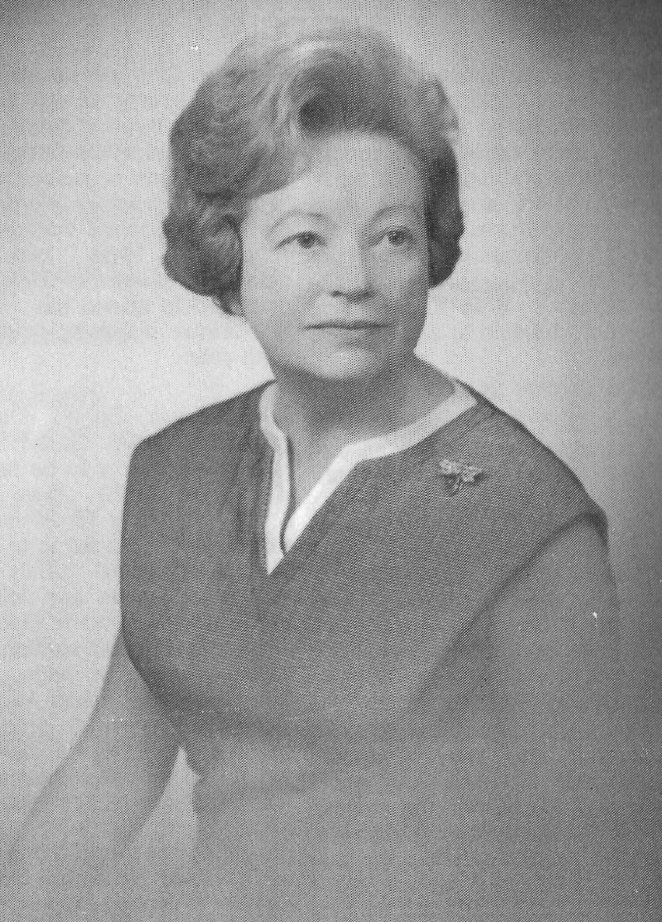
Born Elizabeth Ferguson in Belfast in 1920, where she attended school until the age of 14 when her father decided that any further education would be best obtained in the big wide world. Consequently she spent much of her time travelling the world accompanying her father on his many trips particually to America.
It was in America that one of the many amusing stories of her life happened. One particular day Harry Ferguson was entertaining Henry Ford and Elizabeth was sent to make a pot of tea. Unfortunately she could not work out how the new fangled electric kettle worked and knowing that her father was intolerant of failure was beginning to panic. After some time Elizabeth relented and returned to the meeting room to summon help, both Harry and Henry Ford, two of the greatest engineers that the world has known could not get the kettle to boil also. “Well” said Harry “lets forget about having tea Mr Ford has to return to his office, we will detain him no longer”.
After the war Elizabeth spent some time in France where she attended the Sorbonne and helped set up Harry Ferguson France. Elizabeth spoke french fluently and played tennis with distinction and rode when time allowed with the Cotswold Hunt.
Elizabeth married Tony Sheldon in 1950 they lived near to Abbotswood in Stow on Wold as Tony worked for Ferguson Research after its formation. They moved to the Isle of Wight in 1970 where she enjoyed, with Tony, many hours sailing, supporting him when he was Commodore of the Royal Yacht Squadron at Cowes. She continued to represent the memory of her father and his engineering achievements through Harry Ferguson Holdings and Ferguson Research. She was of course Patron of the Ferguson Club.
Mrs. Sheldon was respected by everyone who met her and made one feel ‘at home’, she had a great sense of humour. She is survived by Tony, has a son Jamie, two daughters Caroline and Sally and five grandchildren.
Duncan Russell
Books written and published about Harry Ferguson
A Compilation of books written and published about Harry Ferguson,
Ferguson, Massey Harris and Massey Ferguson;
“I would like to thank Alan Condie, John Farnworth and Peter Drinkwater for their contribution in helping me put this list together. Mike Thorne.”
Compiled and validated to the best of their knowledge, on behalf of The Ferguson Club
© The Ferguson Club August 2021
This list is not definitive and the Ferguson Club would welcome additions or edits to what we have presented here – please let the website editor know of updates
- A Global Corporation by EP Neufeld ; 1969 ; University Press of Toronto ; 427 pages
- Harry Ferguson Inventor and Pioneer by Colin Fraser ; 1972 ; John Murray publishing ; hardback ; republished by Old Pond ; paperback 1998 ; 288 pages ; ISBN 0-9533651-2-3
A list of books by John Farnworth
- Ferguson Implements and Accessories ; revised edition 2006 ; Japonica Press ; 223 pages ISBN 1-904686-08-7
- Massey Legacy Vol I ; 1997 ; Farming Press ; 399 pages, ISBN 0-85263-403
- Massey Legacy Vol II ; 1998 ; Farming Press ; 272 pages, ISBN 0-85236-404-0
- Advertising of Massey Harris, Ferguson and Massey Ferguson ; 1999 ; Farming Press ; 320 pages, ISBN 0-85236-528-4
- The MF500 Tractor Era ; 2010 ; Japonica Press ; 271 pages, ISBN 978-1-904-686
- Massey Ferguson 100 and 1000 Tractors ; 2003 ; Japonica Press ; 323 pages, ISBN 1-90468-05-2
- A Worldwide Massey Ferguson Industrial & Construction Equipment ; 2001 ; Japonica Press ; 309 pages ; ISBN 0-9540222-0-3
- A Worldwide Guide to Massey Harris, Ferguson and early Massey Harris Ferguson tractors ; 2000 ; Japonica Press ; 239 pages ; ISBN 09533737-6-2
- Memories of the Founding of Massey Ferguson, 1953-1958 ; 2007 ; Japonica Press ; 223 pages ; ISBN 1-9 04686-14-19
- Massey Harris Harvesters ; 2013 ; Japonica Press ; 339 pages ; ISBN 978-1-904686-32-3
- Ferguson, The Hunday Experience ; 2000 ; Japonica Press ; 378 pages ; ISBN 09533737-5-4
- Ferguson Advertising ; 2014 ; Herridge & Sons ; 144 pages ; ISBN 978-1-906733-62-7
- Working with Harry Ferguson ; 2017 ; Japonica Press ; 144 pages ;
- Early Massey Ferguson Implements ; 2019 ; Japonica Press ; 281 pages ; ISBN 978-1-904686-97-2
John’s (Farnworth) Personal Publications
- The Farnworth Masseys ; 2004 ; A substantial booklet of 41 pages – (out of print)
- The Evolution of Massey Ferguson Training ; A substantial booklet of 82 pages
A list of books by Alan Condie – Published by Alan Condie
- The Ferguson Album ; 1st published 1990 – reprinted 1993 ; ISBN 0-907742-82-3 (hardback) ISBN 0-907742-83-1 (softback)
- The Fergie 20 Family Vintage Tractor Special ; 1st published 1992 – reprinted 1995,1998,2001 ; 64 pages ; A4 saddle stitched ; ISBN 0-907742-59-9
- Fergie 20 Implements, Accessories and Industrial Equipment. Vintage Tractor Special No.2 ; 1st published 1996 – reprinted 2002 ; 48 pages ; A4 saddle stitiched ; ISBN 1-85638-006-8
- Massey Ferguson 1958-82 Classic Tractor Special No.3 ; 1st published 1995 – reprinted 2002 ; 56 pages ; A4 saddle stitched ; ISBN 0-907742-92-0
- By Alan Condie but published by Midland Counties Publications ; Great Tractor Builders, Ferguson ; 2001 ; 96 pages ; Quarto printed paper case ; ISBN 97807-1102-8265
Other Authors
- The Ferguson Story ; Stuart Gibbard ; Old Pond ; 2000 ; 168 pages ; ISBN 1-903366-08-9
- Living Biographies, Harry Ferguson by Norman Wymer ; 1961 ; Phoenix House Ltd.
- Harry Ferguson ; Bill Martin ; Ulster Folk & Transport Museum ; 30 pages ; Landscape Format ; soft back
- Ferguson, a Farming Revolution ; Tim Bolton ; 114 pages ; softback ; Morton Books ; 2021 ; ISBN 978-1-911658-22-1
- Working at Masseys by Ken Tyrell ; 213 pages ; Bread Book ; 2008 ; paperback ; ISBN 0-09542112-7-8
- Inside Massey Ferguson – A Story of Service ; David Walker ; Farm Power Publishing ; 2011 ; 265 pages ; softback
- Harry Ferguson Before the Plough ; Michael Clarke in collaboration with Jack Woods ; 159 pages ; Ballyhay Books, an imprint of Laurel Cottage Books ; 57 pages ; softback ; 2009
- The Standard Motor Company ; Graham Robson ; Veloce Publishing ; 2011 ; 208 pages ; ISBN 1-845843-43-4
- Not strictly a book about Ferguson but a lot of insight into the man Harry Ferguson. ; To Make a Better Mousetrap ; a biography of Rex McCandless by R.L Jennings ; self published 2003, revised 2011 ; hardback ; 265 pages ; ISBN 978-0-9534628-4-1
- Traction For Sale ; Bill Munro & Pat Turner ; Earlswood Press ; 2019 ; 298 pages ; ISBN 9780993101861 ; A substantial book about the evolution of Formula Ferguson 4wd Systems
- Harry Ferguson, A Brief History of his Life and Tractors ; Massey Ferguson Tractors Ltd ; 1986 ; publication no. 1856772 M1
- The Massey Ferguson Workshop Service Manual ; Chris Jaworski ; Old Pond Publishing ; 2013 ; 206 pages ; ISBN 978-1-908397-12-6
- Massey Ferguson Tractors ; Michael Williams ; 1987 ; Blandford Press ; 128 pages ; ISBN 0-7137-1898-6
- Massey Ferguson Tractors ; Michael Williams ; 2005 ; Bounty Books ; ISBN 0-7537-1144-3 or ISBN 13-978753711446
- Massey Ferguson Tractors ; Michael Williams ; 1989 ; ISBN 0-85236-203-x (13, 14 & 15 above are the same books)
- The Big Book of Massey Ferguson Tractors ; The Complete Book of Massey Harris & Massey Ferguson Tractors, Collectibles, Sales Memorabilia and Brochures ; Robert Pripps ; 2006 ; ISBN 076032655x
- Ferguson, The Story Continues, an Illustrated History ; Max Smith ; AGCO ; 1998 No. 12720-0398
- Sixty Years of FE35 Tractor ; Stevan DT Patterson ;
- Seventy Years of The Ferguson TE20 ; Stevan DT Patterson
- The Ford Ferguson Tractor ; Stevan DT Patterson
- The Ferguson Black Tractor by Stevan DT Patterson
- Eighty Years of the Ferguson Brown Type A and Black Tractor ; Stevan DT Patterson
- Peter and Pauline at Hollyhock Farm ; RAE Linney ; originally published in 1951 by Harry Ferguson Ltd ; republished in 2008 ; Old Pond ; a charming childrens book about the Ferguson TE20 ; 48 pages ; hardback ; ISBN 978-1-905523-94-8
- Harry Ferguson and I ; Michael Winter (HF Personal Assistant) ; self published 1995 ; paperback ; A5 ; 135 pages
- The Legendary LTX Tractor, The Big Fergie Story ; M Thorne published in 2000 ; originally included with a limited run of 1/18th scale models of the LTX
- A Rural Revolution ; J Wentworth Day ; a Harry Ferguson publication ; 1952 ; 115 pages ; softback – RARE
- British Tractors by Stuart Gibbard ; Herridge & Sons Ltd ; 2013 ; ISBN 978-1-906-133-52-8 ; Covers a lot of makes but a good chunk on Ferguson
- Ferguson TE20 Tractor 1946 Onwards, The Enthusiasts Manual ; Haynes Ltd ; ISBN 9780-85733-01-09 – currently out of print
- TE20 In Detail ; Michael Thorne ; Herridge & Sons Ltd ; 2006 ; 174 pages ; hardback ; phots by Andrew Morland ; ISBN 978-0-9549981-3-4
- Massey Ferguson 35/65 In Detail ; Michael Thorne ; Herridge & Sons Ltd ; 2014 ; photos by Andrew Morland ; ISBN 978-1-906133-53-5
- Massey Ferguson 100 Series In Detail ; Michael Thorne ; Herridge & Sons Ltd ; 2017 ; hardback ; photos by Andrew Morland ; ISBN 978-1-906133-76-4
- Massey Ferguson Tractors ; Jonathan Whitlam ; ISBN 9781445667256
© The Ferguson Club August 2021

Harry Ferguson’s Rolls-Royces and Bentleys
Born in 1884 into a farming family, Ulsterman Harry Ferguson became interested in cars from the time that cars first began to appear on British roads. Though he had planned to emigrate to Canada to escape the severe discipline that his very religious father imposed upon the entire family, his elder brother Joe invited him to work for him in the garage he had set up in Belfast. Harry seized the opportunity and in 1911 he set up his own garage, May Street Motors in Belfast. He competed in motor sport events and as he was an agent for Vauxhall cars, was given the chance to drive a works Vauxhall CType. Unfortunately, he crashed it and with it went his chances of any further drives for the company.
During the 1920’s, Harry Ferguson held the Austin dealership for Belfast and one of his private cars was a 1929 Austin 12/4 with a fabric saloon body. Though most cars at this time would have been finished in a dark colour, Harry Ferguson was bucking the trend with this car, as the picture is captioned ‘the first all-cream car’.

Harry Ferguson’s personal car, a 1929 fabric-bodied Austin 12/4, in what was then a most unusual cream colour.
Ferguson Family Museum/Sam Scadgell
We have no details of what cars he may have had when he and his wife, Maureen moved to Yorkshire when the Ferguson-Brown tractor was being built, but we do know that he enjoyed the privileges that his new wealth brought, which included retaining a butler. Maureen Ferguson never learned to drive, so Harry may have retained a chauffeur to drive her around when he was out on business. It wouldn’t be a stretch of the imagination to think that, as his income grew, he developed a taste for quality cars. In the years immediately prior to the Second World War and through the war years, the Fergusons were domiciled in the USA. Again, we have no idea of exactly what cars he may have owned or had at his disposal, but considering his connections with the Ford Motor Company, some may have been Lincolns, Ford’s luxury brand.

Harry Ferguson’s first post-war car, the Phantom III Barker Sports Saloon. Tom Clarke
It’s only from when Harry Ferguson acquired the Abbotswood Estate in 1946 that we know about the cars he bought and enjoyed. One maker, Rolls-Royce was his clear favourite. The first car he bought on his return to Britain, in August 1946 was a pre-war Rolls-Royce Phantom III, the first of six Rolls-Royces or Bentleys he bought post-war. This may well have come from London Rolls-Royce and Bentley dealers Jack Barclay, as a picture of such a car appears in one of many Rolls-Royce book carrying the caption ‘Jack Barclay Ltd’. Dating from the late 1930’s, this Phantom III had a swept-tail sports saloon body by Barker. A photograph of him standing by the passenger door can be found in Colin Fraser’s biography of Harry Ferguson.
Ferguson had wanted a new car, but in the immediate aftermath of the Second World War, new cars were very difficult to acquire on the home market, as the government demanded that as many cars be exported as possible to recoup the huge sums spent on fighting the war. Used cars of any description were also hard to find and fetched ridiculously high prices, regardless of condition, but Ferguson may have had some good connections in obtaining the Phantom; either that or Jack Barclay was struggling to sell such a large, thirsty car (it had a 7.3 litre V12 engine) in a time of severe petrol rationing.
Nevertheless, he bought the Phantom and at the same time, placed an order with Barclay for a new Bentley MkVI. This was one of Rolls-Royce’s two new models, (Rolls-Royce bought Bentley in 1931) the other being the more expensive Silver Wraith. A radical departure for Rolls-Royce was that the MkVI and its slightly later sister car, the Rolls-Royce Silver Dawn had a new all-steel 4-door saloon body, made at Cowley by the Pressed Steel Company.

Harry Ferguson steps out of his first new car after the Second World War, a Bentley MkVI Standard Steel saloon. Ferguson Family Museum/Sam Scadgell
Though the majority of these bodies, known as the Standard Steel Saloon, were trimmed at Rolls-Royce’s new Derby factory, Harry Ferguson’s example was painted and trimmed by Bromley, Kent coachbuilder, James Young, which had been acquired by Jack Barclay in 1937. Rolls-Royce expert Tom Clarke told me that the factory in Derby, where the new cars were being made, was having great difficulty trimming the new steel bodies. Tom also suggested to me that Ferguson may have struck up a good working relationship with James Young’s manager and chief designer, A.F. ‘Mac’ McNeil, as the name of James Young will appear again in this story.
The car, JLX 73 was finished in black and was ready for delivery in Spring, 1948 a year and a half from him ordering it. However, Ferguson’s ownership of it began with a rather unfortunate incident. Michael Winter, who served as Harry Ferguson’s personal assistant between 1947 and 1954, wrote of the matter in his 1995 book, Harry Ferguson and Me (selfpublished in 1995). The Ferguson family were in France at this time, where Harry Ferguson was visiting his French subsidiary, ahead of a holiday in Provence. Winter acted as Ferguson’s chauffeur when the regular chauffeur was driving Mrs. Ferguson and he was instructed to collect the car from Jack Barclay and take it across the Channel. He was met off the ferry at Boulogne by the French subsidiary’s Managing Director and, as was the custom, they stopped on the way for what can best be described as a ‘very good lunch’. When Winter arrived in Paris, the effects of the lunch were beginning to take their toll and, sleepy from the wine and confused by the Paris traffic, he wrapped the Bentley around a lamppost. Ferguson was furious, especially as he had waited so long for it to arrive and he told Winter bluntly that this incident put his job in great jeopardy. Fortunately for Winter, Ferguson relented and kept him on. Winter does not say whether the family continued with their holiday, but if they had not, Mrs. Ferguson would have not been at all pleased, as, since they had moved to Abbotswood, she was continually trying to get her husband to cut down on his workload! Incidentally, around this time, Ferguson was filmed outside the offices of the tractor factory in Coventry, getting out of the driver’s side of a Triumph 1800 saloon. Whether he had bought the car, or if he had been either given or loaned it by Sir John Black, the boss of Standard’s, we don’t know. In any case, we know that Ferguson’s eyesight was troubling him and as a result he rarely drove, so it may have been a posed shot. But Harry Ferguson, it seems found riding in cars, or indeed sitting down for any length of time, troublesome. He had suffered chronic back pain since he crashed his aeroplane back in 1911. The Ferguson Family Museum displays an item that Harry Ferguson used whenever he was sitting. It is a small, padded seat, known as his ‘Throne’, which he used to ease his discomfort.

Harry Ferguson is standing next to his second Bentley the 1950 gunmetal standard steel saloon MkVI. Ferguson Family Museum/Sam Scadgell
In 1950, Ferguson bought a second Standard Steel Bentley MVII, LLD 703, finished in gunmetal metallic paint. James Young’s name reappears in connection with Ferguson’s third Bentley MkVI, MLY 28, which, rather than the steel body, had a 6-light coachbuilt saloon body by James Young. This he bought in 1952 and it may be that the Phantom was taken in part exchange for this car.

Harry Ferguson’s first new Rolls-Royce, postwar, was this 1954 Silver Wraith, with a James Young body. Tom Clarke
In 1954 he bought his first new Rolls-Royce. This was a Silver Wraith, OLM 98 and, like MLY 28 also had a James Young saloon body, finished in silver but of a somewhat more modern style. Peter Warr recalls Ferguson’s penultimate Rolls- Royce, which was bought in 1955. It was another Silver Wraith saloon, registration number RXY 618 and Ferguson’s third car with a James Young saloon body. This had similar lines to MLY 28, but it was finished in black.

Harry Ferguson is next to his second Silver Wraith which was a long-wheelbase James Young saloon, known as the ‘five houses’ car. Location: Little Donegal St., Belfast. The building in the background with the curved frontage is the site of the garage that belonged to Harry Ferguson’s brother, Joe. (Tom Clarke)
Peter Warr recalls this car clearly, saying: “It was a very expensive car, which we nicknamed ‘five houses’, because that’s what the price of the car would have bought! Unfortunately, the car made Mrs. Ferguson travel sick, so she couldn’t ride in it. Harry Ferguson said that this was sad, because having worked so hard to earn the kind of money he was earning, his wife could not enjoy the benefits.” He took the car to Belfast on at least one occasion. It still exists, but has been repainted in maroon.

The1955 Silver Dawn James Young saloon that was sold new to H.P.Lenaghan & Son. Tom Clarke
He wanted to replace RXY 618 fairly soon, but could not take delivery of a new car to replace it in a short period of time, so he bought a second-hand 1955 Rolls-Royce Silver Dawn, registration number PXD 94, with, yet again a James Young saloon body. The original owner was Belfast ship owner H. P. Lenaghan & Son and Ferguson may possibly have done business with them. This is the last of the Rolls-Royces and Bentleys that Harry Ferguson owned that we know of.
Thanks to Peter and Ann Warr and Tom Clarke for their help in producing this article.
Published in Journal No. 109 Summer 2024, Bill Munro
The Ferguson
Approach to Education
Copy of an early letter from Dick Chambers (circa.1951)
APPROACH TO EDUCATION
Distributors are well aware of the importance attached to education as applied to the Ferguson franchise, and it is considered desirable at this stage to review the situation and point out how Distributors may gain the full benefit from an Education Scheme in their own territory, and so build a very prosperous future for their Ferguson franchise.
Value of Education
We have no doubt whatever that through the Education Plan as applied by Harry Ferguson Limited, Coventry, the sales of Ferguson products have been considerably higher than would have been possible without instruction being given to Salesmen and Servicemen in the proper adjustment and use of the equipment. Just how much the very large volume of business being enjoyed by this Company can be attributed to education, is certainly a matter for conjecture. We do know, however, that most of the sales are made by what the implement does. We have a maxim “It is what the implement does that sells the tractors”.
We do not propose to burden this article with the many experiences which can be quoted how proper adjustment of the implement and proper appreciation of the Ferguson System, and what is built into it, has enabled salesmen to prove to the Farmers that the equipment is suitable for their requirements.
The value of education is exemplified in so many ways that we feel the quoting of just one example may be permitted. Experience has shown that where the Agricultural Mower has been properly understood by the salesmen and demonstrators of a dealer, who, in turn have passed this information on as completely as possible to the owners, the satisfaction obtained by these owners from this piece of equipment has been very much more than where the Dealers’ Salesmen and Servicemen were unfamiliar with the equipment, and, therefore unable to instruct the owners.
Please understand that this is only one example, we can quote many more.
What To Do
It is our desire to help all Distributors in the Education Scheme, and any help that this Company can give is at the disposal of all distributors.
It is our view that each Distributor should immediately set up an efficient Education Organisation, the staff of which would devote their whole time to instruction. The primary object of this Department would be dissemination of instruction on Ferguson equipment to representatives of Dealers and Sub-Dealers, so that they would have a fuller ability to demonstrate the equipment successfully, maintain it correctly and gain a precise appreciation of the aims of the Ferguson Plan and System.
We suggest that your instruction should not be limited to the Dealer Organisation. We have, in fact, through or Coventry Education Department been extremely successful in spreading the information on the Ferguson System far and wide through the medium of other Organisations. In this connection, the Government Agricultural Advisory Officers form a useful nucleus through which information may be passed to farmers. It is of course, essential that these Agricultural Advisors should be well briefed in the equipment and the plan behind the production of this modern agricultural machinery. There is no doubt that the easiest way, and the most lasting way to convince Agricultural Advisors, is through practical experience with the equipment.
To fulfil this, we have arranged a number of very successful courses, each lasting about one week, to which the Agricultural Advisors have been invited. We know that, if we may coin a word, these Advisors have been “Fergusonised” during their stay with us. They, in turn, speak highly of the equipment when amongst farmers, and, in fact, become unpaid salesmen.
We have arranged other courses for Agricultural representatives of the various Rubber Companies, and similar courses for the Oil Companies Agricultural Representatives.
It is agreed that the Agricultural Advisors and Agricultural Representatives must not become too biased towards our equipment, thus excluding completely from their minds other competitive equipment, but we do know from experience that these men have spoken very highly of our System and have often – perhaps unwittingly – swayed a doubtful prospect very much in our favour.
We submit that as well as the training of Sales and Service Representatives, the Managers of your various Dealers; these are other useful lines, which can be applied to an Education Department.
In addition, the Young Farmers’ Club Organisation members in England and Wales have completed, with us, a number of short term, usually weekend, courses on the equipment. We assist in the Young Farmers’ evening lectures, and visit various Agricultural colleges and Agricultural Institutes, with a view to explaining fully the principles behind the Organisation and how the Ferguson System works.
Our Education Scheme is opened to many non-agricultural organisations also – associations of businessmen like the Rotary Club, political bodies, etc., come under our barrage of Ferguson Plan and System propaganda by lectures and films. Distinct from the sales talks, these are of a general nature, aimed at selling the idea of more food at less cost.
For education of any type, one must take a long view, and not hope for immediate results, but it is gratifying to note that in Great Britain during the month of January 1951, we had 67% of the sales for all makes of wheeled agricultural tractors on the home market.
The education tree we have been growing during the past five years is now beginning to bear full fruit.
How To Do It
The setting up of an Education Department is something, which should receive the immediate attention of the Principals of your Company. There must be ample scope for the development of a first rate Education Scheme covering the territory for which you have a franchise. We do not wish to lay down any hard and fast rules for the establishment of an Education Department. We appreciate that each territory must have its own requirements, and its own suitable arrangements, but we feel that an indication of what can be done should be given to you so that the benefit of education to your Organisation, and, indeed, to the owners of the equipment, should be achieved at the earliest possible time.
Distributors have in the past sent representatives to our Instruction School established at Coventry, and here we should like to assure you that further visits from your staff will be welcome at any time.
The Education Department now has its own residential accommodation and lecture rooms right on the farm. The instruction is essentially of a practical nature, and two distinct types of course are arranged.
For the Field Course, instruction is given on the operation and the farm maintenance of the tractor and the adjustments necessary on the equipment, to obtain from that equipment the many features built into it. This course lasts for two weeks, and provides a useful basis on which salesmen may develop their knowledge of the Ferguson equipment. We do not claim that one such course completes the knowledge of our students in the Ferguson equipment, indeed, it is one of the features of the Ferguson franchise that for those who will keep an open mind, there is always more to learn. Overseas students are recommended to remain for two or three field courses, which enables them to become more familiar with the equipment, visit some of our home dealer organisations and gain experience in our office organisation.
For this course we run a fleet of 22 tractors, and a full range of equipment; Ploughs, Cultivators, and other basic implements being held in triplicate or more, so that each student is given an opportunity of operating the equipment in the field. It cannot be too strongly emphasised that during this course we teach “The System”, so that students are conversant with the range of equipment which will enable them to pass on to prospective customers details, which will eventually result in the prospect buying more of our range.
The Service course is designed primarily for Workshop Servicemen, whose job it is to ensure that the Ferguson equipment is maintained in top quality condition, so that the farmers in turn may derive the full benefit from it. During the Service Course students are given instruction by Departmental Managers and their Deputies of the Demonstration, Service, Sales and Spare Parts Departments of the Headquarters.
Residential accommodation expenses are paid by the students or their employers. All other expenses are charged against the general Company expenditure.
The ideal to be aimed at is something along the lines briefly indicated above, an, indeed we hope that when the equipment is being established in any country, due consideration will be given to the organisation of an Education Department along these lines. Much thought has been given to the organisation of the Department, and we always agree that the residential facilities are of very great importance in creating a friendship between representatives who will thereby have a full realisation of the importance of the Ferguson franchise, and understanding of the immensity of the Organisation. It is interesting to recall that on a recent course at our Residential School at Stoneleigh Abbey, 12 different nationalities were represented.
Even if it is not possible in the first year or so of holding a franchise, for a Distributor to set up a Residential Establishment, education should be given considerable priority in the Organisation. A few suggestions on how this may be achieved are submitted for your consideration.
One country starting with a nucleus of two representatives who were fully trained at our Coventry School, arranged for these representatives to visit each Dealer’s area in turn, and there to give practical instruction in the use of the equipment, to the Dealer’s Representatives. This team visited an area for a period of about two weeks, taking with them such equipment as was then available on which instruction could be given. The team moved on from Dealer to Dealer. In additional to equipping the Dealer’s Representatives with a full knowledge of the Ferguson System, they have made use of their time in the particular area to assist the local owners in any operation problems, which they may have had.
In this connection the presence of the team in an area enabled the local Dealer to arrange for a “Dealer Owner Meeting”, to which all owners and some of the more prominent prospects were invited. The Dealer meetings should be arranged in conjunction with a show of recent Ferguson films and the ensuing discussion has always enabled the Education Staff to get to know the problems of the Ferguson owners, and has enabled them to suggest methods of operating the tractor and equipment to achieve the results required by the farmers. So successful has this scheme been that the particular country concerned now has four prominent members of the Staff on Education. After the initial course has been held in each dealer’s area, further courses, specialising in newer equipment and revising on the old, are continually in operation.
Another country, having laboured hard and well in publicising the equipment and making good sales, has now come to realise that the establishment of a Ferguson Training School would be of more value from the publicity angle and of immense value to the owners, than any other system yet conceived. A Training School has therefore been established, and to this School will be invited all who in any way are connected with the Ferguson business, and also those other representatives of Organisations whose interests are in the Ferguson equipment.
Other countries have, in an endeavour to gain more information on the equipment, arranged to have a large number of Dealer’s representatives attend courses of instruction at our Residential School. We welcome the idea, but while good, we can only consider this as being a preliminary to the setting up of a successful Education Department in the Organisation concerned, and it is, in fact, noteworthy that such has been the case.
It is our intention to arrange from time to time for our Senior Instructors to visit Distributors and to assist them with advice on setting up of Education Departments. We feel certain that with the experience we have had during the past five years of education in this growing organisation, our Instructors could be of immense value to you. We are certain also that this intimate contact between your organisation and ours would be of real value in our appreciation of your agricultural conditions, and no doubt our staff would be very heartily welcomed by you.
In acknowledging receipt of this letter, please let us know what scheme of education you have covering your territory, and also whether we can be of further assistance to you in the immediate future prior to one of our staff visiting you.
We look forward with interest to your remarks.
Yours faithfully
For HARRY FERGUSON LIMITED
R M CHAMBERS, EDUCATION MANAGER.
The Development of Mechanised Farming
The Development of Mechanised Farming
One of a series of articles by Mike Thorne, with particular reference to the role of Harry Ferguson
The development of mechanised farming goes back to mankind’s earliest days, for it started when he first used a stick to scratch the soil instead of his own two hands. He domesticated animals and crops. Our present day cereals and livestock are man’s creation and in fact are entirely dependent upon man for survival. In turn, man depends on these creations for his own subsistence.
This process has gone on throughout the ages in an attempt to remove the threat of hunger and famine – this threat is still the driving force behind our efforts to raise the world’s standards of food production (and distribution). We all live on a knife- edge there is no such thing as a surplus of food in the world.
Each step upward in civilisation has meant an increased need for food and today there is still a very real prediction of hunger in much of the world.
As we have become much more civilised with the better hygiene and medicine. This need for more food, has increased more rapidly resulting in the enormous advances in the past century, particularly in new species and varieties of crops, livestock breeding, the introduction of artificial (so called) fertilisers and chemical sprays, pesticides of all kinds and the invention of a host of different farm machines.
It is only during the past 40 years that the horse has lost its pride of place as the power unit on our farms – using oats as its main source of fuel.
 The change however, was a long and gradual one commencing in the early days of the industrial revolution with its driving force of the great invention that transformed the world-steam power (since which, science has learned more from the steam engine than the steam engine has learned from science).
The larger and leading farmers were quick to adopt steam power for threshing and ploughing and some farsighted ones even suggested “that it might displace the horse in future”. However, the death knell of steam power was quickly sounded at about the time of World War I when the motor (I.C.) engine tractor was introduced into this country in comparatively large numbers.
The advantages of these machines over steam engines (or fire engines as they were called which were powerful but heavy and cumbersome) were quickly realised.
The period after the war still saw many horses at work and agriculture entered into the crippling depression of the early Thirties. It also put many manufacturers of farm machinery out of business, some good machines and some brilliant ideas went on the scrap heap, but so did much rubbish.
It is a strange thing, but farmers and churchmen were predominant in looking for ways and means. Jethro Tull was an example, the father of the seed drill and the system of row crop cultivation. The Rev. Patrick Bell gave us the reaper. Appleby the binder knotter and McCommick – self binder. Henry Ford a poor self- educated man and many others are just a few examples.
Many firms were able to keep going in those sad years and again many good ideas never saw the light of day, very often for economic reasons.
Two outstanding developments of the modern tractor were achieved. However the first was in 1932 when a pneumatically tyred tractor was introduced.
This met with considerable opposition to start with, but demonstrated its advantages to such effect that within a few years it became the chief means of gaining traction on the land.
The second was the integral mounting of the implements to the rear of the tractor and controlling lift, drop and depth by hydraulic means.
The Ferguson System
Most great men, particularly it seems, engineers, started from humble origins, most were self- educated.
Newcomen was a Blacksmith – James Watt – Karl Benz – Gotthiel Daimler and others.
 The man who invented the Ferguson System – was Harry Ferguson, inventor of the Ferguson Tractor, the Ferguson farming implements and pioneer of the Ferguson System, was born on October 4th 1884 on a County Down farm in Northern Ireland.
As a boy his main interest was machinery and at the early age of sixteen he made his first venture into the field of practical mechanics. In 1900 he set up a small works in Belfast for the sale and servicing of the then novel motor cars and motor cycles. He soon began to race his own motor cycles and later motor cars, winning several hill climbs and similar sporting competitions.
It was inevitable at that time for Mr Ferguson to turn from automobiles to aeroplanes. He designed and built a small monoplane and flew it for the first time on December 31st 1909. This was the first heavier-than-air machine to be flown in Ireland and Mr Ferguson became the first Briton to build and fly his own machine. In 1911,
Mr Ferguson returned to the automobile industry and organised a distributing agency in Belfast.
On the outbreak of war in 1914, Harry Ferguson was asked by Ireland’s Department of Agriculture to supervise the operation and maintenance of all tractors and implements throughout the country to ensure their maximum efficiency in the difficult days that lay ahead. This was the turning point in his life.
He could see that the existing models of farm production throughout Ireland, and indeed the whole world depended chiefly on animal power, requiring the use of large acreage’s simply to feed the draught animals. He could see that the animal was a definite impediment on the road of human progress.
He realised very soon that the efficient production of food is the foundation of a strong and secure nation and that a prosperous agriculture is the basic ingredient of a sound national economy. With the opinion firmly established in his mind, he reached the conclusion that only efficient mechanisation could place the agriculture of the world on the level it must reach if hunger – and the misery it breeds- were to be abolished. (Note: At that time the world population was increasing at 20 million a year, now 1979 at 70 million a year, 2 people every time your heart beats).
Having reached this conclusion, Harry Ferguson set about designing and developing a new and revolutionary type of farming equipment. The result was that in 1935, after endless experiments and concentrated engineering developments, he perfected what is now known as the Ferguson System, not only unique in itself but outstanding in that it achieved huge commercial success under the personal direction of its inventor.
It gave a new ease of implement operation, automatic depth regulation of soil engaging implements and automatic protection of implements against breakages by hidden obstructions. A new trend in the design of farm tractors and implements had begun. One by one almost all other tractor manufacturers have adopted the hydraulic lift and the mounted implement principle, though Ferguson System in some of its aspects still remains unique.
Harry Ferguson defined his plan in Detroit, Michigan on December 1st 1947 as follows:-
“My whole economic philosophy and all my efforts are guided by the knowledge that the best way to improve the total economy will be through cutting the cost of production of agricultural products, which control the cost of living”.
There must be implements of an altogether new type which will produce for the first time in history, enough food to feed all the people of the world, and also produce from the land, the source from which all wealth comes – a new wealth to enrich the world”. Everything we eat comes from the soil, except the fish and salt.
Our plant for prosperity, security and peace can be stated in two simple propositions.
- Make the good earth produce more than enough to keep its whole population in comfort and contentment.
- And, what is equally vital, produce that “more than enough” at prices which the people of the world can afford to pay.
In October 1949 – when Britain has just devalued the £ sterling in relation to the Dollar, Harry Ferguson conducted a personal campaign in the press and drew the attention of Members of Parliament to the basic fact that modernised agricultural production methods could achieve a cut of 20 per cent in the cost of living resulting in a decreasing spiral of food and all other prices, thus substituting a Price Reducing System for the curse of the age and Price Increasing System.
Echoing words used in an early definition of his plan he added: “The only obstacle for growing all the food that we need in this country (Britain), is our failure to use millions of acres capable of efficient production, and the continued use of antiquated methods of hand labour and animal power on our farms….”
The actual manufacture of farm machinery is only half the reputable manufacturers battle. Harry Ferguson pioneered service “on the farm” by which every machine is kept working on the farm as continuously and efficiently as possible. To this end a complete “School of Farm Mechanisation” was established, situated at Stoneleigh. It is staffed by fully qualified instructors and offers every facility for teaching the application of farm machinery. The school trains the company’s own staff and the representatives of its distributors, from all parts of the world, in all aspects of complete farm mechanisation and these persons in turn can pass on these benefits to the farmer, though some farmers and their workers do attend courses from time to time.
These instructional facilities are also available to university and college students, Young Farmer’s Clubs and similar organisations.
This instruction is carried outside too in the form of lectures, short courses, demonstrations, film shows, talks and discussions in conjunction with distributors educational establishments of many types, farmers’ discussion clubs and similar bodies in this country and abroad. This is considered to be a very important part of the function of Stoneleigh.
The status of agricultural engineering in the economic life of the nation has grown during the past forty years or so from a comparative Cinderella to that of major industry with a similar expansion taking place in many other parts of the world.
No so very long ago, certainly within living memory of many, the village blacksmith was the acknowledged agricultural engineer and his shop the birthplace of many a farm implement. The blacksmith’s products were generally of the simple kind like spike harrows and supplemented the more involved designs produced by a number of manufacturers of long standing. As such, the blacksmith’s knowledge of farm equipment was often surprisingly great.
He fell by the wayside along with so many other rural craftsmen during the farming depression. Today of course, he could never hope to compete with factory built equipment. Many with experience of blacksmith’s work in the old days are now trained mechanics and carry on a great tradition of service to the farmer.
1978 is a far cry from the days of the blacksmith. The agricultural engineering industry is as modern as any in Britain. Its factories cover millions of square feet, and up-to-date methods of mass production are essential to satisfy demand and maintain its products at economic prices. Harry Ferguson substituted brains for brawn, torque wrench and feeler gauges for hammer and chisel.
Agriculture can claim to be the country’s largest industry. There are various ways of justifying this statement – it occupies by far the largest proportion of the country’s area (at present), but then land is its principal raw material. Its output is the largest at some £4,000 million, some fifteen times the pre-ware level. How many other industries of long establishment can claim a figure such as this?
The industry however, employs comparatively few full time workers at under 200,000 about 2 per cent of the population and this figure is expected to fall still further. This dwindling labour force is said by some to be a drift from the land in search of more remunerative employment and by others to be a push from the land caused by increasing mechanisation. Whichever it is, and it is probably a mixture of both, it is inescapable and gives some reliable pointers to future trends in the industry.
Farmers, both large and small must plan and re-organise their activities to maintain or increase their productivity in the face of a diminishing labour force. This can only be done by utilising wherever possible, mechanical aids designed to this end. The agricultural machinery manufacturer must therefore be abreast of latest trends and must make full use of the research and design facilities available to him to produce the modern agricultural equipment capable of working under the exacting conditions met within farming the world over.
Power farming imposes strains on machines never encountered during the age of the horse-drawn implement, and unlike other engineering products designed for known and comparatively uniform conditions, they must work under very widely varying conditions with efficiency and reliability. They must perform under extremes of heat and cold, rough ground and smooth, hilly and level, in mud, in dust or water. In additional to this it must withstand the treatment meted out to it by brute force and ignorance.
Some notes on the personality and idiosyncrasies of Harry Ferguson:
Harry Ferguson was understandably the driving force and dominant personality behind the organisation which he built up. He was a man dedicated to his work and this with his characteristic determination made him a perfectionist. This determination was evident throughout his activities and particularly in designing the tractor and as a result he would never accept the apparently impossible.
He was designing his tractor and machinery for the small farmer, particularly the owner-driver, and therefore cheapness of manufacture was one of his main aims. Another one was that the driver should be able, after a day’s driving, to carry out other essential routine work on the farm without being unduly tired. He always had to be able to operate his machinery himself efficiently and it was an advantage, therefore, that physically he was not strong. This therefore, led to such refinements as an efficient self-starter, brakes, which did not require heavy foot pressure and many more. He also felt that the farmer’s job was to farm and not be a mechanic and the amount of time spent on mechanics should be a minimum. This led to many points of ease of maintenance and features such as the use of one spanner for all implement nuts and bolts and his insistence on greasing a nut before screwing it on.
He had idiosyncrasies largely deriving from his fanatical insistence on tidiness.
This tidiness extended beyond himself and his location to those who were with him and he even required his employees to wear single-breasted suits. The same applied to demonstrations of his machinery and these always had to be rehearsed to such an extent to ensure that the actual demonstrations were assured of success. Another essential of all his personnel was to carry a notebook in the left- hand pocket and a pencil in the left hand inside pocket of the jacket. Notes were to occupy no more than one page per day. This may give you some indication of the personality of Harry Ferguson and the determination, which led to the perfection and success of his system.
L0905 First Published 1979 © /Mike Thorne/KM
Making the Large Tractor Experimental (LTX) Scale Model
Making the Large Tractor Experimental (LTX) Scale Model
I am writing this article in response to a request from Alan Dunderdale, Editor of The Ferguson Club Journal November 2000.
Revised and updated June 2015

LTX Prototype and prototype Ferguson BMC tractors at Harry Ferguson’s estate, Abbotswood, in the Cotswolds.
Being a keen Ferguson collector for about 35 years now, although my enthusiasm for the man and his tractors goes back to 1953 when I was 15 years old and drove “my” first Ferguson – a TED20 that had either a post hole digger swinging on the 3 point linkage or towing a three ton tipping trailer. It was not surprising that the first tractor I bought when I started collecting in 1985, was a TED20. The passion and interest grew rapidly, as it often does – and it was not long before I had given to me a hardback copy of ‘Harry Ferguson – Inventor and Pioneer’ by Colin Fraser. From this excellent piece of writing, I learnt a lot by reading and re-reading and still do.
It was from Colin Fraser’s work, that I first came across the LTX project. What struck me was it was the most obvious development of the TE 20, but really sad that no more than 6 prototypes were produced before the whole project was cancelled by the MH boys at the time of the merger. For a while I really thought there might be the odd LTX lurking around somewhere in the Midlands, but after enquiring around it became clear that they had all been destroyed.
Gradually, the idea turned in my mind – “well if none exist why not build a life size replica”. I had read in one of Alan Condies books on Ferguson, that an LTX had been fitted with a Perkin L4 engine (but was not the case), so at least the engine could be obtained, possibly from an old MH 780 combine.
Then I began to think about the cost of producing patterns for all the parts, gears, small components etc. Needless to say, the dream quickly faded away. Well – not quite! The obvious solution was to produce a scale model and why not make it a limited edition – say 50 so that other Ferguson enthusiasts could share in the fun if they wished. In fact the 1st edition ran to 50 pieces but with so many enthusiasts wanting a model LTX I went on to produce a 2nd edition model that ran to 70 pieces. It should be mentioned here that the first edition featured the styled version as it would have gone into production. The second edition had a bonnet style similar to the TE 20 range.
Before I proceed with my voyage of discovery on the LTX trail, I should mention that around 1944-45, Ford were experimenting with a larger version of the Ford Ferguson. A few prototypes were produced and P4 (possibly Prototype No. 4) was shipped to the UK for evaluation by the Ferguson Engineering Team. So in a way this early work by the Ford people was the precursor to the British built LTX Tractors.
The next turning point for me was how to start the ball rolling and find out as much detail as possible before approaching Paul Dimmock of Somerset, a talented pattern maker who generally specialises in producing patterns for model locomotives. Paul has an interesting background in his career – artist, draughtsman, camera mechanic, motorcycle mechanic and model maker.

LTX Model 1/18th scale, Overall length 177mm, width 100mm : 7″ x 4″.
I made contact with Paul in the first instance as a result of Brian Salter (Transport of Delight) who specialises in the production of model Land Rovers especially odd ball versions like fire engines, breakdown trucks and hydraulic access platforms. Brian and I had met earlier at Dunsfold Land Rovers run by the Bushell family – the Mecca for all serious Land Rover people. I had been to one of their events, my friend Robin Haughton and I had put together, based on a coil sprung, a modern version of a forward control 130-crew cab truck. Brian Salter was interested in photographing the three Land Rover hydraulic access platforms I had at the time in my fleet with the idea of producing a scale model of one for sale in limited numbers and Paul Dimmock was to be the model maker. There is one of these models in the Coldridge Collection.
Having found the maker I now needed to find as much detailed information as possible on the LTX tractor, but how?
Back in 1998, I had been to Kerala, Southern India, on a fortnight’s yoga holiday and got talking to a couple who now live in Exeter, but had lived and worked in Leamington Spa as a dentist. We were talking not about yoga postures but about my interest in Ferguson and tractors.
He told me that a client of his who had become good friends had recently retired from a lifetime’s work with MF in a senior role of Products and Development Engineer – none other than club member Erik Fredrieksen. Erik had been to the collection earlier, so I gave him a ring to see what he knew about the LTX. Well at that time he was working again for MF albeit part-time and putting together a history of the firm for their website so he was digging about in their archives. He also knew quite a number of the men who live in the Midlands and were involved with the LTX project, namely Alex Paterson, Dick Dowdeswell, Nigel Liney, Colin Stevenson, Jack Biddy and Nibby Newbold, and Derrick Hiatt whose farm at Ufton had been used for most of the field testing.
Erik kindly, and on my behalf, set up a series of appointments with these men, spread over a period of two days.
Two night’s bed and breakfast was booked for me in a super barn conversion near Erik’s home. This establishment was owned by John and Rodi Hancock. Rodi, a super Dutch lady and John – a retired farmer – naturally one evening we got talking about tractors and it transpired that he had driven an LTX on his farm. In fact, Ferguson had from time to time used his farm as a field test site. His remark was “It (LTX) was a wonderful tractor. It even had a diff lock operated by a long lever on the right hand side” – his arm moving in a gesture of engaging in diff lock: what a coincidence to stay at a B & B and the owner had driven just the tractor I had come to research – a good omen I thought.
Next day Erik and I set out early on a whistle stop tour that he had planned with true Ferguson precision – ending at 10 o’clock at night! During those two hectic days, I had the privilege of meeting the members of the LTX team I mentioned earlier. I’ll try and deal with each person in the order that Erik had set up on this tour and with each in turn giving the information they were able to provide me with.
First port of call was Nigel Liney who had been involved as a Field Test driver and luckily for me he had always been a keen photographer, so over coffee out came his album of the LTX project and some interesting shots like the one of him standing next to an upside down TE20 fitted with a Perkins P3 engine and plough he had been driving flat out. “We never bothered to slow down at the headlands to turn – just up with the hydraulic lever, flick the steering wheel round and stamp on the independent brake” but the taller P3 engine made the centre of gravity a bit higher hence the result! Nigel went on to talk about the LTX from his view.
It was a fantastic tractor he mentioned to me about the kick back through the steering on rough ground and complained about its operation to the man who designed it – who offered to come and try for himself. Nigel thoughtfully warned him not to fight the steering; the designer did not heed his advice and was pulled off the tractor seat and spread down the bonnet!
Whilst on the subject of steering, next day when I was with Farmer Derrick Hiatt, he recalled the time when one of his tractor drivers was using the LTX, he failed to keep his thumbs out of the steering wheel and suffered a dislocated thumb and was off work for a few days. Nigel went on to tell me about his experience with trailer testing – a purpose built trailer loaded with 5-6 ton of stone they used to take to the top of some steep hill in the Cotswolds doing a hill start on the way up, and on the way down they would engage a low gear but keep the clutch depressed and come down virtually free wheeling and then try out the tractors and trailers brakes if they failed the emergency back-up was to let the clutch out and hope and pray that you did not rip the centre out of the clutch as one could do on the TE20!
Another interesting point Nigel spoke about was that when Ferguson were trying out different makes of diesel engines for the TE20, they tried Perkin P3 – the Standard Motor Co 23c with combustion chamber developed by Freeman Sander (who also did work for Lister by the way) also tried a Meadows diesel engine especially built for prototype testing. One survives in the Coldridge Collection.
Nigel kept harping back to the amazing pulling power of the LTX tractor, which he attributed to the well-designed hydraulics and a torque diesel engine.
Next point of call was Jack Biddy (we were already running behind schedule surprise surprise!) who ran the field testing team, which was a tough assignment as testing was broken down into 2 x 8 hour shifts, 6-2 and 2 –10 and this went on for about 3 years mostly at Hiatts Farm of heavy blue clay. Jack told me how special large implements were developed to go with the LTX. 5 furrow 10” plough, 3 furrow 16” plough, heavy cultivators and the 5 ton trailer already mentioned.
Jack recalled how he was asked by HF to prepare a demonstration of the LTX for the MH people just prior to the merger. Harry Ferguson’s intention was to show how poor the MH766 was in relation to the LTX. They found a steep field of heavy clay and had it coated with a liberal dressing of farmyard manure to make sure it was really slippery. Needless to say the MH766 could hardly move whereas the LTX with a 3-furrow 16” plough and a clutch operated diff lock just flew along!
Again Jack was full of praise for the tractor and the performance of its engines whether petrol or diesel. Jack later after leaving Ferguson became a test engineer for Rover Cars with a team of about 10 people helping in that area. Another point he told me about was that he was involved with Ferguson was the development of a prototype plough spanner which was produced as a one off by Churchill Tools and patented.

LTX Photographs, with ‘Ferguson Spanner’
It has long leverage for undoing and less leverage for tightening and when folded fitted neatly in the TE 20’s tool box! At a later date on one of his trips to the Coldridge Collection, he gave me the spanner – a much-appreciated gesture.
Our next and last call for the day was to Derrick Hiatts farm. A 620-acre farm at Ufton in Warwickshire – the land of blue clay, and as was mentioned earlier, the site used for most of the field-testing. As we sat around the kitchen table of the warm farmhouse, Derrick told me how his father had allowed Ferguson to use their farm as a testing ground – “a cheap way of getting most of the ploughing done” was his comment.
He was a young lad of 14-15 when this testing started in 1949, but his memory of the tractor and its performance is very vivid for it was at Hiatts farm that one LTX survived, escaping the fate of the other 5 in 1954 when they were destroyed by MHF. Derrick spoke with affection of “their”LTX, a diesel version which they used regularly doing 500 hours a year of hard work with great reliability and was only sent back to MF a few times for small repairs. He told me the only problem he can remember as the tractor began to wear out it developed a habit of slipping out of 2nd gear – they got over this problem by the simple expedient of jamming the gear lever in 2nd by using none other than a Ferguson spanner (not part of its original design concept I’m sure). One day in 1970 Derrick contacted MF asking them to collect the tractor as the clutch needed repairing. They took the tractor away and according to Derrick Hiatt, they destroyed it. He was incensed. Thirty years later, telling this story, I could detect the emotion in his voice.
I told him about the model I planned to produce – he said “I’ll have one whatever the cost – the LTX was a fantastic tractor”. A pretty positive comment from a shrewd farmer, and having been involved with the farming community for over forty years, I had never had a farmer before make such an utterance. I crept in very late at the Hancocks Barn conversion.
Next day Erik and I set off early and full of resolve to keep to the time-scale of his itinerary, calling first on Colin Stevenson (Stevie).
Stevie had been a field tester joining the others rather late in the programme. He went on at length about the pulling power of the engine, the amazing traction that was achieved with the hydraulic linkage and the fact that the LTX was fitted with a mechanical lift locking arrangement to take the strain off the hydraulics when heavy implements were transported.
A quick detour to MF Stoneleigh to get some of the small photographs Nigel had kindly lent me enlarged on their computer system. I should mention at this point, after writing initially to Jim Newbold of MF for their permission to produce a model LTX, they have been most helpful in a number of ways including the use of some of their archive photographs. This was most appreciated for were it not for their help and the co-operation of all the various people mentioned, this dream would never have become a reality.
Our next stop was Alex Paterson, a man originally from Northern Ireland who had been with HF as a manager of the experimental workshop. He told Erik and myself how he was asked at a meeting in 1948 with HF, John Chambers and Alex Senkowski and possibly Bill Harrow, to put together a costing for the production of 4 tractors and 2 sets of spare parts. Alex Paterson asked for specification drawings and was told there weren’t any! Anyway after a lot of argee bargee, a date was set for April 14th. Alex told me the concept was to develop a big Fergie with the transmission designed to be able to handle engine power output of up to 100HP (good future planning!). The engines were to be made on the unit principle so engines could be built in 2,3,4,5 and 6 cylinder configurations, designed so that the basic engine could be built to run on petrol, TVO or diesel (rather like Ford did with their early New Majors). Alex Paterson explained that Senkowski was responsible for transmission and hydraulic design, (he came from a background in the aircraft industry) and Bill Harrow was responsible for engine development (he came from the Daimler Bus Co.) and had developed a successful range of high speed diesel engines (to use a buzz phrase of that period!). Anyway Bill Harrows designs must have been pretty successful because everyone we spoke to was very positive about the performance and characteristics of these engines and their low fuel consumption.
Unfortunately he suffered a nervous breakdown towards the end of the development project – my guess was that it was due to his conscientious nature and perhaps the pressure under which he was working and decided to leave Harry Ferguson Ltd. Alex told us of the problems of obtaining the required materials at that time and the problems of getting component manufacturers to produce them as “one-offs” at a time when everyone in the automotive trade was very busy getting production flowing following the wartime restrictions of cars and trucks. Alex Paterson told us how the firm who were commissioned to produce the rear diff, somehow got an extra tooth on the pinion wheel so it would not mesh with the crown wheel, that sort of thing. When they got the pre-production model together with the new styling of sheet metal work, nobody could agree on the badge on the front of the bonnet, so he went to Woolworth’s and bought some wooden alphabets to make up the name Ferguson and stuck them across the bonnet (as you can see on the model made by Paul Dimmock). Alex Paterson had lots more to tell, but space here is restricted, so we said our farewells and headed off towards Nibby Newbolds home.
Nibby was the mechanic for the LTX development team and when I called at his old peoples bungalow on Sunday evening, I asked “what have you been doing today Nibby?”.
“Helping a friend dig the foundations for his garage” he replied. Not bad at 82!
Before we got down to talking about the LTX, Nibby said to me “You must be interested in models, would you like to see some of mine – I make boats you know. I’ve made one from down your way – a Plymouth Coastal Patrol Boat”. Well, I was delighted to be shown at least 3 of his models. The Patrol boat was about 4ft long with electric drive and radio controlled. Next was even bigger – an aircraft carrier which must have been 6ft again all working and all scratch built. What an amazing man, 82 and still producing working things with vigour and enthusiasm.
Time was going on, so we had to turn Nibby’s focus back to the purpose of our visit i.e. the LTX on which he had been the mechanic. I was a bit vague about the build up at the rear axle. Did it have epicyclic reduction hubs like MF65 or did it have bull gears like Fordson Major?
Nibby remembered it having bull gears because there was a problem of getting them out for inspection. He also told us about a diesel engine that was sent to C.A.V. for injection equipment testing and development, an engine came back to Fergusons with varnish in the sump!. He confirmed quite a few of the points told to us by other members of the team, like it had a 3 cylinder hydraulic pump, a 2 speed P.T.O. driven through a two stage clutch; another Ferguson innovation I believe.
By now it was 10.30 on a Sunday night. We shook hands and smiled all round and took our leave.

LTX prototype next to a MH tractor at Banner lane.
Next day after a latish start and some more conversation with the Hancocks, I set off back to Devon, but one more call on the way back. This time to visit Dick & Beryl Dowdeswell at Temple Gluiton, and what a warm welcome I had there.
I had spoken to Dick some two years earlier about his experiences of being on the LTX project and all his years of demonstrating Ferguson and MF equipment worldwide.
Dick had developed quite a legend for himself as being a most competent destroyer of machines (known to his mates as the Wrecker), so it was a wise decision of John Chambers to have him on the testing team. He had already told me a while ago how he had managed to rip the bars off the covers of the rear tyres, so for Dunlop or Goodyear it was back to the drawing board and to come up with a stronger rear tyre design which they did. Dick again spoke at length about the tractors amazing performance, which he attributed to the pulling power of the engine and the balance of the hydraulic system plus the fact that the diff lock was of the clutch type and could safely be engaged on the move.
Dick told me how they used to snatch pull small trees out with a chain when all the ploughing was done. He told me how he was trapped under a tractor that was being used for winching (a near miss) and lots lots more besides, like demonstrating the Ferguson wraparound combine to several farmers.
Well driving back to Devon, my mind was racing away photos, loads of scruffy notes and so much information. I just had to get this sorted out before I drove up to Watchet to discuss it all with Paul Dimmock. I think even he was a bit scared of the task that lay ahead. After all, his locomotive models are all based on freely available detailed working drawings from the days when the locos were made. We only had photographs and luckily one of the LTX next to Fordson Major and one next to a Ferguson FE35, so that helped enormously with the scale.
Well, Paul looked at all these photographs and notes and said in his laid back way – “Well I have never done this before but I need the work and I’ll taken on the challenge”. I breathed a sigh of relief. We talked about costing and made notes. It was not too frightening, but I did double up Paul’s estimate for his time. Just as well, because these things in my experience always take longer than we like to think and there invariably a few problems.
Following that, Paul soon produced a scale working drawing and got underway the patterns of all the individual parts that make up the model – 70 in all. I lent him a Ferguson TE20 parts book and a model Fordson Major and TE20 to give him a bit more insight. The nett result was all very positive, so that within a few weeks, Paul had produced the masters in resin and brass for my inspection. Well, I was not qualified to inspect them, but I did need to check them out with the “boys” up in the Midlands who worked on the LTX project. The last thing you want when producing a model, is to get it all made up and show it to someone only to be told “well that’s not quite right” or “this lever should be on the other side” etc etc.
So with this aim in mind, Erik kindly arranged another of his whistle stop tours and booked me in at Hancocks super B & B.
Well, out of that trip around, there were only 2-3 minor modifications needed to meet the approval of all these gentlemen who had worked on the project, and that was good enough for me.

Model case, with photographs to RH side
Erik kindly asked if I would like him to write the booklet to go with the model and arrange for it to be produced by MF publishing department. I must say, I was delighted when Erik read the proof to me over the phone, that he had started the booklet by saying “This booklet is dedicated to all Ferguson Staff past and present, who were involved in the LTX Project”. That is exactly what I would have written for I feel this limited edition model is a monument to those guys. What a pity it never went into production. It would have made mincemeat of the Fordson Major!
Let the last words of this article be said by Derrick Hiatt from a letter he wrote to me on 26th April 2000.
“I really am pleased and honoured to be of the few to own such a model.
What a pity I didn’t hold on to the real thing, but this model will give me
Many happy memories” © M Thorne November 2000
PS Since this was written I have acquired a copy of the Ferguson Specification Data booklet dated…..as well as a full size working drawing of the diesel engine dated….. These along with the models can be viewed at the Coldridge Collection.
© Mike Thorne (Journal 36 Winter 2000, updated 2015)
Ferguson Combined Epicyclic Gearbox and Live PTO Unit
The Ferguson Combined Epicyclic Gearbox and Live PTO Unit: Mike Thorne
I thought members may be interested to find out more about the Ferguson Combined Epicyclic Gearbox and Live PTO Unit.
The earliest reference to these units I can find is dated June 1955 and that is an article from the Farmer and Stockbreeder magazine. The parts book I have is FP572 with a copyright date of March 1957, while the instruction booklet is FP6 I 2 not dated.
Before proceeding with a description of the function and operation of this Ferguson accessory it may be appropriate to point out to readers that The Howard Rotavator Co. introduced a suitable sized Rotavator for the TE20 tractors. As first gear was not low enough to operate the implement successfully, they developed their own reduction gear system. This was fitted internally behind the main gearbox. Direct drive or reduced speed was selected by moving a short lever mounted on a special cover plate fitted to the right-hand side of the transmission case, replacing the original that carried the dipstick. Of course Howards ensured that their plate incorporated a dip stick facility. These Howard units did what they were designed to do, ie give a reduction of about 3: I, but they gave no protection to the unit itself. If the unit was engaged by the operator, and a low gear was selected with the intention of pulling a tree stump out, then the teeth of the reduction unit would be sheared off!
It is my understanding that the Howard unit predates the Ferguson unit which I will outline next.
The Ferguson unit is a ‘sandwich’ gearbox that is installed behind the main gearbox. This has the effect of extending the tractor’s wheelbase of 80″ by 4.75″, thus giving the driver a bit more legroom. It also means both brake rods have to be extended by that amount, so two screw-in
pieces were supplied with the kit. It also meant that 4 extra pints of oil were needed bringing the total capacity to 5.5 gallons.
This unit, being more sophisticated than the Howard unit. does offer some protection because the brake band that is applied to the perimeter of the epicyclic gear unit to bring it into operation is powered by its own dedicated pump that delivers oil to a preset maximum pressure so if the unit is overloaded the brake band slips so no drive is transmitted.
Apart from the usefulness of giving a reduction of 3:1 in all gear ratios, the Live PTO facility that is available in low ratio is of great benefit when using, for example, a hydraulic loader or a PTO driven baler when the tractor could be stopped but the baler continues to run thus enabling a heavy patch to be cleared through the machine. The characteristic of self wrapping of the brake band only operates in the forward gears, the torque output in reverse will therefore be less but this is rarely a problem.
I feel it appropriate here to reproduce, from the instruction book, the details of its operation so that I will not be responsible for any errors!


 Published in Journal No.102 Autumn 2022